
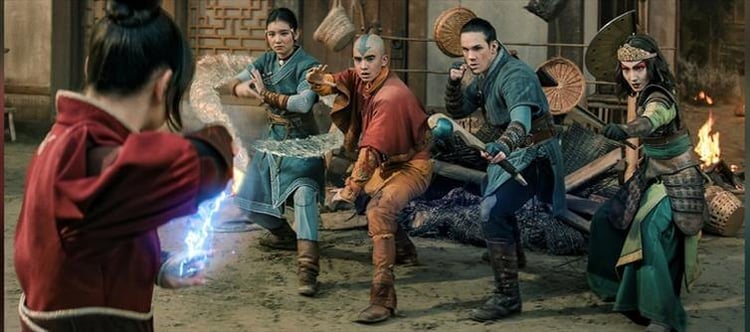


Avatar: The Last Airbender Season 2 Review: Netflix Finally Finds Its Element, But Can't Yet Reach the Animated Classic
Story
After laying the foundation in its uneven debut season, Avatar: The Last Airbender returns with far greater confidence. The second chapter takes Team Avatar deeper into the Earth Kingdom as Aang continues his journey to master Earthbending while preparing for the inevitable confrontation with the Fire Nation. Alongside Katara, Sokka, and the long-awaited introduction of Toph, the series expands its world with political conspiracies, emotional betrayals, and larger-than-life conflicts.
Meanwhile, Zuko and Uncle Iroh continue one of the franchise's strongest parallel narratives, while Princess Azula emerges as an even more dangerous antagonist. Instead of simply racing from one destination to another, Season 2 spends considerably more time exploring relationships, personal conflicts, and moral dilemmas, giving the characters much-needed emotional breathing room. Although the season still condenses several storylines from the beloved animated series, it handles the material with greater maturity and focus than its predecessor.
Performances
The biggest improvement comes from the cast. Gordon Cormier looks noticeably more comfortable carrying Aang's emotional burden, while Kiawentiio delivers a more layered and confident Katara than before.
Ian Ousley continues to provide welcome comic relief without turning Sokka into a caricature, but the season truly belongs to Dallas Liu. His portrayal of Zuko is packed with vulnerability, frustration, and quiet intensity, making his redemption arc one of the show's emotional pillars.
The newest addition, Miya Cech as Toph Beifong, is an instant scene-stealer. She effortlessly captures the confidence, wit, and fearless personality that made the character iconic while adding her own live-action flavor. Elizabeth Yu's Azula is also significantly more intimidating, making every appearance feel like a genuine threat. Critics have widely highlighted Zuko and Toph as the season's biggest acting standouts.
Technical Aspects
Visually, Season 2 is undoubtedly a step forward. The production design feels grander, the Earth Kingdom environments are richer, and several large-scale action sequences showcase impressive choreography. The elemental bending is more dynamic and creative, particularly during Earthbending battles.
However, the visual effects remain inconsistent. Certain CGI-heavy environments and digital backgrounds still lack the cinematic realism expected from a production of this scale. Some sets appear overly polished and artificial, occasionally breaking immersion. While the action is more exciting than before, Netflix's familiar glossy fantasy aesthetic still prevents the series from feeling truly epic.
Analysis
Season 2 succeeds because it finally understands that Avatar has never been about spectacle alone—it is about people. Instead of relying purely on nostalgia, the writers invest more energy into character relationships, emotional growth, and internal conflicts.
The adaptation also makes several narrative changes from the animated version. While some work surprisingly well, others compress important arcs too aggressively. Long-time fans may still miss the slower character development and richer emotional payoff that defined the original animation.
Pacing remains a mixed bag. Seven episodes simply aren't enough to fully explore every major storyline, resulting in moments that feel rushed despite the stronger writing. Some emotional beats arrive before they've earned their impact, while several supporting characters disappear almost as quickly as they're introduced.
Yet despite these shortcomings, the series finally feels like it has discovered its own identity. Rather than constantly reminding audiences of the animated masterpiece, it begins by standing on its own merits—a major achievement, given how heavily criticized the first season was.
What Works
✔ Dallas Liu's outstanding performance as Zuko
✔ Miya Cech makes an excellent live-action Toph
✔ Stronger emotional storytelling throughout
✔ Better pacing compared to Season 1
✔ Larger-scale action sequences
✔ Improved dialogue and character chemistry
✔ More confident direction and world-building
✔ Azula emerges as a compelling antagonist
What Doesn't
✘ CGI remains inconsistent in several sequences
✘ Some story arcs feel compressed
✘ Certain emotional moments lack enough buildup
✘ A few supporting characters remain underdeveloped
✘ Still struggles to match the emotional depth of the animated classic
✘ Some digital sets continue to look artificial
Bottom Line
Netflix's Avatar: The Last Airbender Season 2 isn't merely an improvement—it's a genuine course correction. Nearly every department, from performances to writing and character development, shows meaningful growth. While the adaptation still falls short of capturing the timeless magic and emotional richness of the original animated masterpiece, it finally delivers a fantasy adventure that feels heartfelt, exciting, and emotionally rewarding. If Season 1 raised doubts, Season 2 restores faith that this live-action adaptation can conclude on a high note with its final chapter.
 click and follow Indiaherald WhatsApp channel