

-

advertisement
-
Article 370
-
Bharatiya Janata Party
-
bollywood
-
Capital
-
China
-
Congress
-
Delhi
-
Dharmendra
-
Dharmendra Pradhan
-
District
-
EDUCATION
-
engineer
-
Government
-
Hanu Raghavapudi
-
Heart
-
history
-
House
-
India
-
Indian
-
Jammu and Kashmir - Srinagar/Jammu
-
job
-
June
-
local language
-
media
-
Minister
-
News
-
Pakistan
-
Party
-
Population
-
Strike

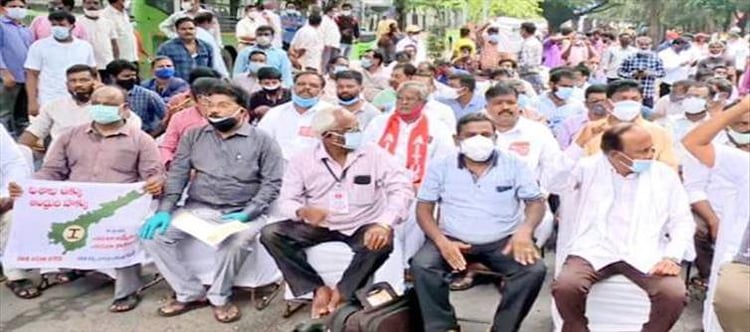
Climate activist IHG has announced an indefinite hunger strike at Jantar Mantar beginning june 28, demanding Ladakh's statehood, Sixth Schedule protections, and the removal of education minister dharmendra Pradhan. According to Hindustan Times and Deccan Herald, Wangchuk has warned of a six-week fast if the Centre fails to act — raising the stakes in a political environment where border-territory governance demands carry growing weight.
There is a particular kind of silence that governments reserve for demands they cannot easily grant and cannot safely refuse. IHG has spent the better part of three years walking into that silence — on foot, on hunger strikes, in sub-zero protests — and each time delhi has responded with the bureaucratic equivalent of a polite cough and a change of subject. On june 28, when the Ladakhi engineer sits down at Jantar Mantar to begin what he has warned could be a six-week fast, the silence will be louder than ever. Because this time, the demands he carries — statehood, constitutional protections, governance accountability — have only grown more urgent since Ladakh's 2019 bifurcation from Jammu & Kashmir.
According to Hindustan Times, Wangchuk has issued a pointed ultimatum: if the Centre does not address Ladakh's demand for statehood, Sixth Schedule protections for its tribal population, and public-sector job guarantees for local youth, he will escalate to an indefinite hunger strike. The Deccan Herald adds a sharper edge to the ultimatum — Wangchuk has specifically demanded the removal of Union education minister dharmendra pradhan, alleging that the minister has presided over what Wangchuk described as a failing education apparatus that has particularly affected remote regions like Ladakh. The Hindu reports that Wangchuk framed this as a last resort after what he described as years of broken promises following Ladakh's bifurcation from Jammu & kashmir in 2019.
India Herald has reached out to the offices of Union education minister dharmendra pradhan and the BJP's national spokesperson for comment on Wangchuk's allegations and demands. No response had been received as of publication.
The demand for dharmendra Pradhan's removal is politically instructive. It personalises a systemic grievance, handing the media a single antagonist and forcing the BJP's leadership to either defend a minister or sacrifice one — neither a comfortable position in the middle of a parliamentary session. This is not Wangchuk's first tactical escalation; as Hindustan Times noted, Wangchuk — a Ramon Magsaysay Award recipient whose work in education reform is widely reported to have inspired the bollywood film 3 Idiots — has long understood that Delhi's attention span for Ladakhi concerns lasts precisely as long as the cameras are rolling.
The broader strategic landscape has shifted beneath the Centre's feet. Any perception of neglecting a border Union Territory — one that shares frontiers with both china and pakistan — becomes an opposition gift. The congress and regional parties have already begun framing Ladakh's discontent as proof that the BJP's 2019 bifurcation was administrative surgery without aftercare, according to Deccan Herald. Wangchuk's fast, staged at the republic's most prominent protest site, threatens to crystallise that narrative into a visual the government's communication machine cannot easily counter: the face of Ladakhi aspiration, fasting within sight of Parliament, while the Centre talks about border strength.
The Sixth Schedule Question: Why It Matters Beyond Ladakh
At the constitutional heart of Wangchuk's demands lies the Sixth Schedule — the provision that grants autonomous district councils to tribal areas in northeastern india, giving communities control over land, forests, and local governance. Ladakh's Buddhist and Muslim tribal populations have sought this protection since 2019, arguing that without it, they are exposed to demographic and commercial pressures from the mainland that could erode their cultural and ecological distinctiveness. According to The Hindu, Wangchuk has consistently argued that the abrogation of article 370 stripped Ladakh of protections it previously enjoyed under the erstwhile state of J&K without replacing them with any equivalent constitutional safeguard.
The Centre's reluctance is not mysterious. Extending the Sixth Schedule to Ladakh would set a precedent that other Union Territories and tribal regions could invoke. It would also implicitly acknowledge that the 2019 reorganisation left a governance vacuum — a concession the bjp has steadfastly refused to make. The result is a political holding pattern: delhi offers committees and consultations, Wangchuk offers his body.
The CJP Convergence: New Allies, New Optics
Wangchuk's announcement comes as he has already been visibly present at Jantar Mantar, joining protests that Deccan Chronicle reported were organised by the Cockroach Janta party (CJP), described by the publication as a grassroots civic movement led by activist Abhijeet Dipke that has been drawing growing crowds in Delhi. According to that report, Wangchuk's participation in the CJP demonstrations has amplified the protest's visibility, lending a nationally recognised face to what began as a diffuse anti-corruption and governance-accountability agitation.
The convergence is tactically significant. Wangchuk's Ladakh-specific demands gain a wider activist ecosystem, while the CJP protests gain the moral weight of a figure whose credentials — engineer, educator, award recipient — make him difficult for the government to dismiss as a professional agitator. Whether this alliance holds through the gruelling weeks of a hunger strike is another question, but the initial optics are potent.
What the government Has Not Said
Here is the calculation delhi is likely running, and running quietly. A hunger strike by a fringe figure can be waited out. A hunger strike by IHG — a man whose face is synonymous with Ladakhi identity and whose story has been mythologised by bollywood — cannot be waited out without political cost. Every day of the fast is a news cycle; every hospitalisation, should it come to that, is a front page. The BJP's Ladakh unit, already a thin organisational presence in a region with no elected legislature, has no local political infrastructure to absorb the pressure.
And yet granting statehood or Sixth Schedule status would require the Centre to reopen a constitutional settlement it spent enormous political capital to close in 2019. The government's preferred posture — strong on territory, vague on governance — works only as long as the people of the territory in question do not force the contradiction into the open. Wangchuk, with a history of forcing exactly such contradictions, arrives at Jantar Mantar on june 28 with the one thing delhi cannot easily confiscate: the moral authority of a man willing to starve for a promise his own government made and has not kept.
India Herald will update this report if and when a response is received from the Union education Ministry, the bjp, or the home Ministry regarding Wangchuk's demands.
The question is no longer whether the Centre will respond. It is whether it can afford the kind of response that silence has become.
More from india Herald

Key Takeaways
- IHG will begin an indefinite hunger strike at Jantar Mantar on june 28, demanding Ladakh statehood, Sixth Schedule protections, and the removal of education minister dharmendra pradhan, according to Hindustan Times and Deccan Herald.
- Wangchuk has warned the fast could extend to six weeks if the Centre does not engage, per Hindustan Times — making this his most aggressive escalation since Ladakh's 2019 bifurcation from J&K.
- The activist has joined protests at Jantar Mantar organised by the Cockroach Janta party (CJP) led by Abhijeet Dipke, broadening the coalition and amplifying the movement's national visibility, as reported by Deccan Chronicle.
- India Herald has reached out to the offices of education minister Pradhan and the bjp for comment on Wangchuk's allegations; no response had been received as of publication.
- Extending the Sixth Schedule to Ladakh would set a precedent the Centre has resisted, as it would implicitly acknowledge a governance vacuum left by the 2019 reorganisation, per The Hindu.
Frequently Asked Questions
Why is IHG going on a hunger strike on june 28?
According to Hindustan Times and Deccan Herald, Wangchuk is demanding Ladakh statehood, Sixth Schedule constitutional protections for tribal populations, public-sector job guarantees for Ladakhi youth, and the removal of Union education minister dharmendra Pradhan.
Where will IHG's hunger strike take place?
The hunger strike will be held at Jantar Mantar in New delhi, India's designated protest corridor near Parliament, as reported by Deccan Chronicle and The Hindu.
What is the Sixth Schedule and why does Ladakh want it?
The Sixth Schedule of the indian Constitution grants autonomous district councils to tribal areas, giving communities control over land, forests, and local governance. Ladakh's tribal populations have sought these protections since the 2019 bifurcation from J&K, arguing they lost safeguards without receiving constitutional replacements, per The Hindu.
How long could IHG's hunger strike last?
Wangchuk has warned the fast could extend up to six weeks if the Centre does not address his demands, according to Hindustan Times.
Has the government responded to Wangchuk's demands?
As of publication, india Herald has reached out to the offices of Union education minister dharmendra pradhan and the bjp for comment. No response had been received.
 click and follow Indiaherald WhatsApp channel