
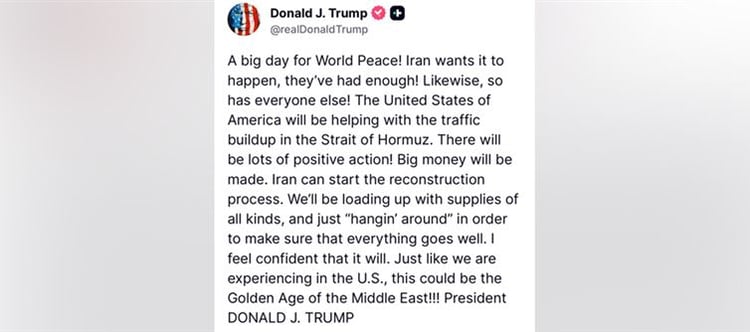


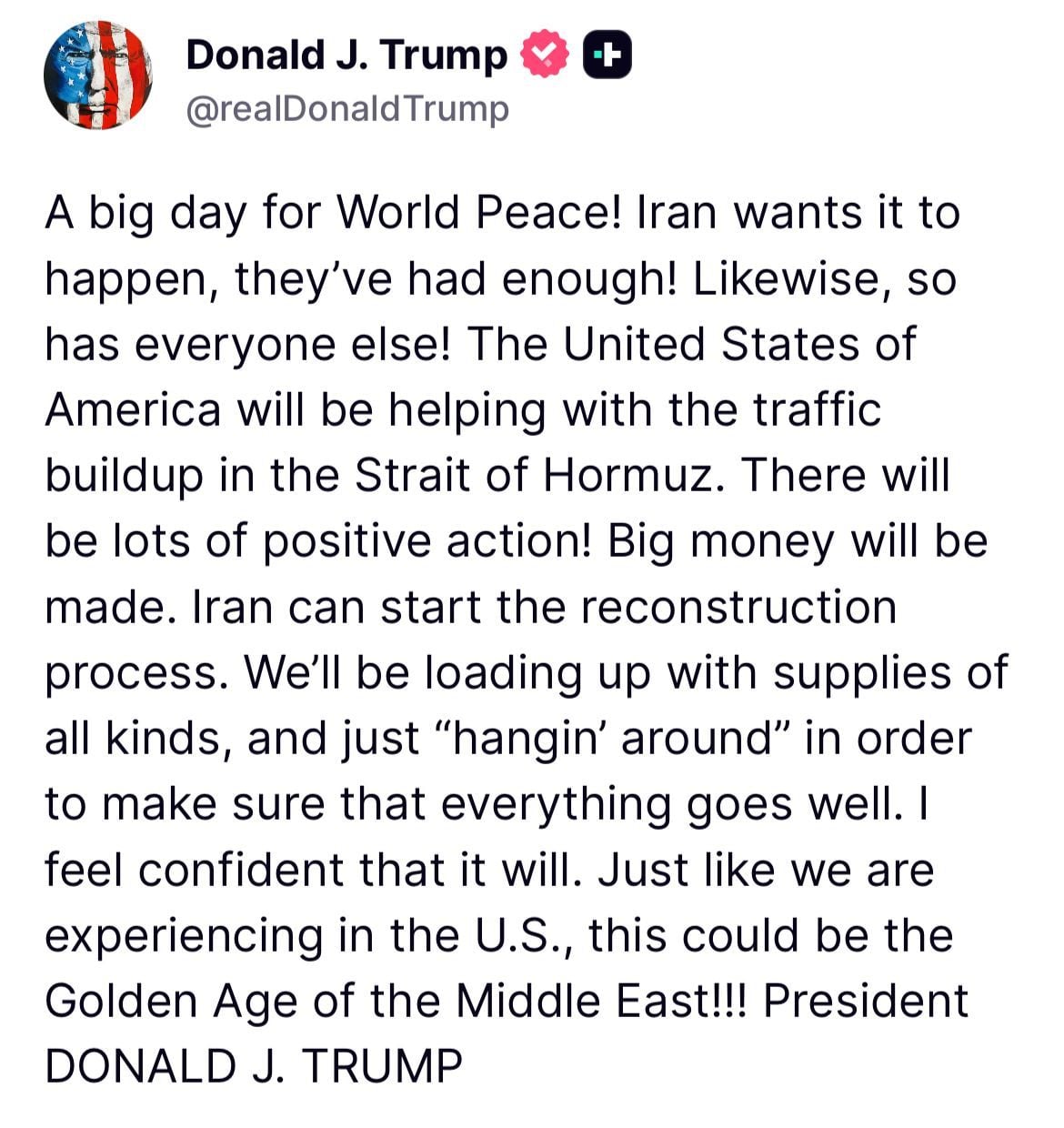
Twelve hours. That’s all it took for the tone to flip completely. From warnings of devastation to talk of rebuilding, cooperation, and even a “Golden Age,” the shift wasn’t gradual—it was immediate, almost jarring. And yet, for many watching closely, the bigger question isn’t how fast it changed… but what it means going forward.
1. The Sudden Pivot
Just hours after issuing stark warnings, the message turned sharply toward optimism. The focus moved from conflict to reconstruction—reopening key routes, stabilizing the region, and laying the groundwork for recovery.
2. A New Narrative Emerges
Instead of escalation, the language now centers on rebuilding—helping restore critical infrastructure, ensuring safe passage through vital corridors, and supporting a broader sense of regional stability.
3. The “Golden Age” Vision
Framing the moment as a potential turning point, the rhetoric leans into possibility—a Middle east defined less by conflict and more by cooperation, trade, and recovery.
4. Why the Whiplash Matters
The speed of the shift is what stands out. Such rapid changes can feel unpredictable, but they also signal how fluid high-stakes diplomacy can be when pressure peaks and priorities evolve.
5. The Practical Impact
Beyond the headlines, the real measure will be what follows—whether the pause holds, whether reconstruction begins, and whether stability replaces volatility, even temporarily.
6. A Fragile Opportunity
Moments like this don’t last forever. They open a window—brief, uncertain, but potentially transformative—where outcomes can shift dramatically depending on what happens next.
Bottom Line
The tone may have changed overnight, but the stakes haven’t. If this pivot leads to fewer strikes and more rebuilding, the sudden shift won’t just be surprising—it might actually matter.
 click and follow Indiaherald WhatsApp channel