
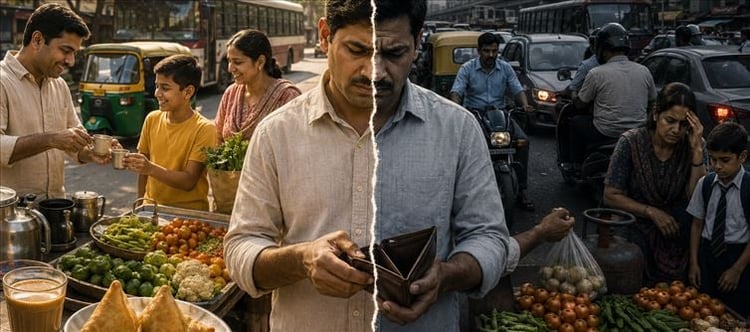


A lot of people look at petrol price hikes and shrug them off. “I don’t own a car.” “I use public transport.” “Why should fuel prices affect me?” But that’s the biggest misunderstanding when it comes to inflation. petrol and diesel prices are never just about vehicles. They are the first domino in a chain reaction that eventually reaches every single corner of daily life.
The impact starts quietly. Your ₹15 tea suddenly becomes ₹20. A samosa that cost ₹20 becomes ₹25 overnight. Vegetables become more expensive because transportation costs increase. fruits cost more. Milk prices creep upward. Delivery charges on apps like swiggy and zomato start rising. auto fares increase. uber and ola rides become costlier. school transportation fees quietly go up in the next academic cycle.
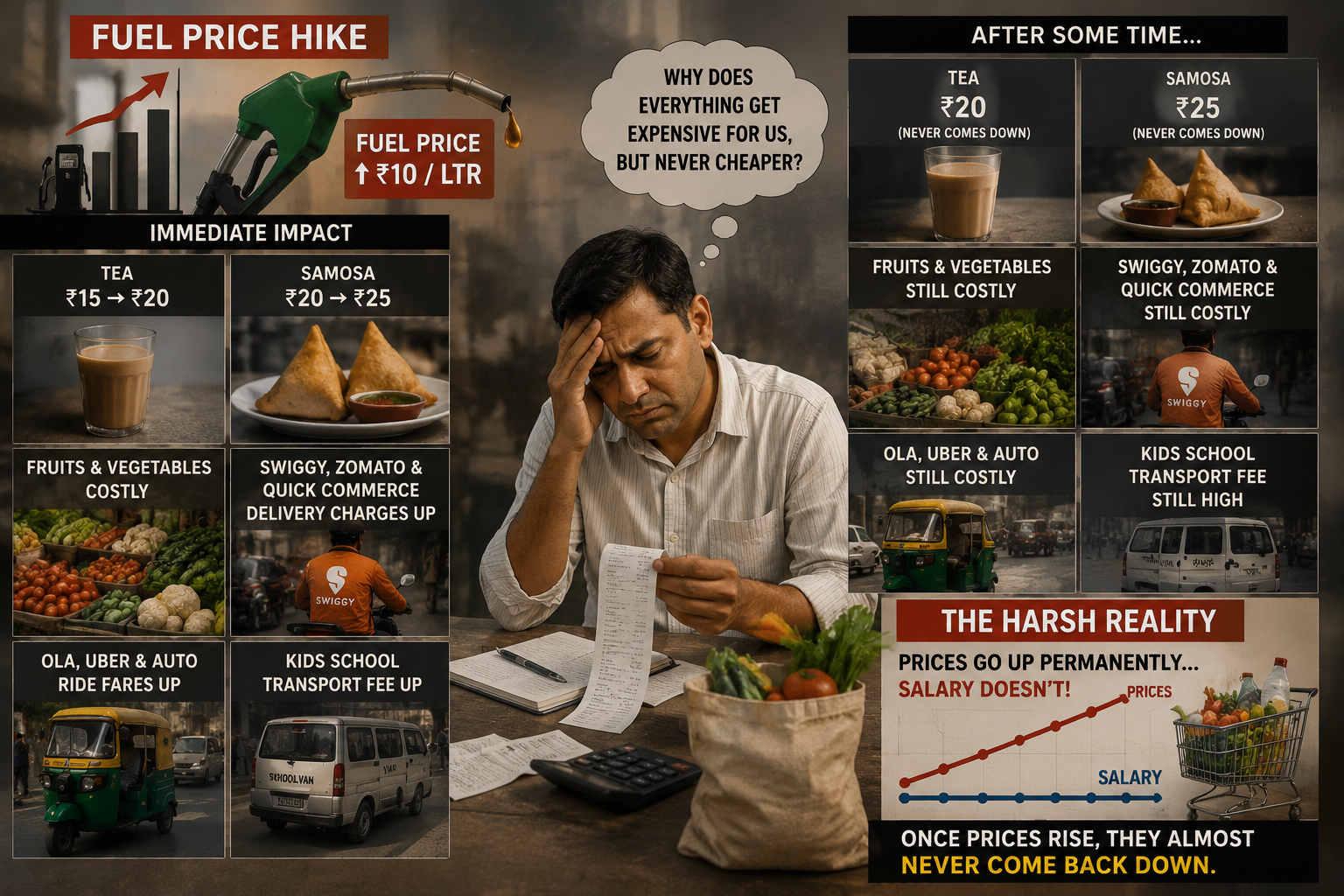
And the harshest part? Those prices almost never return to where they were.
That’s what frustrates ordinary people the most. Fuel prices may occasionally drop slightly, but the inflation triggered by those hikes rarely reverses. Once businesses raise prices, they adjust to the “new normal.” The ₹20 samosa never becomes ₹20 again. The expensive tea becomes permanent. Delivery charges stay high. Household budgets permanently stretch thinner.
This is why fuel hikes create so much anxiety among middle-class and lower-income families. Because inflation doesn’t arrive dramatically all at once. It slowly seeps into everyday life until basic living itself feels more expensive than it did just a few years ago.
And eventually, people realize something uncomfortable: even if you never touch a steering wheel, rising fuel prices still end up sitting at your dining table every single day.
 click and follow Indiaherald WhatsApp channel