
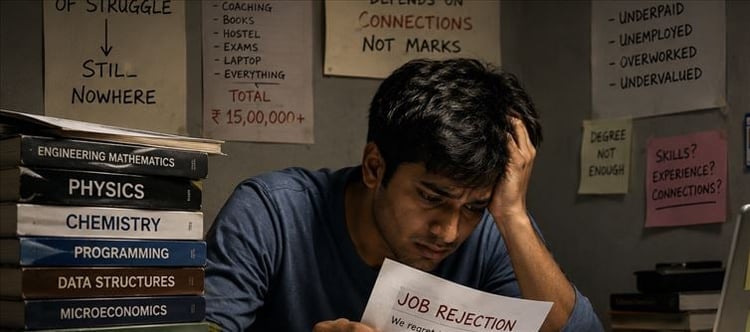


For years, society sold one powerful promise to young people: study hard, get good marks, earn a degree, and life will eventually reward you. That belief shaped entire generations. Families emptied savings accounts. parents took loans. students sacrificed their teenage years to coaching centers, entrance exams, assignments, and sleepless nights — all chasing the dream of “security.”
But for millions today, that promise feels increasingly hollow.
After spending 15 to 20 years inside the education system, many graduates are walking into a brutal reality: low salaries, unstable jobs, unemployment, or careers that barely cover rent, fuel costs, EMIs, and monthly survival. Degrees that once guaranteed respect and opportunity now often feel like expensive pieces of paper in an overcrowded market.
That growing frustration is why more young people are starting to question the system itself. Not because education has no value, but because the gap between what students are promised and what they actually receive keeps widening.
Meanwhile, the real world appears to reward entirely different skills. Networking. Communication. Social influence. Personal branding. business instincts. Connections. Timing. Confidence. In many industries, these factors often matter more than academic scores or university rankings.
And that realization hits hard for people who spent most of their lives believing marksheets alone would decide their future.
The problem becomes even more painful when students realize schools and colleges rarely teach practical survival skills — how to build income streams, negotiate salaries, manage money, understand markets, or adapt to rapidly changing industries. Instead, many are trained primarily to pass exams and compete for shrinking opportunities.
That doesn’t mean education is useless. But it does mean the traditional formula no longer guarantees success the way previous generations believed it did.
And for a growing number of young people, that awakening feels less like disappointment — and more like betrayal.
 click and follow Indiaherald WhatsApp channel