


‘Passenger’ Review: Familiar horror Formula, Elevated by Sharp Direction and Genuine Tension
Modern horror has developed a bad habit.
Too many films become obsessed with mythology, symbolism, universe-building, or “elevated horror” ambition while forgetting the one thing audiences actually came for: fear.
That’s where Passenger unexpectedly succeeds.
It doesn’t try to reinvent the genre. It doesn’t bury itself under endless lore dumps or pretentious philosophical detours. Instead, it strips horror down to its most primal ingredients — dread, tension, atmosphere, and survival — and executes them with enough technical confidence to keep audiences locked in even when the story itself feels familiar.
And honestly, there’s something refreshing about that.
STORY: SIMPLE, DIRECT, AND EFFECTIVE
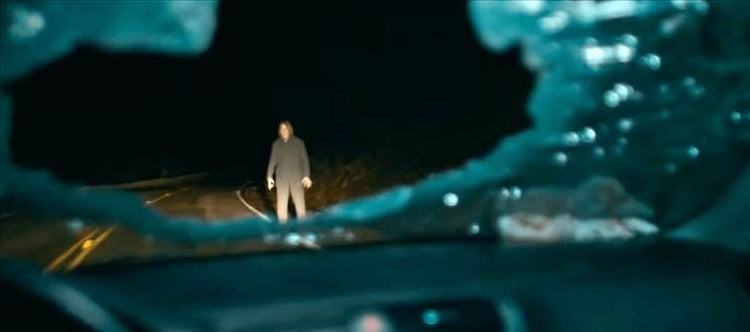
At its core, Passenger follows Tyler and Maddie, a young couple traveling across the country in a sleeper van while chasing the fantasy of starting a new life together. Their trip takes a terrifying turn after they stop to help a man involved in a car crash, unknowingly inviting a sinister supernatural force into their lives.
That force is “The Passenger,” a demonic entity that feeds less on violence and more on fear itself.
The premise is undeniably familiar. horror fans will immediately recognize many of the genre beats: isolated roads, escalating paranoia, eerie encounters, and a relentless supernatural stalker. But what separates Passenger from countless forgettable streaming horror films is its refusal to overcomplicate itself.
The screenplay wisely avoids drowning the audience in convoluted mythology. The demon exists. It wants to torment people. That’s enough.
That simplicity becomes one of the film’s biggest strengths.
PERFORMANCES: GROUNDED, NATURAL, AND SURPRISINGLY STRONG
Jacob Scipio and Lou Llobell carry the movie exceptionally well.
Instead of turning Tyler and Maddie into frustrating horror archetypes constantly fighting each other for artificial drama, the film presents them as an emotionally believable couple trying to survive something incomprehensible together.
That small creative choice matters enormously.
Their chemistry gives the movie emotional grounding, and both actors understand the tone the film needs. They never overplay the fear, never drift into melodrama, and manage to maintain just enough charm and vulnerability to keep the audience emotionally invested.
Scipio brings quiet resilience, while Llobell balances panic and determination convincingly. Together, they elevate material that could have easily collapsed into generic horror territory.
DIRECTION & TECHNICALITIES: WHERE THE FILM REALLY SHINES
Director André Øvredal once again proves why he remains one of modern horror’s most dependable craftsmen.
The film’s strongest asset is its staging.
Even when relying heavily on jump scares, Øvredal understands timing, silence, framing, and visual tension well enough to make many of them genuinely effective. Several sequences are built around anticipation rather than pure shock, allowing dread to linger before the payoff arrives.
One standout sequence involving a wallet PLATFORM' target='_blank' title='digital-Latest Updates, Photos, Videos are a click away, CLICK NOW'>digital projector becomes the film’s most memorable moment — a brilliantly staged scene that transforms a simple object into a nightmare device through lighting, pacing, and spatial manipulation.
The cinematography also deserves praise for maximizing claustrophobic environments without making the visual storytelling feel repetitive.
The film constantly feels controlled.
That matters.
ANALYSIS: horror DOESN’T ALWAYS NEED TO BE “ELEVATED”
One of the most interesting things about Passenger is how unapologetically traditional it feels.
There’s no desperate attempt to become the next prestige horror phenomenon. No bloated metaphor pretending to be deeper than it is. No exhausting mythology expansions designed to set up sequels.
Instead, the film focuses almost entirely on tension and execution.
Ironically, that restraint makes it more effective than many bigger, more “ambitious” horror projects released in recent years.
At the same time, the film never fully escapes genre limitations. The Passenger himself lacks complexity as an antagonist, and repeated reliance on jump scares eventually becomes predictable. horror veterans will likely anticipate many of the narrative turns long before they happen.
Still, strong craftsmanship consistently keeps the film entertaining even when originality fades.
WHAT WORKS
• Strong chemistry between the lead actors
• Tight pacing with very little filler
• Excellent tension-building and atmosphere
• Clever visual horror staging
• Effective use of practical fear over excessive exposition
• André Øvredal’s confident direction
• Smart decision to avoid overcomplicated lore
WHAT DOESN’T
• Story feels heavily familiar
• The Passenger lacks depth as a villain
• Overuse of jump scares becomes repetitive
• Limited thematic ambition
FINAL VERDICT
Passenger may not become a defining horror classic, but it absolutely succeeds at what it sets out to do: deliver a tense, well-crafted supernatural thriller that understands how to scare an audience without wasting time.
It’s lean, technically polished, performance-driven, and just clever enough to rise above standard genre filler.
And sometimes, especially in modern horror, competence and confidence are more valuable than forced originality.
 click and follow Indiaherald WhatsApp channel