


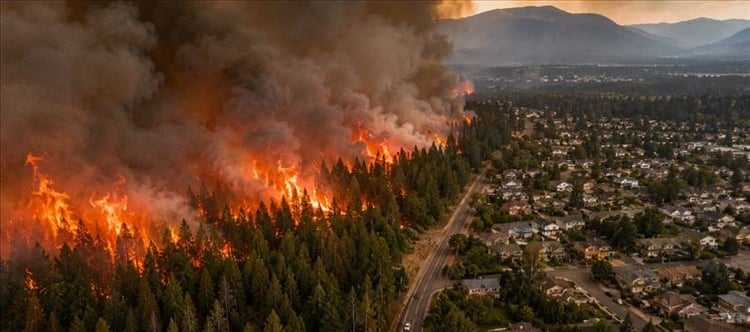

For years, the 1.5°C warming limit has been treated as one of humanity's most important climate guardrails—a line scientists warned we should avoid crossing if we want to reduce the risk of severe environmental disruption. Now, a new United Nations assessment suggests that the line may be approaching much faster than many expected.
According to the report, there is now a 75% chance that global temperatures will temporarily exceed 1.5°C above pre-industrial levels before 2030. What was once viewed as a distant possibility is increasingly becoming a near-term reality, raising fresh concerns among climate scientists and policymakers around the world.
The significance of the 1.5°C threshold goes far beyond a single number. It represents a point at which the risks of extreme weather, heat waves, droughts, floods, ecosystem damage, and rising sea levels become increasingly severe. Every fraction of a degree matters, and the difference between staying below the target and surpassing it could affect millions of lives.
One of the most alarming aspects of the report is the speed at which the timeline appears to be accelerating. Not long ago, discussions about crossing 1.5°C often focused on the middle of the century. Now, researchers warn that the milestone could be breached within just a few years if current trends continue.
The report does not claim that all hope is lost. Crossing the threshold temporarily is not the same as permanently remaining above it. However, scientists stress that each year of delay makes the challenge of limiting long-term warming increasingly difficult and expensive.
The message is stark but clear: the climate clock is ticking faster than expected. The question is no longer whether warming is happening—it is how much more warming the world is willing to accept before the consequences become impossible to ignore.
The countdown has begun, and the window for action is rapidly narrowing.
 click and follow Indiaherald WhatsApp channel