


Backrooms Review: Kane Parsons Turns Internet Nightmare Fuel Into One Of The Year's Most Unsettling horror Experiences
A Liminal horror Experience That Crawls Under Your Skin
horror movies often rely on loud jump scares, grotesque creatures, and relentless violence to keep audiences engaged. Backrooms takes the opposite route. Kane Parsons' feature directorial debut is a patient, eerie, and deeply atmospheric descent into psychological dread that understands one simple truth: what we can't fully understand is often far scarier than anything standing directly in front of us.
Adapted from Parsons' wildly popular YouTube series inspired by the viral internet phenomenon, Backrooms faces an enormous challenge. The original concept thrives on ambiguity. It's an endless maze of yellow walls, humming fluorescent lights, and impossible spaces that exist outside reality itself. Translating that mystery into a conventional narrative was always going to be difficult.
Against the odds, Parsons largely succeeds.
Rather than explaining every mystery or turning the concept into a monster-heavy spectacle, Backrooms preserves the unsettling uncertainty that made the phenomenon so compelling in the first place. The result is a horror film that feels less like a movie and more like a recurring nightmare you can't quite wake up from.
Story: A journey Into The Unknown
The film follows Clark, a struggling furniture store owner whose life has completely fallen apart. Estranged from his wife, drowning in alcoholism, and trapped in a cycle of self-delusion, Clark spends his days pretending everything is fine when clearly it isn't.
His mundane existence changes forever when he discovers a hidden opening inside his furniture store that leads into the Complex—an endless liminal dimension known by fans as the Backrooms.
Instead of reacting with terror, Clark becomes fascinated.
As he ventures deeper into the impossible space, he encounters strange environments, abandoned objects, and mysteries that seem tied to the darkest corners of his own psyche. Alongside therapist and self-help author Mary Kline, as well as fellow explorers bobby and Kat, Clark begins unraveling secrets that blur the line between physical reality and psychological collapse.
The narrative isn't always straightforward. Like the Complex itself, the story constantly shifts shape, introducing new questions faster than it answers old ones. Yet that unpredictability becomes one of the film's greatest strengths.
Chiwetel Ejiofor Anchors The Madness
The emotional weight of the film rests largely on Chiwetel Ejiofor's shoulders, and he delivers one of the strongest horror performances of the year.
Clark is not an easy protagonist to like. He's arrogant, stubborn, self-destructive, and often frustratingly blind to his own flaws. Yet Ejiofor finds the humanity buried beneath those layers. His portrayal captures a man desperately clinging to an identity that no longer exists.
Renate Reinsve is equally compelling as Mary Kline, a therapist whose calm exterior masks her own loneliness and unresolved emotional scars. While the script occasionally leaves her underdeveloped, Reinsve gives the character a quiet depth that resonates throughout the film.
Finn Bennett and Lukita Maxwell provide solid support, though their roles primarily serve the larger mystery rather than receiving extensive character development.
Kane Parsons Understands What Makes The Backrooms Scary
Many filmmakers would have been tempted to transform the Backrooms into a conventional haunted-house movie.
Parsons wisely avoids that trap.
What made his YouTube series stand out wasn't simply the monsters lurking in the darkness—it was the overwhelming feeling of wrongness. Hallways stretch endlessly. Rooms seem disconnected from logic. Familiar environments become alien simply through repetition and isolation.
That same philosophy drives the film.
The Complex itself becomes the true protagonist. Every corridor, every buzzing fluorescent fixture, every empty room feels carefully designed to provoke unease. The environment isn't merely a setting; it's a living force that slowly reshapes those who enter it.
The horror emerges not from what appears on screen but from what might be waiting around the next corner.
Technical Brilliance Elevates The Terror
Visually, Backrooms is exceptional.
Cinematographer Jeremy Cox transforms mundane architecture into something deeply unsettling. Wide shots emphasize scale and loneliness, while handheld sequences immerse viewers in the confusion and vulnerability of exploration.
The production design deserves particular praise. The endless maze of offices, hallways, storage areas, and forgotten spaces feels authentic yet impossibly dreamlike. Every room appears ordinary at first glance, only to become increasingly disturbing the longer you look at it.
The sound design may be the film's secret weapon.
The constant hum of fluorescent lights, distant echoes, and barely perceptible ambient noises create a suffocating atmosphere of anxiety. Even in scenes where nothing happens, the audio keeps viewers on edge.
The score is used sparingly but effectively, allowing silence and environmental sounds to carry much of the tension.
Themes Of Identity, Isolation, And Self-Deception
Beneath its horror surface, Backrooms explores themes that are surprisingly human.
Clark's journey through the Complex mirrors his inability to confront reality. Every impossible room reflects some aspect of his fractured self-image. The endless maze becomes a metaphor for emotional stagnation, addiction, and the fear of personal change.
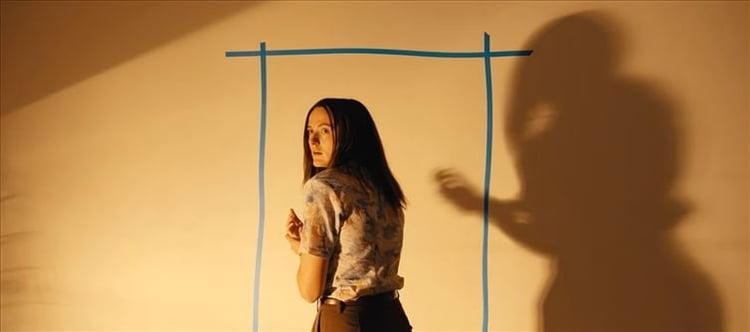
Mary's storyline complements these ideas through her self-help philosophy centered on opening new "windows" into life. Both characters are trapped in different ways, and the Complex forces them to confront truths they've spent years avoiding.
The film's strongest moments emerge when psychological horror and existential dread overlap.
This isn't simply a story about surviving a monster.
It's about surviving yourself.
What Works
✔ Chiwetel Ejiofor delivers a powerful and layered lead performance.
✔ Kane Parsons successfully preserves the unsettling spirit of the original internet phenomenon.
✔ Outstanding production design creates genuinely unforgettable liminal spaces.
✔ Atmosphere and tension remain consistently effective throughout.
✔ Exceptional sound design transforms ordinary environments into nightmare fuel.
✔ Smart thematic exploration of identity, loneliness, and self-delusion.
✔ Refuses to over-explain its central mystery.
What Doesn't Work
✘ Secondary characters feel underdeveloped.
✘ Some viewers may find the deliberately slow pacing frustrating.
✘ The psychological themes occasionally exceed what the script is equipped to fully explore.
✘ Certain narrative turns prioritize ambiguity over emotional clarity.
✘ Fans expecting constant creature encounters may leave disappointed.
Final Verdict
Backrooms isn't interested in delivering easy scares or conventional horror thrills. Instead, Kane Parsons crafts something far more unsettling—a slow-burning descent into isolation, identity, and existential dread wrapped inside one of the internet's most fascinating modern myths.
The film occasionally struggles with characterization and can become lost within its own ambitions, but those shortcomings are outweighed by its remarkable atmosphere, haunting imagery, and unwavering commitment to psychological terror.
Like the endless corridors it depicts, Backrooms lingers long after you've left it behind. It may not answer every question, but that's precisely what makes it so effective.
Bottom Line
Kane Parsons proves that some nightmares are best left unexplained, delivering a chilling, atmospheric horror experience that transforms internet folklore into genuinely unsettling cinema.
 click and follow Indiaherald WhatsApp channel