


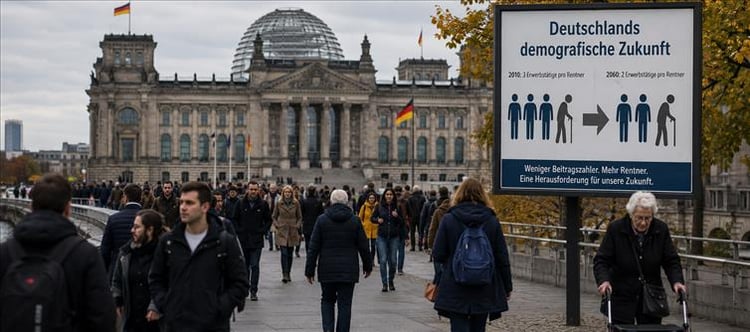

For decades, germany has been one of Europe’s economic powerhouses. But beneath the strength of its industries, exports, and world-class infrastructure, a demographic storm has been quietly gathering force. The numbers are simple, yet their implications are staggering.
Back in 2010, germany had roughly three people of working age supporting every citizen aged 65 or older. It was a ratio that helped sustain pensions, healthcare systems, and public services without overwhelming pressure. Fast forward to 2060, and that balance is expected to shift dramatically. There will be only two working-age people for every person over 65.
At first glance, the change may seem minor. In reality, it signals a profound transformation that could reshape the country’s economic and social future.
A smaller workforce means fewer taxpayers contributing to public finances. At the same time, a growing elderly population will require more pension payments, healthcare services, and long-term care support. The result is a mounting challenge: more people drawing from the system while fewer people are paying into it.
This demographic shift is not just about statistics. It raises difficult questions about retirement ages, labor shortages, immigration policies, productivity, and the sustainability of social welfare programs. Businesses may struggle to find workers, governments may face tougher budget decisions, and younger generations could shoulder a heavier financial burden.
germany is not alone in facing this challenge, but it stands as one of the clearest examples of how aging populations can transform advanced economies. The countdown has already begun. The real question is whether policymakers, businesses, and society can adapt quickly enough before the demographic imbalance becomes one of the defining economic battles of the century.
 click and follow Indiaherald WhatsApp channel