


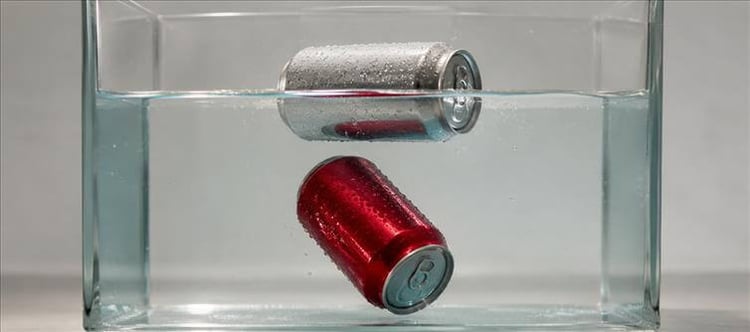

At first glance, a can of Diet Coke and a can of regular Coke look almost identical. Same size. Same shape. Same fizzy drink inside.
But drop them into a container of water, and suddenly physics steals the show.
One can float gracefully near the surface. The other sinks like a stone.
Sounds like a magic trick, right?
Not even close.
The secret is hiding in something most people never think about... density.
A standard can of regular Coke contains a surprisingly large amount of sugar. We're talking about nearly 39 grams packed into a single can. That extra sugar adds weight without significantly increasing the can's volume, making the entire can denser than water.
And when something is denser than water, there's only one direction it can go.
Down.
Diet Coke, however, plays by a completely different rulebook.
Instead of being loaded with sugar, it uses tiny amounts of artificial sweeteners to achieve a similar taste. The result? The can weighs slightly less overall and ends up being less dense than water.
And when an object is less dense than water?
It floats.
What's fascinating is that the difference is almost invisible to the naked eye. Pick up both cans, and most people won't immediately notice anything unusual. Yet that small change in ingredients completely alters how they behave.
It's one of those rare science demonstrations that feels like a party trick, a classroom experiment, and a reality check all rolled into one.
The next time someone says science is boring, hand them two cans of Coke and a bucket of water.
Sometimes the most mind-blowing lessons are hiding in plain sight... right inside your refrigerator.
 click and follow Indiaherald WhatsApp channel