



Sardar 2 Review: Spy Thriller? More Like Spy Torture
Story
Sardar 2 picks up the spy-action template and places Sardar and his son in a new high-stakes mission. Without getting into spoilers, the story revolves around their attempt to stop SJ Suryah’s character, who is planning to unleash a dangerous form of biological warfare. Their mission eventually becomes a race against time to deactivate a deadly machine and prevent what the film describes as an antibiotic apocalypse.
The basic premise has enough ingredients for a gripping espionage thriller, but the problem lies in the execution. The narrative introduces Agent Walrus, mission DOKU, biological warfare and an elaborate multi-stage operation, yet none of these elements develops into a genuinely exciting or convincing thriller. What could have been an intelligent spy adventure instead becomes an increasingly exhausting series of missions, puzzles and action set pieces.
Performances
Karthi remains dependable in the dual role of Sardar and his son. He brings the required sincerity and energy to both characters, and there are no major complaints about his performance. Unfortunately, the writing does not provide him with enough material to produce a memorable performance. Despite playing two roles, Karthi is not given a single standout sequence that truly allows either character to leave a lasting impression.
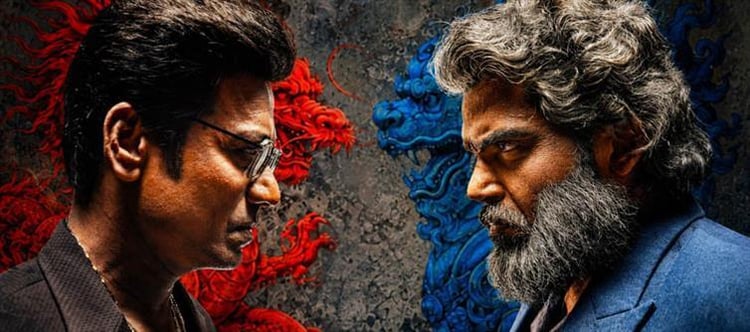
SJ Suryah gets the most prominent supporting role as the antagonist, but the character is written with such exaggerated villainy that his presence quickly becomes irritating. His performance is extremely loud and theatrical, making the antagonist feel more like an outdated caricature than a threatening modern villain. The seriousness with which the film presents his character only makes some of his scenes unintentionally funny.
Malavika Mohanan has an important role connected to the central mission, but the character never develops enough emotional or dramatic weight. Rajisha Vijayan, Yogi Babu, and the rest of the familiar supporting cast also fail to make a significant impact. Ashika Ranganath, in particular, gets very little to work with, and her role barely registers in the overall narrative.
Technicalities
Sam CS handles the music, but the film does not feature songs, leaving the background score to carry most of the musical responsibility. Unfortunately, the BGM often feels dated and fails to generate the necessary tension during crucial sequences. Instead of elevating the action or suspense, it frequently adds to the film's exhausting atmosphere.
George C Williams’ cinematography is functional but rarely impressive. Considering the scale of the spy-action narrative, the film needed a more visually striking treatment. The international settings and action sequences offer opportunities for strong visuals, but the camera work seldom turns them into memorable cinematic moments.
Vijay Velukutty’s editing is one of the film’s major problem areas. The second half desperately needed a much sharper and more ruthless edit. Several sequences are stretched far beyond their natural duration, making the narrative feel repetitive and unnecessarily lengthy. A tighter cut could have significantly improved the overall experience.
The production values from Prince Pictures and Ivy Entertainment are adequate for the scale of the film, but the visual effects and CG work are noticeably below the standard expected from a big-screen spy thriller. Some of the action sequences lose their intended impact because the visual effects do not convincingly support what is happening on screen.
Analysis
The first half starts with some promise. The search for Agent Walrus eventually leads the characters toward mission DOKU, giving the narrative a sense of mystery and purpose. One positive aspect is that the director stays focused on the central mission rather than filling the screenplay with unnecessary subplots.
However, staying focused on a plot is not enough when the execution fails to generate excitement. The Japan episode is a prime example. The military plane sequence, particularly the portions involving Karthi and Malavika performing mid-air stunts and jumping from planes, is presented with complete seriousness but ends up looking unintentionally hilarious. The action choreography lacks the realism and impact required to make these moments thrilling.
There is a brief emotional track involving children, but it does not create the desired impact. Karthi’s flashback portions as the younger Sardar, Agent Bose, also fail to generate the emotional or dramatic weight expected from an important backstory. Similarly, Malavika’s attempt to deactivate the dangerous machine does not produce the tension the scene desperately needs.
The director clearly appears committed to telling a straightforward spy-action story, and that sincerity is visible throughout. But the screenplay repeatedly asks the audience to accept increasingly implausible situations without providing enough excitement, logic, or emotional investment to make them work.
The second half makes matters considerably worse. SJ Suryah sends Sardar on a mission to locate DOKU, resulting in a long sequence where the protagonist moves through different floors, solving one puzzle after another before finally reaching the machine. In theory, this could have been designed as an engaging action-thriller set piece. In practice, the logic behind the entire setup is so flimsy that the sequence becomes more tiring with every passing stage.
The film also struggles badly with pacing. Instead of building momentum toward the climax, the screenplay keeps extending the mission. The pre-climax and climax are stretched to such an extent that whatever patience the audience has left is thoroughly tested. Yogi Babu’s brief comedy does not provide meaningful relief, while the extended aerial fight involving SJ Suryah and both Karthi characters becomes particularly exhausting.
The biggest disappointment is that Sardar 2 rarely delivers the adrenaline that its genre demands. A spy thriller can survive implausibility if it compensates with style, suspense, emotion, or sheer entertainment value. Unfortunately, the film does not consistently deliver any of these. The result is a serious-looking action film that frequently becomes unintentionally funny.
What Works
✅ Karthi is sincere and dependable in both roles.
✅ The screenplay remains focused on the central spy mission.
✅ The first-half setup involving Agent Walrus and mission DOKU creates some initial curiosity.
✅ The film attempts to maintain a serious espionage tone throughout.
✅ The basic biological-warfare premise has the potential for a compelling thriller.
What Doesn’t Work
❌ The execution is extremely silly despite the film taking itself very seriously.
❌ Several action sequences are unintentionally laughable.
❌ The Japan and military-plane portions lack convincing choreography and visual impact.
❌ SJ Suryah’s villain is excessively loud, outdated, and irritating.
❌ The supporting characters are poorly developed.
❌ The background score feels dated rather than thrilling.
❌ The cinematography rarely creates a sense of scale.
❌ The CG work is below expectations.
❌ The second half is painfully long and repetitive.
❌ The multi-floor DOKU mission tests the audience’s patience.
❌ The pre-climax and climax are unnecessarily stretched.
❌ The film lacks a genuinely thrilling spy-action set piece.
❌ Logic takes a back seat to increasingly implausible situations.
❌ By the end, the film feels more exhausting than entertaining.
Verdict
Sardar 2 has the ingredients of a potentially engaging spy thriller but fails to convert its premise into compelling cinema. Karthi puts in a sincere effort, but the writing and execution leave him with very little to showcase. The film’s serious treatment of its increasingly absurd situations creates unintentional humour, while the weak villain, dated BGM, average visuals, and overlong second half further drag down the experience.
The biggest issue is not that Sardar 2 is ambitious; it is that the ambition is not backed by convincing writing or execution. The film keeps escalating its missions and action sequences, but the excitement never rises proportionately. Instead, the running time feels longer with every passing minute.
In the end, Sardar 2 turns what should have been a thrilling father-son spy adventure into a long, tiring, and frequently unintentionally funny mission. The first Sardar had enough novelty and entertainment value to make its world work. The sequel, unfortunately, struggles to justify its own existence.
Ratings: 2/5
India Herald Percentage Meter: 40%
Bottom Line
Sardar 2 is a serious spy thriller that accidentally turns into a comedy of implausibility — a long mission that tests patience more than it delivers thrills.
 click and follow Indiaherald WhatsApp channel