


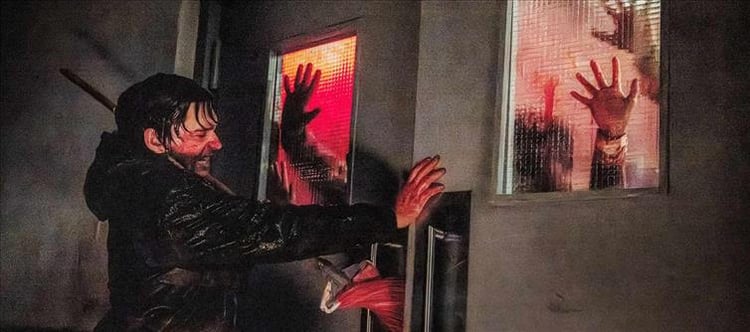

Resident Evil Movie Review: Zach Cregger Turns Capcom’s Nightmare Into A Gorgeously Gruesome Horror Ride
Zach Cregger’s Resident Evil takes a fascinatingly risky approach to one of gaming’s most recognizable horror franchises. Rather than attempting another faithful recreation of the games’ sprawling mythology, familiar heroes and elaborate continuity, Cregger chooses to capture something arguably more important—the feeling of playing a Resident Evil game. The result is a lean, nasty, and frequently inventive horror movie that feels less like a conventional video-game adaptation and more like a filmmaker having a terrifyingly good time inside the franchise’s DNA.
Story: A Simple Journey Into Something Very Sinister
The story follows Bryan, played by Austin Abrams, a medical courier whose already complicated life takes an unexpected turn when he discovers that his girlfriend is pregnant. Struggling to process the news and facing his own existential crisis, Bryan accepts a last-minute assignment to deliver a mysterious package to Raccoon City General Hospital.
What initially appears to be a routine delivery becomes a nightmare when Bryan’s journey through the mountains takes a horrifying turn after a wandering woman is struck by his car. From there, the film gradually transforms into a survival nightmare, with Bryan moving from one dangerous location to another while encountering increasingly disturbing creatures, mutations, and gruesome situations.
The narrative deliberately resembles the progression of a video game. Every new location feels like another level, while new enemies, discoveries, and increasingly grotesque threats keep appearing along the way. The story itself remains relatively straightforward, but that simplicity works because Cregger is far more interested in creating an escalating horror experience than constructing an enormous mythology.
Performances: Austin Abrams Holds The Madness Together
Austin Abrams is the film’s emotional anchor. Bryan could easily have become an irritating protagonist because of some of the questionable decisions he makes, but Abrams gives the character enough vulnerability and humanity to make those choices believable.
His performance also helps the movie navigate its strange mixture of horror, comedy, and emotional darkness. Bryan can be genuinely frightened one moment, hilariously clueless the next, and unexpectedly moving when the situation becomes more personal. Abrams understands exactly how much realism the increasingly outrageous story needs.
Paul Walter Hauser, Kali Reis, and Zach Cherry also make memorable impressions. Their characters are intentionally less developed than Bryan, functioning more as colorful personalities encountered during his increasingly bizarre journey. Nevertheless, each actor brings enough personality to make their appearances count.
Technicalities: Cregger Turns Gore Into Visual Storytelling
This is where Resident Evil really flexes its muscles. Zach Cregger’s direction demonstrates a strong understanding of how horror can be created through anticipation, composition, and grotesque imagery rather than simply relying on jump scares.
The cinematography frequently gives the environments an oppressive quality, making forests, corridors, hospitals, and other seemingly ordinary locations feel threatening. Cregger's imagery has a tactile quality, with the movie repeatedly finding new and unpleasant ways to make its monsters and mutations feel physically disturbing.
The creature work is another major strength. Instead of simply reproducing the familiar zombies from the games, the film creates its own collection of grotesque threats. That decision gives Cregger considerable freedom to surprise even viewers who know the games inside out.
The horror also benefits from carefully controlled pacing. The film knows when to slow down and build tension before unleashing another burst of violence. Its bloodier sequences are often deliberately excessive, but they are staged with enough visual creativity to feel like part of the film's personality rather than empty gore.
Humour: Gallows Comedy Keeps The Horror From Becoming Heavy
One of the movie’s biggest surprises is how funny it can be. Cregger injects the story with a distinctly dark sense of humor, particularly through Bryan’s reactions to increasingly ridiculous circumstances.
The comedy never completely destroys the horror because the film understands that absurdity can actually make terrifying situations more uncomfortable. Bryan’s occasional stupidity becomes part of the entertainment, while the movie's willingness to suddenly undercut a frightening moment with a ridiculous reaction gives it a personality of its own.
The climactic enthusiasm of “Yeah! Video games!” is exactly the sort of bizarre moment that could become an instant audience favorite.
Analysis: This Is A Resident Evil Movie Without Trying To Be One
The smartest decision here is what Cregger chooses to leave out. There is comparatively little obsession with explaining every piece of Resident Evil mythology. Rather than stuffing the screenplay with recognizable names and lore references, the filmmaker focuses on the franchise's fundamental mechanics.
Exploration. Isolation. Resourcefulness. Enemy encounters. Environmental storytelling. Discovering something horrifying around the next corner. Finding a temporary moment of relief before another threat appears.
In that sense, the movie understands the games on a deeper level than a simple recreation of their plots would have allowed. It recreates the experience rather than the continuity.
Longtime fans expecting Leon Kennedy, Chris Redfield, or a familiar parade of recognizable characters may find the approach frustrating. But something is refreshing about a filmmaker refusing to treat an established franchise like a checklist of references.
The film also feels strongly influenced by classic horror cinema, particularly the kind of atmospheric, practical, and occasionally outrageous filmmaking associated with John Carpenter and Sam Raimi. Yet it doesn't simply imitate those filmmakers. Cregger's own fingerprints remain obvious, particularly in the strange humor, unsettling imagery, and sudden tonal pivots.
What Works
✅ Zach Cregger’s direction — Confident, inventive, and unafraid to take major creative liberties.
✅ Austin Abrams — Provides the emotional grounding the deliberately simple story requires.
✅ Creature design — Disturbing, inventive, and frequently very different from the expected Resident Evil imagery.
✅ Video-game structure — The progression through locations and enemy encounters successfully recreates the feeling of gameplay.
✅ Practical horror and gore — The film embraces gruesome imagery rather than playing it safe.
✅ Gallows humor — Gives the movie a distinctive personality without completely undermining the scares.
✅ Atmosphere — Dark environments and escalating tension create a genuinely oppressive horror experience.
✅ Originality — It feels like a Resident Evil movie without becoming trapped by the franchise's established continuity.
What Doesn't Work
❌ Limited character development — Several supporting characters feel more like memorable stops on Bryan's journey than fully developed people.
❌ Simple narrative — Viewers looking for a complicated mythology-driven story may find the plot surprisingly thin.
❌ Some tonal whiplash — The increasingly goofy elements, particularly toward the finale, may clash with the film's darker stretches.
❌ Fan-service restraint — Hardcore fans expecting recognizable heroes, monsters, and lore references could be disappointed.
❌ Occasional questionable decisions — Bryan's choices are usually justified by Abrams' performance, but not every decision will work for every viewer.
The Final Act Takes A Wild Turn
The final stretch pushes the film further into Sam Raimi territory, mixing grotesque violence, absurd humor, and genuine bleakness. It is arguably the movie's biggest tonal gamble.
For some viewers, the shift may feel abrupt after the comparatively grounded horror of the earlier portions. Yet it also makes sense within Cregger's overall philosophy. Resident Evil is not trying to maintain a single conventional horror tone. It wants to replicate the bizarre emotional roller coaster of a game where terror, absurdity, discovery, and sudden bursts of triumph can exist within the same experience.
The ending may divide audiences, but it certainly refuses to play safe.
What Resident Evil Gets Right About The Games
The film's greatest achievement is understanding that Resident Evil was never solely about zombies or laboratory conspiracies. The appeal has always involved the sensation of entering an unfamiliar space, knowing something is wrong and slowly discovering just how wrong things really are.
Cregger translates that sensation remarkably well. The movie repeatedly gives viewers the feeling that the next room, corridor, or location could contain something horrible. Even when the audience knows a confrontation is coming, the uncertainty surrounding exactly what is waiting creates tension.
It is essentially a horror game translated into cinematic language without literally turning the movie into a game.
Verdict
Resident Evil is a bold reinvention rather than a traditional adaptation. It doesn't attempt to satisfy every corner of the fanbase, and that may ultimately be its greatest strength. Instead of mechanically recreating beloved game moments, Zach Cregger extracts the atmosphere, mechanics, and emotional rhythm of the franchise and filters them through his own filmmaking sensibilities.
The result is bloody, funny, strange, bleak, and frequently horrifying. It isn't perfect, and its tonal shifts won't work for everyone, but there is far more personality here than in a conventional franchise adaptation.
For longtime players, it may initially feel like the movie is deliberately ignoring what they know. But once it becomes clear that Cregger is trying to recreate how Resident Evil feels rather than what Resident Evil is, the approach starts making considerably more sense.
Bottom Line
A bloody, bizarre, and brilliantly nasty reinvention that understands Resident Evil is less about the lore—and more about the fear of opening the next door.
 click and follow Indiaherald WhatsApp channel