


Heart diseases are among the most common health concerns worldwide. While the thought of a “blocked artery” once meant a high-risk, open-heart surgery, modern medicine has transformed cardiac care. One of the most advanced treatments that has emerged is Laser Angioplasty — a minimally invasive procedure designed to clear blocked arteries quickly and effectively.
🩺 What Exactly Is Laser Angioplasty?
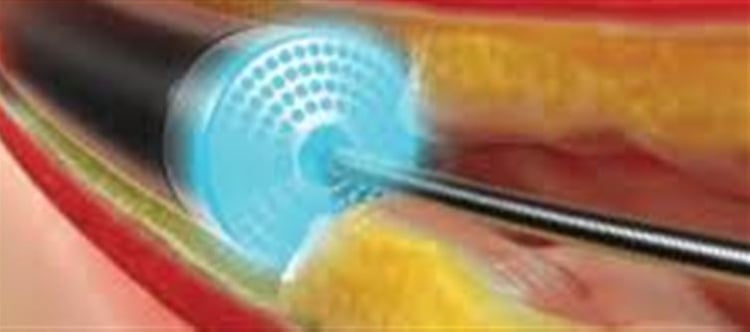
Laser angioplasty is a specialized form of angioplasty that uses a tiny laser attached to a catheter (a thin, flexible tube) to open up blocked or narrowed arteries.
· The laser emits high-energy light pulses that help vaporize the plaque buildup (a mix of fat, cholesterol, and calcium) inside the arteries.
· Once the blockage is cleared, normal blood flow is restored, significantly reducing the risk of heart attacks or chest pain (angina).
⚙️ How Does the Procedure Work?
1. Insertion of Catheter:
The doctor inserts a small catheter into the affected artery, usually through the leg or arm.
2. Laser Activation:
A laser fiber at the tip of the catheter emits controlled bursts of light energy to dissolve or vaporize the plaque.
3. Angioplasty and Stenting (if needed):
After laser treatment, a balloon angioplasty or stent placement may follow to keep the artery open.
4. Recovery:
Since it’s a minimally invasive procedure, patients often recover much faster compared to open-heart surgeries.
⚡ Why Is Laser Angioplasty Faster and More Effective?
· Precision: The laser targets the exact area of blockage without damaging the surrounding tissue.
· Speed: The plaque is vaporized within seconds, restoring blood flow quickly.
· Reduced Complications: There’s less bleeding, pain, and tissue trauma compared to traditional surgical methods.
· Shorter Hospital Stay: Most patients can return home within 24–48 hours.
❤️ Who Can Benefit From Laser Angioplasty?
This procedure is especially useful for patients who:
· Have hard or calcified blockages that are difficult to treat with standard angioplasty.
· Suffer from peripheral artery disease (PAD) in the legs.
· Have diabetes-related arterial complications.
· Have already undergone previous angioplasty or bypass surgery but still face re-narrowing (restenosis).
🧠 Aftercare and lifestyle Tips
Even after a successful laser angioplasty, long-term heart health depends on your daily habits.
· Eat a heart-healthy diet rich in fruits, vegetables, and whole grains.
· Exercise regularly, as advised by your cardiologist.
· Avoid smoking and limit alcohol intake.
· Manage stress and get regular heart check-ups.
💬 In Summary
Laser Angioplasty is a groundbreaking advancement in heart care, offering a faster, safer, and more precise way to clear blocked arteries. It not only restores blood flow but also gives patients a chance at a healthier, more active life — without the long recovery times of traditional surgery.
Disclaimer:
The views and opinions expressed in this article are those of the author and do not necessarily reflect the official policy or position of any agency, organization, employer, or company. All information provided is for general informational purposes only. While every effort has been made to ensure accuracy, we make no representations or warranties of any kind, express or implied, about the completeness, reliability, or suitability of the information contained herein. Readers are advised to verify facts and seek professional advice where necessary. Any reliance placed on such information is strictly at the reader’s own risk.
.jpg)
 click and follow Indiaherald WhatsApp channel