




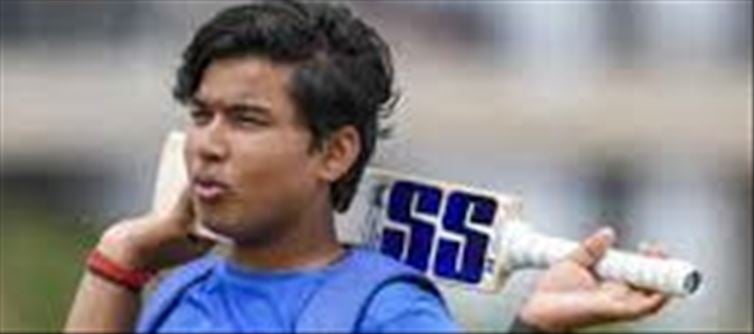
Vaibhav Suryavanshi, a 15-year-old left-handed opener from Bihar, has been named in India's T20I squad for the 2026 Ireland series, per BCCI's official squad announcement. If he features in the 2nd T20I, he could become one of the youngest players ever capped by India — a story that offers both a blueprint and a cautionary framework for young cricketers nationwide.
The 5W+H: Who, What, When, Where, Why, How
- Who: Vaibhav Suryavanshi, a 15-year-old left-handed batting prodigy from Bihar, named in India's T20I squad per BCCI's official announcement.
- What: Suryavanshi could make his international debut in the 2nd T20I against Ireland, potentially becoming one of the youngest India cricketers ever.
- When: During the India vs Ireland T20I series in 2026.
- Where: The 2nd T20I of the IRE vs IND series, played in Ireland.
- Why: Suryavanshi's extraordinary performances in age-group cricket and the IPL earned him a call-up to the senior India squad.
- How: Through consistent run-scoring in Under-19 cricket and a record-noted IPL auction selection, Suryavanshi caught selectors' attention and was named in the T20I squad.
Picture this. A boy — not yet old enough to drive a car — walks out to bat in international cricket, wearing the India cap. Not in a dream. Not in a Bollywood script where the interval card is about to drop. In a real, televised T20 International, against a real opposition, with the whole country watching.
That boy could be Vaibhav Suryavanshi. He is fifteen years old. And if he takes the field in the 2nd T20I against Ireland in 2026, he could become one of the youngest cricketers in history to represent India — a country where millions of children pick up a bat before they pick up a pencil, and where the odds of actually making it to the top are, to put it mildly, extraordinarily slim.
A note on sourcing and the subject's age: Suryavanshi is a minor. India Herald's coverage is confined strictly to publicly available sporting facts — his squad selection as announced by the BCCI, his documented performances in officially sanctioned cricket, and his IPL auction record as reported by ESPNcricinfo and the IPL's official records. No private or personal details beyond publicly reported sporting information are included. His inclusion in this article is justified by the strong public interest in a national team selection, a standard recognised under Indian press norms.
Key Takeaways
- Vaibhav Suryavanshi, 15, has been named in India's squad for the T20I series against Ireland in 2026, per the BCCI's official squad announcement. If selected in the playing XI, he could become one of the youngest India internationals ever.
- Hailing from Bihar — not a traditional cricketing powerhouse — his rise signals a broadening of access in Indian cricket, partly driven by IPL scouting networks.
- His IPL auction selection as one of the youngest-ever players, as documented by ESPNcricinfo, preceded his international call-up, underscoring how the league has become a fast-track pathway.
- Cricket history shows prodigies face immense competitive and public pressure; how India's team management handles his development will be a defining test.
- For young dreamers, Suryavanshi's story suggests that talent combined with relentless training can overcome geography — but also that patience, protection, and support systems matter enormously.
The Numbers That Made the Selectors Sit Up
Suryavanshi's rise has been rapid. According to ESPNcricinfo's player profile and match records, he was a standout in India's Under-19 setup, scoring runs at a tempo that drew attention from selectors, scouts, and IPL franchise owners. His left-handed batting style — aggressive, clean, with a shot selection that impressed observers given his age — drew comparisons to players with far more experience. When the IPL auction came around, he was picked up at a notably young age, a fact documented in the IPL's official auction records and widely reported by ESPNcricinfo and Cricbuzz.
What separates Suryavanshi from many talented teenagers who flicker and fade in Indian cricket: he did not merely survive the IPL spotlight — he competed in it. Match reports from ESPNcricinfo noted his composure in high-pressure situations and his ability to build an innings rather than simply swing from ball one.
What Bihar Means in This Story
India's cricket infrastructure, for all its depth, has always tilted toward certain states. Maharashtra, Karnataka, Tamil Nadu, Delhi — these are the traditional assembly lines. Bihar, by contrast, has produced a handful of notable cricketers, but has never been a factory. The grounds are fewer, the coaching less structured, the pathways less mapped, as multiple reports in The Indian Express and Sportstar have documented over the years. For Suryavanshi to emerge from this landscape is not just impressive; it is a quiet signal of change. It tells young cricketers in Patna, in Muzaffarpur, in Gaya, that the dream is no longer reserved for postcodes with gleaming academies. That part of his story deserves far more attention than it typically receives.
The Weight of International Debut at Fifteen
Let us be honest about the competitive pressure, because glossing over it would be dishonest. Fifteen is very young for international sport. There are fast bowlers in opposition ranks who have been playing professionally for a decade, fielding captains who will try to unsettle a debutant with words and body language, and — perhaps most daunting of all — millions of social media opinions that arrive in real time, many of them unkind.
Cricket history offers both hope and caution. Sachin Tendulkar, who debuted at 16 against Pakistan in 1989 — a fact documented exhaustively in Wisden and ESPNcricinfo's historical records — is the glittering exception. But for every Tendulkar, there are players whose early promise did not translate into sustained careers, in part because the support structures around them were insufficient. Sports science research, including studies cited by the International Cricket Council (ICC) in its player welfare guidelines, indicates that workload management and structured support for young athletes are now considered as important as technique development.
As of publication, the BCCI has not publicly commented on specific workload management or development plans for Suryavanshi. India Herald has reached out for comment; this article will be updated if a response is received. Similarly, no public statement from Suryavanshi's family or his IPL franchise regarding his international selection has been reported by major cricket outlets at the time of writing.
Why This Story Matters to Every Kid with a Bat
Here is what India Herald's read of this moment keeps returning to: Vaibhav Suryavanshi's potential debut is not just a cricket event. It is a cultural signal. In a country where roughly 300 million children are under fourteen, according to Census of India data, and where cricket is less a sport than a shared national passion, this teenager potentially walking out in India colours tells a very specific story — that age, geography, and pedigree are no longer the gatekeepers they once were. The IPL, for all its glitz and controversies, has functionally democratised access: if you can bat, bowl, or field at a certain level, the scouting network is now wide enough to find you, even if your home ground is a municipal park in Darbhanga.
For young dreamers — the eight-year-olds currently practising cover drives against compound walls, the eleven-year-olds waking at five to hit balls before school — Suryavanshi is evidence that the system can work. Not always. Not easily. But sometimes, and that sometimes is everything when you are a child.
What Comes Next — The Test That Really Matters
The debut, if it happens, will generate a day of headlines. But in India Herald's assessment, the real story plays out over the next twelve to eighteen months. Will the team management shield Suryavanshi from overexposure, rotating him judiciously rather than locking him into every series? Will the IPL franchise that holds his contract manage his workload responsibly, or will commercial interests push a teenager beyond sustainable limits? And — most importantly — will the public, the media, and social media give a fifteen-year-old permission to fail? Because failure, at some point, is inevitable in any sporting career, and what defines a career is whether the structure around the player treats a lean patch as a learning curve rather than a crisis.
Watch for the signals: how India's coaching staff speak about him in press conferences, whether he is given lower-stakes matches before marquee series, and whether the narrative around him is allowed to remain one of patient development rather than instant superstardom. Those will tell you more about the future of Indian cricket than any single innings he plays.
A Note for Young Readers
If you are reading this and you are ten, twelve, fourteen — and you dream of playing for India — here is what Vaibhav Suryavanshi's story actually teaches, beyond the fairy tale:
One: Talent is necessary but not sufficient. By all publicly documented accounts, he trained with extraordinary dedication in officially structured programmes. Two: Geography is no longer destiny. The scouting system is wider than it has ever been. Three: The mental game matters as much as the physical one. Handling competitive pressure, coping with setbacks, staying grounded when attention intensifies — these are skills that can be developed. Four: Have people around you who support and protect you. A strong support system is, by every sporting account, central to a young athlete's journey.
And five, the one nobody tells you: it is okay if your dream takes longer. Suryavanshi at fifteen is extraordinary. Most great cricketers debuted in their twenties and had magnificent careers. The sprint is exciting; the marathon is where the real story lives.
Sources: BCCI official squad announcement; ESPNcricinfo player profiles and match records; IPL official auction records; Cricbuzz reporting; Wisden historical records; ICC player welfare guidelines; Census of India demographic data. This article covers a minor in the context of public-interest sports reporting. No private or unverified personal information is included.


By the Numbers
- Vaibhav Suryavanshi at 15 could become one of the youngest cricketers ever to represent India in international cricket, per BCCI squad records.
- Sachin Tendulkar debuted at 16 against Pakistan in 1989, per Wisden and ESPNcricinfo historical records.
- India has roughly 300 million children under fourteen, according to Census of India data.
Key Takeaways
- Vaibhav Suryavanshi, 15, has been named in India's T20I squad for the Ireland series per the BCCI's official announcement — if selected in the playing XI, he could become one of the youngest India internationals ever.
- Hailing from Bihar, his rise signals a broadening of access in Indian cricket, partly driven by IPL scouting networks reaching beyond traditional cricketing hubs.
- His IPL auction selection as one of the youngest-ever players, per ESPNcricinfo records, preceded his international call-up, highlighting the league's role as a fast-track pathway.
- As of publication, the BCCI has not publicly commented on workload management plans for the 15-year-old; no statement from his family or IPL franchise has been reported.
- For young dreamers, Suryavanshi's story suggests talent plus relentless training can overcome geography, but patience, protection, and structured support matter just as much.
Frequently Asked Questions
How old is Vaibhav Suryavanshi and when could he debut for India?
Vaibhav Suryavanshi is 15 years old and has been named in India's squad for the 2026 T20I series against Ireland, per the BCCI's official announcement. If selected in the playing XI for the 2nd T20I, he could become one of the youngest India cricketers ever.
Where is Vaibhav Suryavanshi from?
Suryavanshi hails from Bihar, a state not traditionally known as a cricket powerhouse, making his rise particularly significant for young cricketers from non-metro regions.
What records could Vaibhav Suryavanshi break with his India debut?
If he plays, Suryavanshi could become one of the youngest players ever to represent India in any format, approaching the benchmark set by Sachin Tendulkar, who debuted at 16 in 1989 according to Wisden records.
How did Vaibhav Suryavanshi get selected for India?
His performances in Under-19 cricket followed by a notable IPL auction selection — documented by ESPNcricinfo and IPL official records — caught national selectors' attention, leading to his inclusion in the senior T20I squad as announced by the BCCI.
What challenges does a 15-year-old face debuting in international cricket?
A teenage debutant faces immense competitive pressure including physical workload demands, intense public scrutiny, social media exposure, and the historical pattern of prodigies struggling without proper support structures. The ICC's player welfare guidelines recognise workload management for young athletes as critical. As of publication, the BCCI has not publicly detailed management plans for Suryavanshi.
 click and follow Indiaherald WhatsApp channel