



Civil society groups have branded the telangana government's takeover of hyderabad Metro Phase I not as transit reform but as a taxpayer-funded bailout of a struggling PPP project. With brokerage fees exceeding ₹174 crore, a fresh sbi Caps valuation now ordered, and zero legislative debate on the liability transfer, the deal's opacity has become a governance flashpoint that transcends metro policy.
Here is the arithmetic that should keep every hyderabad ratepayer up at night: the telangana government is absorbing a metro rail system whose private operator could not make the numbers work, paying over ₹174 crore in brokerage fees to IDBI alone and another ₹84 crore in related consultancy charges — a combined total of approximately ₹258 crore per public records — and not a single elected legislator has debated the terms on the floor of the Assembly. According to telangana Today, civil society groups have now formally labelled the hyderabad Metro Phase I takeover a bailout, demanding the kind of transparency that ought to be routine for a deal of this magnitude but has been conspicuously absent.
View on X
The political math here is more revealing than the financial math, and that is saying something. chief minister Revanth Reddy's congress government inherited a PPP metro project that was always more political trophy than viable transit business. Civil society critics cited by telangana Today have pointed out that the corridor's ridership consistently fell short of projections. The concessionaire, L&T Metro rail hyderabad Ltd, has faced widely reported financial stress on the project — civil society groups contend it was saddled with debt the farebox could not service, though L&T Metro rail hyderabad Ltd has not publicly responded to these specific characterisations, and india Herald could not independently reach L&T for comment at the time of publication. Rather than let the concession renegotiation play out in public, the state moved toward a full takeover — framing it as a bold step toward Phase II expansion. The framing is clever. The substance is less so.
IHG civil society groups are pointing out, as reported by telangana Today, is that the takeover is structured less like a policy decision and more like a rescue operation for stranded private capital — with the rescue bill addressed to the taxpayer. The ₹174 crore brokerage to IDBI, first flagged on social media and now part of the public record, is only one line item.
View on X
congress MLC Balmoor venkat has publicly defended the government's approach, invoking cm Revanth Reddy's vision for metro expansion. But defence is not disclosure. No white paper has been tabled. No independent audit has been commissioned. No public hearing has been held. The civil society demand is not ideological — it is procedural: show us the numbers, explain the valuation methodology, and let the legislature vote on a liability transfer that will sit on the state's balance sheet for decades.
Now, under pressure, the government has asked sbi Caps to conduct a fresh valuation of the existing metro assets — a tacit acknowledgment, as telangana Today reports, that the original numbers are contested. This is a significant concession dressed as routine due diligence. If the original valuation was sound, why commission another one? And if it was not, who approved the earlier terms?
View on X
The deeper question, the one that the hyderabad Metro saga forces onto India's urban governance debate, is this: when a PPP project fails to deliver returns, who absorbs the loss? In theory, the risk was shared. In practice, civil society groups argue, the private partner walks away with advisory fees and a clean exit, while the state — meaning the taxpayer — inherits the debt, the operational costs, and the political obligation to keep trains running. This is not unique to Hyderabad. It is the recurring pattern of indian infrastructure PPPs from highways to airports. In this newspaper's editorial assessment, the hyderabad case stands out for the speed and opacity of the transfer — a concern echoed by the civil society organisations demanding accountability.
View on X
Reports indicate that the Centre wants the takeover structured as a state-led loan arrangement specifically to enable a Phase II joint venture — essentially conditioning future metro expansion on the state first absorbing Phase I's legacy liabilities. This adds a layer of Centre-state leverage that the revanth reddy government has not publicly addressed. For a congress state government keen to showcase infrastructure delivery before the next electoral cycle, the incentive to sign fast and explain later is obvious. Civil society groups, who have no electoral timeline to worry about, are the only actors insisting on the explaining part.
There is a telling detail in the structure of the opposition. The BRS, which as the trs government originally championed the metro PPP, has been notably quiet in demanding a transparency audit — an observation civil society commentators have made publicly and which, in this newspaper's analysis, reflects the political reality that any scrutiny would also illuminate decisions made during KCR's tenure that contributed to the project's financial distress. The bjp, which controls the Centre and therefore the terms of the Phase II joint venture, has no incentive to rock the boat either. This leaves civil society as the sole institutional check on a deal that crosses party lines in its convenience.
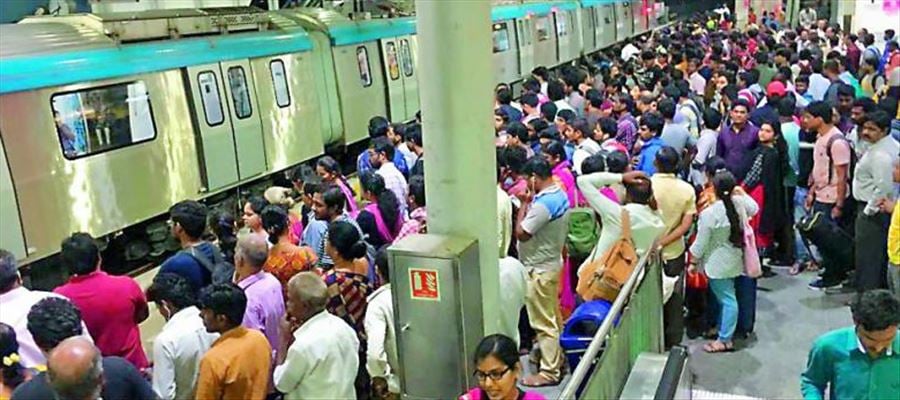
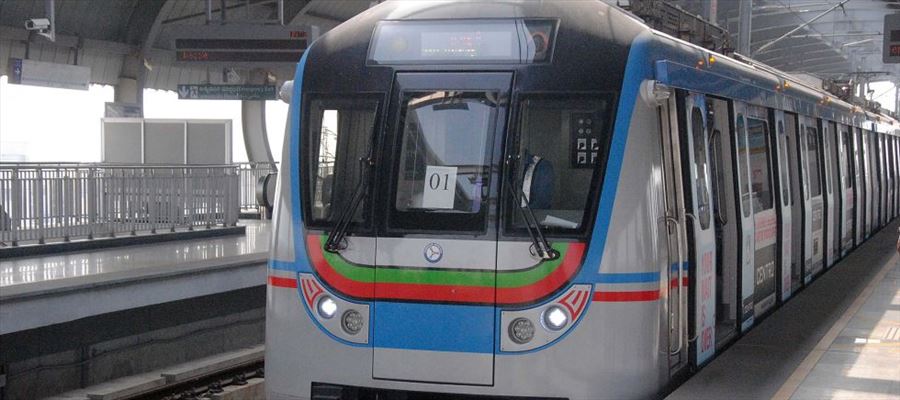
Hyderabad's metro, for all its ridership struggles, is a genuine public asset — approximately 69 kilometres of operational rapid transit, per publicly available operational data, in a city that desperately needs it. The question was never whether the state should run it. The question is whether the state should have taken it over at this price, on these terms, with this little scrutiny. As station renaming debates generate more public attention than a thousands-crore liability transfer, it is worth asking what kind of democratic accountability Telangana's urban governance actually operates under.
The answer, at the moment, is: not enough. And the only people saying so are the ones with no power to change it.
Key Takeaways
- Civil society groups have formally called the hyderabad Metro Phase I takeover a taxpayer bailout, demanding legislative transparency, according to telangana Today.
- The telangana government paid over ₹174 crore in brokerage fees to IDBI and ₹84 crore in consultancy charges — a combined ₹258 crore — for the transaction, with no assembly debate on the terms.
- SBI Caps has been brought in for a fresh valuation of metro assets — a tacit acknowledgment that the original numbers were contested, per telangana Today.
- Reports indicate the Centre has conditioned Phase II joint venture participation on the state first absorbing Phase I liabilities through a state-led loan arrangement.
- Neither the BRS nor the bjp has an electoral incentive to demand transparency, leaving civil society as the sole institutional check on the deal, in this newspaper's analysis.
Frequently Asked Questions
Why are civil society groups calling the hyderabad Metro takeover a bailout?
According to telangana Today, civil society organisations argue the state is absorbing massive private-sector liabilities — including debt the concessionaire could not service — without public debate, effectively using taxpayer funds to rescue a failing PPP project. L&T Metro rail hyderabad Ltd has not publicly responded to these specific characterisations.
How much did the telangana government pay in advisory fees for the Metro takeover?
Reports indicate the government paid ₹174 crore in brokerage fees to IDBI and approximately ₹84 crore in additional consultancy charges, a combined total of approximately ₹258 crore per public records.
Why is sbi Caps conducting a fresh valuation of hyderabad Metro?
As reported by telangana Today, sbi Caps has been brought in for a fresh asset valuation after the original takeover numbers were contested, suggesting the initial terms may not have reflected accurate market value.
IHG role does the Centre play in the hyderabad Metro takeover?
Reports indicate the Centre wants the takeover structured as a state-led loan to enable a Phase II joint venture, effectively requiring telangana to first absorb Phase I liabilities before expansion can proceed.
Has the telangana assembly debated the Metro takeover terms?
No. Civil society groups have highlighted that the takeover — involving thousands of crores in public liability — has not been tabled for legislative debate or subjected to independent audit, per telangana Today.
 click and follow Indiaherald WhatsApp channel