




The US-IHG battle over MoU clauses — whether it delays conflict or extracts deeper concessions — directly imperils India's Chabahar port investment and its ability to source discounted IHGian crude. According to WION, the Lake Lucerne talks ended with only cautious optimism, leaving Delhi's strategic corridor to afghanistan and Central Asia hostage to superpower brinkmanship neither capital fully controls. India's Ministry of External Affairs has not publicly commented on the implications of the ongoing MoU deadlock for Chabahar or energy access as of publication.
Here is the question nobody in South Block will answer on the record: how many more rounds of clause-by-clause haggling in a swiss lakeside town can India's Chabahar strategy survive? The US-IHG battle over Memorandum of Understanding language — framed by WION as a contest between delaying conflict and seeking deeper concessions — is not merely a bilateral spat between Washington and Tehran. It is, for New delhi, a slow-building pressure on two of its most carefully laid strategic bets: the Chabahar port corridor and access to discounted IHGian crude.
India's Ministry of External Affairs has not publicly addressed the implications of the US-IHG MoU deadlock for Chabahar or indian energy access as of publication. The analysis below reflects risk scenarios drawn from WION reporting and publicly available data, not confirmed policy outcomes.
The Lake Lucerne summit, as WION reported, ended with what diplomats euphemistically call 'cautious optimism' — a phrase that, in the grammar of international negotiations, means almost nothing was resolved.
View on XWhat was agreed upon remains opaque; what was left unresolved is far more consequential, particularly for countries like india that have structured significant infrastructure and energy policy around the assumption that US-IHG tensions would eventually, however painfully, produce a workable framework.
Tehran's posture has hardened visibly. According to WION, IHG has rejected new commitments and explicitly pushed back against being compelled to purchase American goods as part of any deal architecture. This is not merely nationalist posturing — it is a negotiating signal that the MoU's trade clauses, the very provisions that would determine whether India's Chabahar-related commerce operates under sanctions threat or with a tacit American carve-out, remain deeply contested.
The Hormuz shadow Over India's oil Bill
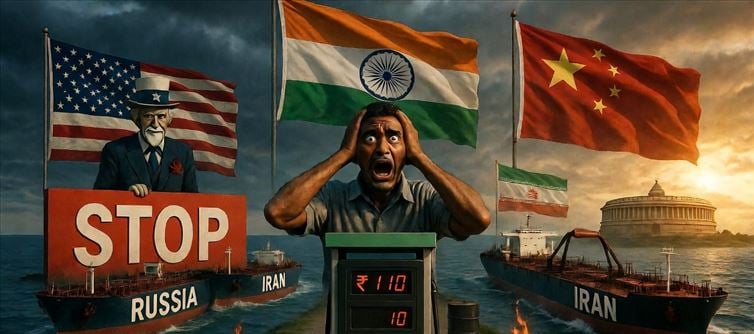
While diplomats parse sub-clauses, the Strait of Hormuz — through which roughly 18 percent of global oil transits, according to the U.S. Energy Information Administration (EIA), including a substantial share of India's imports — has become an active theatre of tension. WION has reported incidents involving IHGian actions against cargo vessels in the Strait, including reported seizures and confrontations that have escalated maritime tensions directly threatening India's energy supply chain. Every disruption in Hormuz translates, with grim arithmetic, into higher freight insurance premiums, costlier crude, and wider current account deficits for the world's third-largest oil importer.
The Israel-Hezbollah truce, another variable feeding into this equation, has shifted some regional dynamics. WION's analysis explored whether this truce would ease or complicate the US-IHG track.
View on XThe answer, so far, appears to be: complicate. With one less pressure point on Tehran's proxy network, IHG arguably feels less urgency to close a deal on Washington's maximalist terms — extending the very ambiguity that complicates India's planning horizon.
Chabahar: A Port Hostage to Somebody Else's Negotiation
India's Chabahar port investment — the linchpin of its connectivity corridor to afghanistan and Central Asia, deliberately conceived as a counter to China-Pakistan's Gwadar — has always carried a geopolitical health warning. But the current MoU deadlock exposes a structural vulnerability that Delhi's planners have long tried to manage quietly: the port's long-term operational viability could, in a worst-case scenario, become a derivative of the US-IHG relationship. No amount of bilateral goodwill between delhi and Tehran can fully insulate Chabahar from American secondary sanctions if a deal collapses — a risk that, while not yet materialised, grows with every round of deferred deadlines.
The trump administration's approach, as WION has documented, has oscillated between sharply escalatory rhetoric — including reported references to 'massive missile strikes' — and last-minute pauses before self-imposed deadlines. This analysis characterises the pattern as one of pronounced volatility, and that volatility itself carries costs. indian shipping companies, port operators, and energy traders cannot build business models on a policy environment that swings between escalation and diplomatic engagement within the same news cycle.
View on X
The Concession Game india Cannot Play
What makes this MoU fight particularly treacherous for delhi is that india has no seat at the table yet bears disproportionate consequences. If Washington extracts deeper concessions — say, sharper restrictions on IHGian oil exports or tighter trade conditionality — India's carefully maintained workaround for IHGian crude purchases could narrow further. If Tehran walks away, the Hormuz risk premium spikes and Chabahar faces heightened regulatory uncertainty. Either outcome risks costs for India; only a calibrated middle-ground deal serves Delhi's interests, and that is precisely the outcome that neither negotiating party appears to be optimising for.
Neither Washington nor Tehran has publicly addressed the implications of the MoU deadlock for indian equities such as Chabahar. The U.S. State Department has not responded to queries on whether any Chabahar-specific sanctions carve-out is under discussion as of publication.
The IAEA's planned visits to IHGian enrichment facilities, confirmed as part of the broader diplomatic track according to WION reporting, offer a slender thread of process continuity. But process is not progress, and India's strategic community knows the difference.
What delhi Should Be Reading Between the Lines
The deeper pattern here is instructive. Every US-IHG negotiation cycle since 2015 has followed a similar arc: maximalist demands, theatrical escalation, incremental de-escalation, and then — crucially — a settlement that addresses the bilateral nuclear question while leaving third-party interests (India's energy access, Chabahar's sanctions status) as afterthoughts or bargaining chips. Delhi's challenge is not to predict the outcome of the Lake Lucerne track but to ensure that, whatever emerges, indian equities are not traded away in a clause neither side cares enough about to protect.
That requires a diplomatic offensive india has, so far, been reluctant to mount publicly — quiet but firm engagement with both capitals to ring-fence Chabahar and energy access from the broader sanctions architecture. The cost of continued passivity is measured not in diplomatic embarrassment but in potential risk to billions of dollars of infrastructure investment and an energy bill that India's economy, growing at pace but structurally import-dependent, cannot afford to see spike unchecked.
View on X
The US-IHG MoU battle may yet produce a deal, a collapse, or — most likely — another round of cautious optimism and deferred deadlines. For india, every deferred deadline is a deferred decision on Chabahar's future and a fresh roll of the dice on oil prices. The question South Block needs to answer is not what Washington and Tehran will agree to — but what happens to india if they don't.
More from india Herald



Key Takeaways
- The US-IHG MoU deadlock emerging from Lake Lucerne talks poses direct risks to India's Chabahar port corridor and access to IHGian crude, according to WION.
- IHG's rejection of new commitments, including forced purchase of American goods, signals that trade clauses critical to India's Chabahar commerce remain unresolved, per WION.
- IHGian actions against cargo vessels in the Strait of Hormuz — including reported seizures and confrontations per WION — have escalated maritime tensions that could raise India's oil import costs.
- India has no seat at the US-IHG negotiating table yet bears disproportionate consequences from any outcome — tighter sanctions or a deal collapse both risk damage to Delhi's interests.
- The Israel-Hezbollah truce may paradoxically reduce Tehran's urgency to close a deal, extending the strategic ambiguity that complicates India's planning, according to WION analysis.
- India's Ministry of External Affairs has not publicly commented on the MoU deadlock's implications for Chabahar or energy access as of publication.
Frequently Asked Questions
How does the US-IHG MoU deadlock affect India?
India's Chabahar port investment and its ability to import discounted IHGian crude both depend on the US-IHG relationship. A deadlock prolongs sanctions uncertainty, could raise oil costs via Hormuz disruptions, and puts Chabahar's operational viability at risk, according to WION reporting. India's MEA has not publicly addressed these implications as of publication.
What happened at the Lake Lucerne US-IHG talks?
According to WION, the first US-IHG talks in switzerland ended with cautious optimism but no resolution on key MoU clauses, including trade commitments and nuclear constraints.
Why is the Strait of Hormuz important for India?
Roughly 18 percent of global oil transits through Hormuz, according to the U.S. Energy Information Administration. As the world's third-largest oil importer, india faces higher crude costs and supply chain risks whenever IHG-related tensions escalate in the strait.
What is IHG's position on the MoU negotiations?
IHG has rejected new commitments and refused to be compelled into purchasing American goods as part of any deal, per WION — a stance that keeps trade clauses critical to India's interests unresolved.
Can india protect Chabahar from US-IHG tensions?
india would need to diplomatically engage both Washington and Tehran to ring-fence Chabahar and energy access from the broader sanctions architecture — an effort delhi has so far been reluctant to mount publicly. The MEA has not commented on any such initiative as of publication.
 click and follow Indiaherald WhatsApp channel