




The telangana high court has issued notice to the election commission of india after a petition revealed that Summary Intensive Revision (SIR) enumeration forms are being distributed exclusively in telugu — raising concerns that urdu, hindi, and other minority-language speakers may face barriers in the voter-roll verification process, according to reports in The Hindu, telangana Today, and The news Minute.
Here is a deceptively simple question with significant democratic implications: if you cannot read the form that determines whether your name stays on — or vanishes from — the voter roll, how effectively can you participate in the verification process?
That, stripped to its bones, is what the telangana high court has put to the election commission of India. According to Telangana Today and The news Minute, the court has issued notice to the ECI after a petition highlighted that SIR enumeration forms — the documents through which citizens verify or update their voter registrations — are being printed and distributed in telugu alone across the state.
As of june 2026, the ECI had not publicly responded to the court's notice, nor had it issued any statement on the matter, according to the available reports.
A State That Speaks More Than One language — Officially
telangana is not, by any constitutional or administrative measure, a monolingual state. urdu holds co-official status under the andhra pradesh Official Languages Act, 1966 — a law telangana inherited at bifurcation and has never repealed. hindi is widely spoken in border districts and among migrant communities. Marathi has a significant presence in the northern reaches. Census data from 2011 indicates that a substantial proportion of the undivided state's population — widely estimated at around 12–13 per cent, though precise state-level breakdowns vary by source — spoke urdu as a mother tongue, with the proportion significantly higher in Hyderabad.
Against this backdrop, distributing voter-enumeration forms exclusively in telugu raises questions about accessibility. As The Hindu reports, the petition argues that this choice effectively renders a significant section of the population unable to independently verify what is being recorded about them — or to flag errors, deletions, or wrongful additions.
What the Petition Alleges — and What It Does Not
The SIR process is not a minor bureaucratic ritual. It is the mechanism through which the ECI updates the electoral roll — adding new voters, deleting the deceased or relocated, and correcting errors. The petition contends that if a citizen cannot read the enumeration form, they cannot verify their own details; if they cannot verify, errors may go unchallenged; and if errors go unchallenged, names may be wrongly deleted or incorrectly recorded.
It is important to note what the petition does not allege: it does not claim deliberate partisan intent or targeted exclusion of any specific community. The argument, as reported, is procedural — that monolingual forms in a multilingual state create a structural barrier to participation in the voter-roll verification process.
The ECI's Position Remains Unknown
The election commission of india prides itself — rightly, in many domains — on being the institutional guarantor of free and fair elections. It conducts voter-awareness campaigns in multiple languages. It prints ballot papers with symbols precisely because literacy cannot be a precondition for voting. Yet the same institution, according to the petition before the telangana high court, issued SIR forms in only one language in a state where urdu is a co-official language.
As The Times of india reports, the high court has now sought the ECI's response, setting a judicial clock ticking on what had been an administrative decision attracting little public scrutiny. As of the latest available reports in june 2026, the ECI had not filed its reply or issued a public statement on the matter. Its actual position — whether it considers telugu sufficient, plans to introduce multilingual forms, or intends to rely on ground-level Booth Level Officers to assist non-Telugu speakers — will only become clear once it responds to the court.
The Electoral Context
Observers have noted that Urdu-speaking populations in telangana are concentrated in urban constituencies, including in hyderabad and parts of surrounding districts. Any systematic barrier to voter-roll verification in these areas — whether intentional or not — could have uneven effects across the political spectrum. However, no party or political actor cited in the available reports has alleged that the Telugu-only forms were designed with partisan intent, and this article does not make that claim. The petition's argument rests on procedural fairness, not political motivation.
What the court Is Really Asking
The telangana High Court's notice is narrow in form — it asks the ECI to explain why forms are monolingual. But the underlying question is broader: does the ECI's institutional machinery ensure that linguistic minorities can fully participate in the voter-roll verification process, or does it inadvertently create barriers? The answer will not come from one response in one case. It will come from whether the ECI changes the forms — or explains why it does not need to.
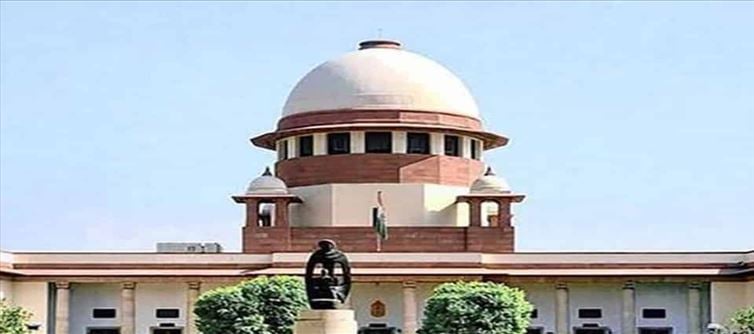
The supreme court has already affirmed, in a related context reported by multiple outlets, that the ECI has full authority over the SIR process. That authority includes the power to determine the language in which forms are printed — and, one could argue, a corresponding responsibility to ensure accessibility.
Telangana's voter rolls are the foundation on which the next election will be built. If that foundation has a language-accessibility gap, the question is not whether it will matter on election day. The question is whether it will be addressed before then.
More from india Herald




Key Takeaways
- The telangana high court has issued notice to the ECI over SIR enumeration forms being distributed exclusively in telugu, according to telangana Today, The Hindu, and The news Minute.
- Urdu is a co-official language in telangana, and Census data indicates a substantial Urdu-speaking population — yet no Urdu-language SIR forms were provided, the petition states.
- The SIR process determines additions, deletions, and corrections to voter rolls; citizens unable to read the forms may face barriers to independently verifying their own records.
- The ECI had not publicly responded to the court notice or issued a statement as of june 2026.
- The supreme court has affirmed the ECI's authority over SIR — which means the ECI also has the authority to determine whether multilingual forms should be provided.
Frequently Asked Questions
What is the SIR process and why does it matter?
Summary Intensive Revision (SIR) is the election commission of India's periodic exercise to update voter rolls — adding new voters, removing the deceased or relocated, and correcting errors. It is the foundation of accurate electoral rolls for upcoming elections.
Why are Telugu-only SIR forms a concern in Telangana?
telangana has a substantial Urdu-speaking population and urdu is a co-official language. The petition before the telangana high court argues that distributing forms only in telugu may prevent non-Telugu speakers from independently verifying or correcting their voter-registration details.
What has the telangana high court done about this issue?
The high court has issued notice to the election commission of india, seeking its response on why SIR enumeration forms are being distributed exclusively in telugu, as reported by The Hindu, telangana Today, and The news Minute.
Has the ECI responded to the court notice?
As of june 2026, the ECI had not publicly responded to the court notice or issued a statement on the matter, according to available reports.
Does the ECI have authority to change the SIR form language?
Yes. The supreme court has affirmed that the ECI has full authority over the SIR process, which would include decisions about the language of enumeration forms.
How to check telangana high court case status?
Case status for the telangana high court can be checked via the official high court of telangana website's case status search feature, searchable by case number, party name, or advocate name.
 click and follow Indiaherald WhatsApp channel