

-

Akhilesh Yadav
-
Assembly
-
Ayodhya
-
Bharatiya Janata Party
-
CM
-
Congress
-
court
-
Cow slaughter
-
District
-
Donald Trump
-
Election
-
Elections
-
Government
-
High court
-
House
-
Idea
-
India
-
Indian
-
Leader
-
local language
-
Lucknow
-
Madhya Pradesh - Bhopal
-
Mohan
-
Party
-
rahul
-
Rahul Gandhi
-
Rahul Sipligunj
-
ram mandir
-
ram pothineni
-
students
-
temple
-
Uttar Pradesh

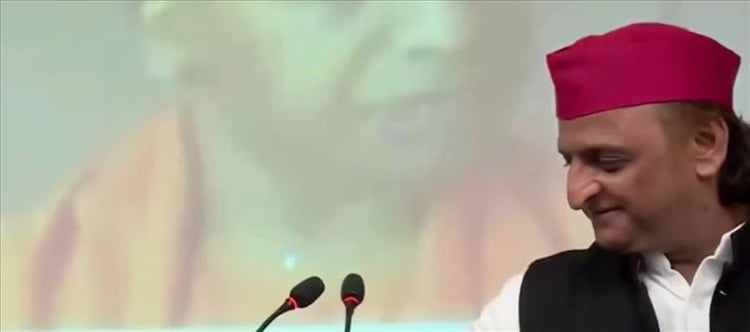
Akhilesh Yadav, speaking in Azamgarh, argued that the Uttar Pradesh government was compelled under public pressure to constitute an SIT into the Ayodhya Ram Mandir donation controversy, according to Dainik Jagran. The SP chief is reframing Ayodhya — BJP's crowning electoral symbol — as evidence of governance failure, a calculated line of attack ahead of the 2027 UP assembly elections.
The 5W+H: Who, What, When, Where, Why, How
- Who: Samajwadi Party chief Akhilesh Yadav, speaking at a public event, as reported by Dainik Jagran and ANI.
- What: Yadav claimed the UP government was forced under pressure to constitute an SIT after reports surfaced regarding the Ayodhya Ram Mandir donation controversy, according to Dainik Jagran.
- When: The remarks were made during Akhilesh Yadav's Azamgarh visit, as reported by ANI and Dainik Jagran in their current coverage cycle.
- Where: Azamgarh, Uttar Pradesh — Yadav's own parliamentary constituency and a key SP stronghold in Purvanchal.
- Why: Yadav framed the SIT as evidence that the BJP government acts only when cornered by public scrutiny, not out of governance commitment, according to Dainik Jagran.
- How: By citing the forced SIT constitution as a governance failure linked to BJP's most sacred political project — the Ram Mandir in Ayodhya — Yadav is attempting to neutralise the temple's electoral halo and convert it into an accountability issue, as reported by Dainik Jagran.
Akhilesh Yadav is using the forced Ayodhya SIT — constituted only after damaging reports surfaced publicly — to build a new line of attack against the BJP government in Uttar Pradesh, reframing the Ram Mandir not as a shrine of faith but as a ledger of unanswered questions. Speaking in Azamgarh, the Samajwadi Party chief told supporters that the government moved to constitute an SIT only because public pressure left it no choice, according to Dainik Jagran. The implication was unmistakable: if the ruling party cannot keep its own holiest project free of scandal, what does that say about its claim to governance?
View on X
Consider the political geometry. For a decade, Ayodhya has been BJP's single most powerful electoral totem — the one word that settled debates before they began, the one image that flattened every opposition argument about development, corruption, or caste. Every election cycle since the temple's consecration, it has been the trump card played when governance questions grew uncomfortable. Now, Akhilesh Yadav is attempting something that no opposition leader in Uttar Pradesh has tried with any real conviction: he is not attacking the temple or the faith — he is attacking the accounting.
That distinction matters more than it appears. According to Dainik Jagran, Yadav specifically pointed to the SIT's constitution as a reactive measure — one the government took not out of institutional commitment to transparency, but because reports about alleged irregularities in donation handling made silence politically untenable. His framing was deliberate: the SIT is not evidence of a responsive government, but of a government caught off-guard by its own backyard.
View on X
The choice of Azamgarh as the stage is no accident, either. This is Yadav's own parliamentary constituency, deep in the Purvanchal heartland where SP's Yadav-Muslim coalition has its strongest sinews. But Azamgarh is also a place where BJP has been making steady inroads, partly by leveraging the emotional resonance of Ayodhya. By raising the SIT issue here — not in Lucknow, not on social media, but from his own political home ground — Yadav is signalling to his base that the Ayodhya narrative is no longer untouchable. He is telling his cadre, as ANI's footage confirms, that the BJP's sacred cow now has an audit trail, and that trail leads to questions the ruling party would rather not answer.
This is a significant escalation in SP's rhetorical strategy. For years, the party's approach to the Ram Mandir issue was to either sidestep it or offer grudging acceptance — a survival tactic in a state where opposing the temple was electoral poison. What Yadav is doing now is more surgical. He is not questioning the temple; he is questioning the temple trust's governance. He is not attacking Lord Ram; he is attacking the men who handled Lord Ram's donations. The difference is the difference between political suicide and a viable opposition narrative.
The SIT itself, as reported by Dainik Jagran, was constituted after reports regarding alleged embezzlement of donations collected for the Ram Mandir came to light. The very fact that a special investigation team had to be formed — rather than existing institutional mechanisms being sufficient — suggests either that the scale of the alleged irregularities warranted extraordinary investigation, or that the political optics of inaction had become unbearable for the government. From the SP's perspective, both readings are useful.
Here is what makes this a 2027 play, not just a 2026 sound bite. Uttar Pradesh's next assembly election is the defining contest for both the BJP and the Samajwadi Party. The BJP's entire UP strategy since 2017 has rested on two pillars: Hindutva consolidation (with the Ram Mandir as its apex symbol) and welfare delivery. If the opposition can credibly taint the first pillar — not by challenging the faith, but by exposing governance failures within its institutional apparatus — the second pillar must bear all the weight. And welfare delivery, as every district magistrate in UP knows, is a far more contested, far more auditable, and far more vulnerable proposition than an emotional symbol.
Yadav's Azamgarh remarks also carry a caste arithmetic subtext. The Ram Mandir's political magic was, in part, its ability to transcend caste lines — to unite Brahmins, Thakurs, OBCs, and even some Dalit voters under a shared Hindu identity umbrella. If that umbrella now comes with a donation scandal attached, the cross-caste unity it represents becomes fragile. OBC and Dalit voters, who are far more responsive to governance and welfare arguments than to abstract symbolism, may find a donation embezzlement narrative easier to process than a theological one. Yadav, whose party's core constituency is precisely these voters, knows this arithmetic cold.
The BJP's response will be instructive. If the party treats the SIT as a demonstration of its own accountability — a sign that it investigates even its most cherished institutions — it can contain the damage. But if the investigation appears to stall, or if the SIT's terms of reference are perceived as narrow or performative, SP will have a ready-made narrative for every rally from now until 2027: they could not even keep Ayodhya clean.
What Akhilesh Yadav is really doing in Azamgarh is not opposing the Ram Mandir. He is doing something far more dangerous for the BJP: he is making Ayodhya ordinary. He is subjecting it to the same governance scrutiny that any government project — a highway, a hospital, a ration scheme — faces. And in that ordinariness lies the real threat. Because once Ayodhya is just another project where the audit does not add up, it is no longer a trump card. It is a liability.
The question that should keep BJP strategists awake is not whether the SIT will find wrongdoing. It is whether the SIT's very existence has already done the political damage — whether the forced investigation, regardless of its outcome, has permanently punctured the idea that Ayodhya is above politics. Because Akhilesh Yadav is betting that it has. And in Purvanchal's tea stalls, where elections are decided long before the votes are counted, that bet is already being discussed.


By the Numbers
- The UP government constituted an SIT to investigate the Ayodhya Ram Mandir donation controversy only after reports of alleged irregularities surfaced publicly, according to Dainik Jagran.
Key Takeaways
- Akhilesh Yadav, speaking in Azamgarh, claimed the UP government constituted the Ayodhya SIT only under public pressure — framing it as reactive governance, not proactive accountability, according to Dainik Jagran.
- The SP chief is separating the Ram Mandir as a site of faith from the Ram Mandir as a governance institution — attacking the donation handling, not the temple itself, a significant rhetorical escalation.
- The forced SIT's existence, regardless of outcome, may weaken Ayodhya's status as BJP's untouchable electoral trump card — converting it from a symbol of faith consolidation into an auditable government project.
- Azamgarh as the venue signals Yadav's intent to take this narrative into Purvanchal's caste-sensitive heartland, where OBC and Dalit voters respond more to governance failures than to emotional symbols.
- The 2027 UP assembly election is the real horizon — SP is building the argument that if BJP cannot manage Ayodhya's books, its larger governance claim is hollow.
Frequently Asked Questions
Why did Akhilesh Yadav raise the Ayodhya SIT issue in Azamgarh?
Azamgarh is Yadav's own parliamentary constituency in Purvanchal, a region where SP's core Yadav-Muslim coalition is strongest. Raising the Ayodhya governance issue here signals to his cadre that the Ram Mandir narrative is no longer untouchable and frames the SIT as proof of BJP's reactive governance, according to Dainik Jagran.
What is the SIT that Akhilesh Yadav referenced regarding Ayodhya?
According to Dainik Jagran, the Uttar Pradesh government constituted a Special Investigation Team (SIT) to look into alleged irregularities related to Ram Mandir donations after reports of the controversy became public. Yadav argued this was done under pressure, not voluntarily.
How does the Ayodhya SIT issue affect the 2027 UP assembly elections?
If SP can credibly frame the Ram Mandir donation controversy as a governance failure, it weakens BJP's most powerful electoral symbol and forces the ruling party to defend itself on accountability terms — terrain where the opposition has more room to operate, particularly among OBC and Dalit voters who prioritise governance over emotional symbolism.
Is Akhilesh Yadav opposing the Ram Mandir itself?
No. Yadav's strategy carefully separates the temple as a site of faith from the institutional handling of its donations. He is attacking the governance around the donations, not the temple or the religious sentiment — a distinction designed to avoid the political risk of appearing anti-temple while still creating an accountability narrative.
 click and follow Indiaherald WhatsApp channel