
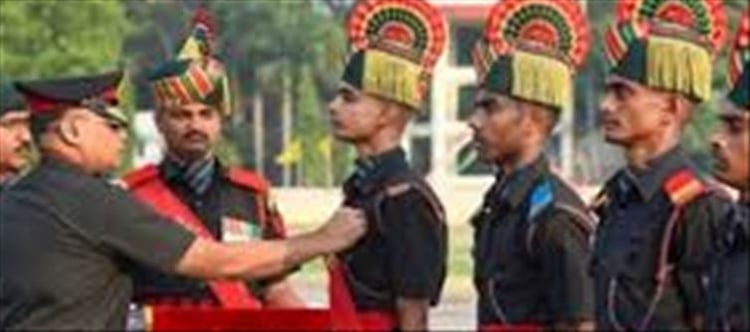


The Indian Army is restructuring its legacy Strike Corps into Integrated Battle Groups — self-contained units of 5,000–8,000 troops capable of deploying in 48 hours rather than three weeks, as reported by the Times of India. The shift directly responds to China's theatre-command reorganisation and represents the most disruptive change to Army command hierarchy since 1962.
The 5W+H: Who, What, When, Where, Why, How
- Who: The Indian Army, under Chief of Defence Staff oversight, restructuring legacy Strike Corps into Integrated Battle Groups (IBGs), according to the Times of India.
- What: Replacement of division-sized Strike Corps (each 30,000–40,000 troops) with modular IBGs of 5,000–8,000 troops integrating armour, infantry, artillery, air defence, and logistics into a single self-sufficient formation.
- When: The restructuring is underway in 2025–2026, with pilot IBGs already tested along the Line of Actual Control (LAC), as reported by the Times of India.
- Where: Primarily along India's northern borders with China — Ladakh, Sikkim, and Arunachal Pradesh — with implications across the western front with Pakistan.
- Why: China's People's Liberation Army has already reorganised into five theatre commands built for rapid, joint-force deployment; India's legacy Strike Corps, designed for plains warfare against Pakistan, take up to three weeks to mobilise — a timeline incompatible with a Himalayan two-front scenario.
- How: IBGs consolidate combined-arms capability into brigade-sized units pre-positioned near potential flashpoints, reducing mobilisation time from weeks to 48 hours, with integrated command structures bypassing the traditional Corps-Division-Brigade chain, according to the Times of India report.
Here is the number that should keep every Indian defence planner awake: three weeks. That is how long India's legacy Strike Corps — the armoured fists designed in the 1980s to punch deep into Pakistan's Sindh and Punjab — take to fully mobilise, assemble logistics, and move into battle positions. Three weeks in a world where China's People's Liberation Army, already reorganised into five theatre commands optimised for joint operations, can project credible force along the Line of Actual Control in a fraction of that time. The Indian Army's answer, as the Times of India has laid out in granular detail, is the Integrated Battle Group — and the shift it demands is not a bureaucratic re-labelling. It is, by every honest internal measure, the most disruptive overhaul of India's ground forces since the humiliation of 1962.
The logic is deceptively simple. Instead of giant Strike Corps — formations of 30,000 to 40,000 personnel that lumber across the country by rail, road, and prayer — the Army is building modular, self-contained units of roughly 5,000 to 8,000 troops. Each IBG integrates armour, mechanised infantry, artillery, air defence, engineers, signals, and logistics under a single commander. No waiting for the artillery brigade to arrive from Allahabad. No three-day rail movement of tank transporters from Jhansi. The IBG sits pre-positioned near its likely theatre, ready to fight within 48 hours of a political order. The term the Army uses internally is "plug and play" — a unit that walks into battle whole, not one that has to be assembled from scattered cantonments across the Gangetic plain.
But behind this clean operational logic lies a messier political reality that the official briefings will never say out loud.
Political Pulse
The talk inside South Block and the service headquarters, as defence insiders describe it to those tracking the shift, is less about tactical innovation and more about institutional survival. The IBG model does not merely shrink formations — it collapses entire layers of command hierarchy. A Lieutenant General commanding a Corps of three divisions suddenly finds his empire reduced to overseeing two or three IBGs, each led by a Major General or even a Brigadier with more autonomy than a divisional commander ever enjoyed. The whisper in the corridors of Army HQ, according to serving and retired officers speaking to defence publications, is blunt: "This is not restructuring — this is a cull of star ranks." Multiple three-star billets face redundancy. The resistance is real, even if it dresses itself in doctrinal objections about "mass" and "concentration of force."
The political calculation is equally sharp. Any government that greenlights the IBG transition earns the silent fury of dozens of senior officers whose career trajectories evaporate overnight. Yet the same government cannot afford a repeat of the 2020 Galwan crisis, where mobilisation timelines were a quiet scandal — Indian reinforcements reaching Ladakh in a scramble that exposed exactly the structural weakness IBGs are designed to cure. The political risk of NOT reforming, in other words, now exceeds the bureaucratic risk of reforming. That arithmetic, India Herald's read suggests, is what finally tipped the balance.
The China factor is the elephant no briefing can ignore. The PLA's Western Theatre Command, headquartered in Chengdu, already operates on the integrated model the Indian Army is only now adopting. Its combined-arms brigades exercise joint operations with the PLA Air Force and Rocket Force as a matter of routine, not aspiration. According to the Times of India's analysis, China's theatre-command reorganisation — completed in 2016 and refined since — gave the PLA the ability to concentrate decisive force at a specific border sector faster than India could even begin marshalling its Strike Corps. The IBG is India's attempt to close that gap, a decade late.
The Terrain Dictates the Force
There is a geographic truth that the old Strike Corps doctrine never honestly confronted. The formations were designed for the flat, canal-laced terrain of the India-Pakistan border — wide-front armoured thrusts modelled on the 1971 campaign. That doctrine is worse than useless in Ladakh's 15,000-foot passes, Sikkim's knife-edge ridges, or Arunachal's jungle valleys. You cannot drive a T-90 tank column through the Naku La. You cannot stage a corps-sized logistics dump at Daulat Beg Oldi without spending weeks building the supply chain. What you can do, as the IBG model envisions, is station a combined-arms group with its own organic logistics close to the sector it is expected to fight in, trained specifically for that altitude, that terrain, that threat axis. The IBG turns geography from a constraint into an advantage — if, and this is the operative caveat, the infrastructure to sustain forward positioning actually exists.
And that infrastructure gap is the second quiet scandal. The Border Roads Organisation has accelerated construction — the Atal Tunnel, the Sela Tunnel, the Darbuk-Shyok-DBO road are real achievements. But the volume of forward-area storage, ammunition depots, fuel points, medical facilities, and hardened shelters needed to sustain pre-positioned IBGs year-round in extreme altitudes is, by multiple defence analysts' assessments, still years from completion. An IBG without forward logistics is a light brigade without supply — tactically agile and strategically starving.
The Two-Front Nightmare
The deeper strategic driver, as defence commentators including those cited by the Times of India have observed, is the two-front scenario that Indian war-gaming has treated as the defining challenge since at least 2010: a simultaneous confrontation with China along the LAC and Pakistan along the Line of Control and the international border. Legacy Strike Corps were already too slow for one front. For two, the mobilisation timelines become absurd — the same rail network, the same road arteries, the same ammunition depots serving formations moving in opposite directions. IBGs, pre-positioned at their respective theatres with independent logistics, eliminate the single-network bottleneck. Each group fights where it sits, without competing for the same strategic transport corridor.
This is also, not incidentally, the logic that finally makes jointness — the integration of Army, Air Force, and Navy operations under a single theatre commander — operationally necessary rather than politically aspirational. An IBG is designed to call in air support as an organic function, not a request through a separate Air Force chain of command. The theatre-command restructuring that has been debated since the Shekatkar Committee recommendations and accelerated under the Chief of Defence Staff framework is, in many ways, the IBG model's natural roof. Without joint theatre commands, IBGs gain speed but lose the air and maritime integration that would make them genuinely decisive.
What to Watch Next
India Herald's assessment is that the IBG transition will be the defining test of whether India's defence establishment can reform itself from within, or whether it will do what large militaries almost always do — adopt the language of reform while preserving the structures of the status quo. The pilot IBGs already tested along the LAC have reportedly shown tactical promise, according to defence reporting. But scaling from a few pilot formations to a full restructuring that retires entire Corps headquarters, redraws command boundaries, and reassigns thousands of officers is a political and bureaucratic undertaking of a different order entirely.
The next 18 to 24 months are the window. China's theatre commands are not waiting for India's internal debates to conclude. The PLA's infrastructure build-up across the LAC — the villages, the roads, the dual-use airfields in Tibet — proceeds on its own timeline. Every month India delays full IBG operationalisation is a month the mobilisation gap with China widens rather than narrows. The question is no longer whether IBGs are the right answer — even the Army's internal sceptics concede the conceptual case. The question is whether the institution can execute the most painful reorganisation in its post-independence history fast enough for the answer to matter.
And that, ultimately, is not a military question. It is a political one — which is precisely why it should worry us.
By the Numbers
- Legacy Strike Corps of 30,000–40,000 troops take up to 3 weeks to mobilise; IBGs of 5,000–8,000 troops target 48-hour deployment readiness, per Times of India reporting.
- China completed its theatre-command reorganisation in 2016 — India's IBG transition, a decade later, is still in pilot phase.
- India faces a two-front scenario requiring simultaneous deployment along the LAC (China) and LoC/international border (Pakistan), where legacy formations compete for the same strategic transport corridors.
Key Takeaways
- India's legacy Strike Corps take up to three weeks to mobilise; IBGs are designed to deploy in 48 hours, directly addressing the speed gap with China's PLA theatre commands, according to the Times of India.
- Each IBG integrates 5,000–8,000 troops with armour, infantry, artillery, air defence, and organic logistics — eliminating dependence on the slow assembly of scattered cantonments across the country.
- The restructuring threatens multiple Lieutenant General-level billets and collapses traditional Corps-Division-Brigade hierarchy, generating significant internal resistance from senior officers whose career structures face redundancy.
- Forward infrastructure — ammunition depots, fuel points, hardened shelters at extreme altitudes — remains years from completion, posing a risk that pre-positioned IBGs could lack sustainable logistics.
- The IBG model is the operational prerequisite for joint theatre commands integrating Army, Air Force, and Navy operations — without that roof, IBGs gain speed but not the full-spectrum integration needed for a two-front war.
Frequently Asked Questions
What are Integrated Battle Groups (IBGs) in the Indian Army?
IBGs are self-contained combined-arms formations of 5,000–8,000 troops integrating armour, infantry, artillery, air defence, engineers, and logistics under a single commander. They replace the larger, slower Strike Corps model and are designed for rapid 48-hour deployment, according to the Times of India.
Why is the Indian Army shifting from Strike Corps to IBGs?
Legacy Strike Corps of 30,000–40,000 troops take up to three weeks to mobilise — a timeline incompatible with threats from China's PLA, which completed its own theatre-command reorganisation in 2016. IBGs are designed to close this speed and readiness gap, particularly for high-altitude Himalayan warfare.
How do IBGs counter China's military threat along the LAC?
IBGs are pre-positioned near likely conflict zones with organic logistics, eliminating the need for weeks-long mobilisation across India's rail and road network. This matches the PLA's theatre-command model, which enables rapid joint-force concentration at specific border sectors.
What challenges does the IBG restructuring face?
Key challenges include bureaucratic resistance from senior officers facing redundancy of star-rank billets, incomplete forward infrastructure at high altitudes, and the need for joint theatre commands to integrate air and naval support with ground IBGs.




 click and follow Indiaherald WhatsApp channel