
-

advertisement
-
Air
-
Akhilesh Yadav
-
Assembly
-
Audience
-
Bharatiya Janata Party
-
Congress
-
Cricket
-
Dargah Sharif
-
Election
-
Election Commission
-
Event
-
Government
-
Gujarat - Gandhinagar
-
Hindi
-
House
-
India
-
Indian
-
Loksabha
-
Lucknow
-
Minister
-
oil
-
Party
-
pollution
-
Population
-
Press
-
READ
-
Red
-
Sardar Vallabhai Patel
-
social media
-
Survey
-
Uttar Pradesh
-
Vaishno Devi
-
war
-
WATCH
-
WhatsApp
-
yogi
-
zero

Akhilesh Yadav's Sikh Sammelan in Lucknow is less about harvesting a numerically tiny Sikh vote and more about sending a visible, high-optics signal to every non-core community in Uttar Pradesh — Sikhs, Kurmis, Jats, Rajputs, Brahmins, tribals — that the Samajwadi Party is no longer a two-community outfit but a genuinely broad tent heading into 2027, according to party and political analysts.
The 5W+H: Who, What, When, Where, Why, How
- Who: Samajwadi Party chief Akhilesh Yadav, senior SP leaders, and Sikh community representatives in Uttar Pradesh.
- What: SP organised a Sikh Sammelan (community conclave) at its Lucknow headquarters as part of a series of micro-community outreach events ahead of the 2027 UP Assembly elections, as reported by ANI and Oneindia Hindi.
- When: Today, 2026, coinciding with a broader phase of pre-election community engagement by the Samajwadi Party.
- Where: Samajwadi Party headquarters, Lucknow, Uttar Pradesh — the epicentre of a region often called 'Mini Punjab' for its concentrated Sikh population in segments spanning Lucknow, Shahjahanpur, and the Terai belt.
- Why: To expand SP's electoral coalition beyond its traditional Yadav-Muslim base by visibly courting micro-minority and non-core communities, signalling ideological breadth and social inclusion ahead of 2027, according to political observers cited by Oneindia Hindi.
- How: By organising a dedicated sammelan — a format SP is replicating community by community — offering a platform to Sikh grievances and aspirations, and folding the event into a wider narrative of PDA (Pichda, Dalit, Alpsankhyak) plus coalition expansion, as reported by ANI.
Akhilesh Yadav's Samajwadi Party held a Sikh Sammelan at its Lucknow headquarters today — a conclave for a community whose total numbers in Uttar Pradesh would not fill a mid-sized cricket stadium. And that, paradoxically, is exactly the point. In a state where 403 assembly seats are carved along the sharpest caste and community lines in IHGn democracy, the decision to roll out the red carpet for a micro-minority tells you less about Sikhs and more about the single most important question of the 2027 cycle: can SP convince voters it is something bigger than a Yadav-Muslim arithmetic machine?
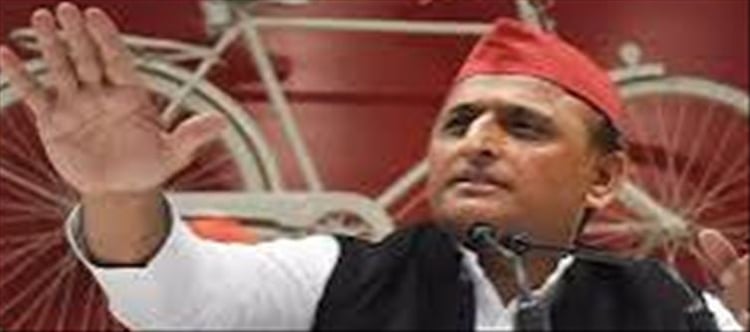
According to ANI, Akhilesh Yadav arrived at the party headquarters amid a large gathering of community members and senior leaders, turning what could have been a perfunctory calendar event into a carefully staged visual.
View on X
The optics were deliberate. SP's social media handles amplified images of turbans in the iconic red-and-green party backdrop — a visual grammar designed not for Sikh WhatsApp groups alone, but for the far larger audience of fence-sitting non-Yadav OBC, upper-caste, and micro-community voters scrolling through their feeds in Ayodhya, Gorakhpur, and Varanasi.
The 'Mini Punjab' Arithmetic — Small Numbers, Strategic Seats
Uttar Pradesh's Sikh population is estimated at roughly 6-7 lakh — less than half a percent of the state's nearly 25 crore people, according to Census-derived estimates. By any conventional electoral logic, this is a rounding error. But here is what the conventional logic misses: Sikhs in UP are not evenly scattered. They are concentrated in identifiable pockets — Lucknow's Husainabad and Yahiyaganj localities, parts of Shahjahanpur, and the fertile Terai belt stretching from Pilibhit to Lakhimpur Kheri.
In tight assembly contests — and in 2022, according to Election Commission data, over 60 UP seats were decided by margins under 15,000 votes — even 5,000 to 8,000 concentrated community votes in the right segment can tip a result. SP's strategists, as reported by Oneindia Hindi, are betting that a visible, respectful courtship of such micro-communities adds up across dozens of marginal seats. The Sikh Sammelan is the latest in a series: SP has held similar conclaves for Rajputs, Kurmis, Patels, and other sub-groups over recent months.
Political Pulse
The backstage read in Lucknow's political corridors — the talk that does not make it into the press release — is far more interesting than the sammelan itself. The whisper among SP insiders, according to party-linked sources and political commentators speaking to Oneindia Hindi, is that Akhilesh has internalised the harshest lesson of 2022 and 2024: SP's ceiling is fixed as long as it is seen as a two-community party. The Yadav-Muslim combination can win 100-120 seats in a good year; it cannot cross 200 without significant non-core support.
The chatter in SP's war rooms, according to analysts tracking the party's outreach, is that every sammelan — Sikh, Rajput, Kurmi, Patel — is less about the specific community and more about a cumulative visual portfolio. Each event is a photograph that says: "Look, we are not what the BJP says we are." The target audience is the persuadable non-Yadav OBC voter in eastern UP, the small-town Brahmin tired of feeling taken for granted by the BJP, the Jat farmer in western UP who voted for RLD-SP in 2022 but drifted back in 2024. For them, a Sikh Sammelan is not about Sikhs — it is permission to consider SP without feeling they are joining someone else's party.
(This reflects political corridor chatter and analytical speculation, not confirmed internal party strategy.)
There is a counter-argument, and it deserves honest airing. BJP's state unit, according to party spokespeople quoted in Hindi media, has dismissed SP's community sammelans as "cosmetic politics" — arguing that symbolic conclaves cannot substitute for the organisational depth and welfare delivery architecture the BJP has built among non-Yadav OBCs over the past decade. That critique has data behind it: in 2024's Lok Sabha results, SP's non-Yadav OBC vote share, while improved from 2022, remained well short of what it needs for a majority on its own, according to CSDS-Lokniti survey estimates.
View on X
The Deeper Gambit: PDA Plus, or Alphabet Soup?
Akhilesh Yadav's broader framework — the PDA (Pichda, Dalit, Alpsankhyak) coalition — was the spine of SP's surprisingly strong 2024 Lok Sabha performance in UP, where the party won 37 seats. But IHG Herald's read of what is really driving this Sikh Sammelan is that Akhilesh is now stress-testing the next evolution of PDA: can the formula stretch to include communities — Sikhs, upper-caste sub-groups, micro-minorities — that are not traditionally 'pichda' or 'alpsankhyak' at all?
If it can, SP enters 2027 with what political scientists call a "rainbow coalition" — a grouping so broad that the BJP's standard counter-strategy (consolidate Hindus against a Muslim-Yadav bloc) loses its sharpest edge. If it cannot — if these sammelans remain photo-ops without ground-level cadre integration — then SP risks the worst of both worlds: alienating its core base by seeming to dilute its identity, while failing to win over the very communities it is courting.
The early evidence is mixed. SP's 2024 performance showed genuine gains among non-Yadav OBCs and Dalits in UP, per CSDS-Lokniti data, but the party still lost the state-level popular vote to BJP. The Sikh Sammelan is a bet that the gap can close — one community conclave, one visual, one handshake at a time.
View on X
What to Watch Next
The real test will not be in Lucknow's party headquarters — it will be in ticket distribution. If SP allocates assembly tickets to Sikh candidates in Shahjahanpur, Lucknow Cantt, or Terai-belt seats in 2027, the sammelan strategy has teeth. If the community is courted in conclaves but shut out of candidacies, the exercise joins a long IHGn political tradition of high-optics, low-delivery minority outreach — a tradition voters in UP have learned to see through with brutal clarity.
The other metric to track: does BJP respond with its own Sikh outreach in UP? If Yogi Adityanath's government suddenly discovers a pending demand of the Sikh community in the state — a long-stalled gurdwara land issue, a minority welfare allocation, a cultural board appointment — it will confirm that SP's sammelan achieved its real purpose: not winning Sikh votes, but forcing the ruling party to spend political energy defending a flank it never expected to contest.
That, in the end, is the quiet genius of the micro-minority gambit. You do not need to win the community. You need the other side to believe you might.
By the Numbers
- UP's Sikh population is estimated at 6-7 lakh — under 0.5% of the state's nearly 25 crore people, yet concentrated in key pockets around Lucknow, Shahjahanpur, and the Terai belt.
- Over 60 UP assembly seats were decided by margins under 15,000 votes in 2022, per Election Commission data — making concentrated micro-community blocs potentially decisive.
- SP won 37 Lok Sabha seats in UP in 2024 under the PDA framework, its strongest performance in a decade, per Election Commission results.
Key Takeaways
- SP's Sikh Sammelan in Lucknow targets a community of barely 6-7 lakh in UP — the real audience is the far larger pool of non-core voters watching SP's optics for proof the party has changed.
- Over 60 UP seats were decided by margins under 15,000 in 2022 — concentrated micro-community votes in the right segments can be decisive in 2027.
- The sammelan is the latest in a series (Rajput, Kurmi, Patel conclaves) aimed at building a visual portfolio of SP as a broad-tent party, not a Yadav-Muslim outfit.
- The real test of sincerity will be ticket distribution in 2027 — whether Sikh and other micro-community candidates actually get assembly nominations in winnable seats.
- If BJP responds with its own Sikh outreach in UP, it confirms SP achieved its strategic purpose: forcing the ruling party onto a new, energy-consuming defensive flank.
Frequently Asked Questions
How many Sikhs are there in Uttar Pradesh and where are they concentrated?
UP's Sikh population is estimated at 6-7 lakh (under 0.5% of the state), concentrated in pockets around Lucknow (Husainabad, Yahiyaganj), Shahjahanpur, and the Terai belt from Pilibhit to Lakhimpur Kheri, according to Census-derived estimates.
What is SP's PDA strategy for 2027 UP elections?
PDA stands for Pichda (backward), Dalit, and Alpsankhyak (minority) — SP's coalition framework that delivered 37 Lok Sabha seats in 2024. The Sikh Sammelan signals an attempt to expand PDA beyond its original scope to include micro-minorities and even non-backward communities.
Can a micro-community like Sikhs actually influence UP election results?
In 2022, over 60 UP assembly seats were decided by margins under 15,000 votes, per Election Commission data. Concentrated Sikh votes of 5,000-8,000 in specific segments could tip results in tight contests, especially in Lucknow, Shahjahanpur, and Terai-belt constituencies.
Has SP held similar community conclaves for other groups?
Yes — SP has organised sammelans for Rajputs, Kurmis, Patels, and other sub-communities in recent months, as reported by Oneindia Hindi, as part of a systematic community-by-community outreach strategy ahead of 2027.



 click and follow Indiaherald WhatsApp channel