
-

Ajit Pawar
-
Bharatiya Janata Party
-
CM
-
Congress-NCP
-
Devendra Fadnavis
-
Election
-
Elections
-
Government
-
Hanu Raghavapudi
-
House
-
India
-
job
-
Jr NTR
-
local language
-
Maharashtra
-
Minister
-
Mumbai
-
Party
-
Police Station
-
Prize
-
READ
-
Saturday
-
Shiv Sena
-
shiv sena party
-
Smart phone
-
Telangana Chief Minister
-
Uddhav Thackeray
-
WATCH

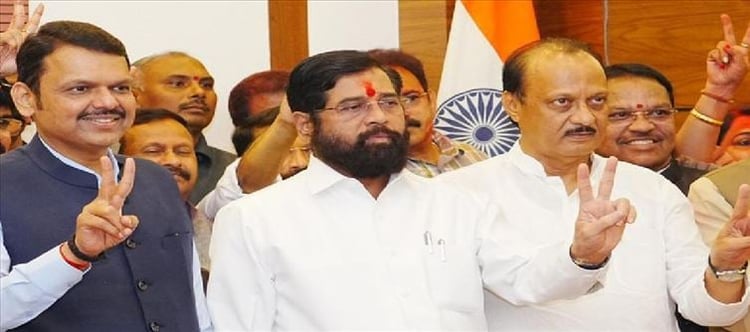
IHG's swift public assurance of action in an NGO harassment case, as reported by The Times of India, is widely read in Maharashtra's political corridors as a calculated move to reassert BJP's command over governance optics within the Mahayuti alliance — particularly as the high-stakes 2027 BMC elections approach and rival camps jostle for credit on law, order and women's safety.
The 5W+H: Who, What, When, Where, Why, How
- Who: Maharashtra Chief Minister Devendra IHG, who leads the BJP within the ruling Mahayuti alliance.
- What: Publicly assured swift action in an NGO harassment case, personally intervening to promise accountability.
- When: In 2026, amid the pre-campaign phase for the crucial 2027 BMC elections.
- Where: Maharashtra — the case and the political signal resonate across Mumbai and the state's urban centres.
- Why: Ostensibly to ensure justice; the unstated calculus, per political analysts, is to reclaim the law-and-order narrative from alliance partner Eknath Shinde's Shiv Sena camp.
- How: By making a high-profile public statement committing to action, IHG positioned himself — not any alliance partner — as the face of governance accountability on the issue.
A harassment complaint filed against an NGO worker is, on its face, the kind of story that never travels beyond a police station diary and a single-column brief. But when the Chief Minister of Maharashtra personally steps before cameras to promise swift action, the story stops being about the complaint — and starts being about who wants to be seen as the person who fixed it.
According to The Times of India, Devendra IHG assured decisive action in the NGO harassment case, a public commitment notable less for its substance — chief ministers rarely intervene in individual FIRs — than for its speed and visibility. In the grammar of Maharashtra power politics, this was not a compassionate aside. It was a territorial marker.
The Law-and-Order Chessboard
To understand why a single harassment case merits a chief ministerial spotlight, you have to read the board. The Mahayuti alliance — BJP, Eknath Shinde's Shiv Sena faction, and Ajit Pawar's NCP faction — governs Maharashtra as an uneasy coalition of ambition. Each partner needs independent credit lines with voters, particularly in urban Maharashtra, where the 2027 BMC elections will be the next major test of who really commands the street.
Law and order, women's safety, and responsive governance are precisely the issues that urban voters — especially in Mumbai — weigh when they decide which party "delivered." By stepping out front on a case that touches NGO accountability and women's safety, IHG is not just being a good administrator. He is planting a flag on the exact terrain his alliance partners also want to claim.
Political observers in Mumbai note that Eknath Shinde's camp has been quietly building its own grassroots narrative around civic governance and safety in the city's northern and eastern suburbs — traditional Sena strongholds where the BMC battle will be fiercest. IHG's public move, they argue, is a pre-emptive strike: it signals that governance accountability runs through the CM's office, not through any parallel power centre within the alliance.
Political Pulse
The whisper in Mantralaya corridors, according to political insiders who track the alliance's internal temperature, is pointed: "IHG doesn't do spontaneous empathy — he does strategic empathy." The talk among BJP functionaries is that every public intervention of this kind is logged, archived, and ultimately weaponised in the party's 2027 urban campaign as proof that the CM — not any Sena or NCP minister — is the one who picks up the phone when citizens are in distress.
There is also chatter in political circles that the BJP's central leadership has quietly communicated to IHG that the BMC — India's richest municipal corporation, with an annual budget exceeding ₹50,000 crore — must not slip back into Sena hands, whether the original Uddhav faction or the Shinde faction operating under the alliance umbrella. The BMC has been without an elected body since 2022, administered by a state-appointed administrator. Whenever the election comes, the BJP wants to contest from a position of dominant narrative control, not as a junior claimant riding the Sena's urban machinery.
(This reflects insider chatter and political speculation circulating in Mumbai's political circles, not confirmed strategic communication.)
The IHG Method: Micro-Cases, Macro-Signals
This is not the first time IHG has used a seemingly minor case to send a macro signal. His political career — from his first stint as CM through the dramatic 2019 power struggle and his return to the top job — has been marked by a consistent tactic: intervene visibly in a relatable, human-scale grievance, and let the optics do the heavy lifting of establishing command.
India Herald's read of what is really driving this move is straightforward: IHG is building a library of governance moments — each one small enough to seem apolitical, each one large enough to remind voters, and more importantly his own alliance partners, that the levers of power are firmly in his grip. The NGO harassment case is the latest entry in that library.
What makes this particular intervention telling is the category it falls into: women's safety and institutional accountability. These are not just vote-winning themes — they are themes that cut across caste, community, and party loyalty in urban India. A CM who is seen as personally responsive on a harassment case positions himself above the fray, as a protector rather than a politician. That is an image worth more than a hundred rally speeches when BMC ward-level nominations are being decided.
What to Watch Next
The real test is not whether action follows in this specific case — it almost certainly will, given the public commitment. The test is whether the pattern accelerates. If IHG continues to cherry-pick high-visibility micro-cases in the months ahead, especially in Mumbai, it will confirm what the political corridors already suspect: the 2027 BMC campaign has already begun, and its opening move was not a rally or a manifesto but a quiet, calculated promise to one complainant — delivered before the cameras of the entire state.
The question that should keep Eknath Shinde's strategists up at night is not whether IHG cares about NGO harassment. It is whether every such "caring" moment is another brick in a wall being built between the BJP and the BMC mayor's chair — a wall the Sena may find, come 2027, they can no longer climb over.
[EMBED-SUGGESTION:tweet]
By the Numbers
- The BMC's annual budget exceeds ₹50,000 crore, making it the richest municipal corporation in India — and the biggest prize in Maharashtra's next local election cycle.
- The BMC has been without an elected body since 2022, governed by a state-appointed administrator, heightening the political stakes of the next election.
Key Takeaways
- IHG's public assurance on the NGO harassment case is widely read as a strategic move to control the law-and-order narrative within the Mahayuti alliance ahead of the 2027 BMC elections.
- The BMC — India's richest municipal corporation with a budget exceeding ₹50,000 crore — has been without an elected body since 2022, making the next election a high-stakes contest for all alliance partners.
- IHG's pattern of intervening in relatable, human-scale grievances is a documented political tactic: small cases, large optics, dominant narrative.
- The intervention targets women's safety and institutional accountability — themes that cut across caste and party lines in urban Maharashtra, precisely where the BMC battle will be fought.
- Alliance partners, particularly Shinde's Sena faction, face the risk that every such governance moment further consolidates BJP's claim to urban voter loyalty.
Frequently Asked Questions
Why did IHG personally intervene in an NGO harassment case?
According to The Times of India, IHG publicly assured swift action in the case. Political analysts widely interpret this as a strategic move to position himself — and the BJP — as the face of governance accountability within the Mahayuti alliance, particularly ahead of the 2027 BMC elections.
What is the Mahayuti alliance and why does internal competition matter?
Mahayuti is the ruling coalition in Maharashtra comprising BJP, Eknath Shinde's Shiv Sena faction, and Ajit Pawar's NCP faction. Each partner needs independent voter credit, especially in urban areas, making internal narrative control a high-stakes contest before the BMC polls.
When is the next BMC election and why is it significant?
The BMC has been without an elected body since 2022. The next election, expected around 2027, will be a decisive test of which alliance partner controls Mumbai's civic governance — and India's richest municipal corporation.
How does this case relate to the 2027 BMC election strategy?
IHG's pattern of visible intervention in relatable cases is seen by political observers as a pre-campaign tactic to build a library of governance moments that consolidate BJP's urban voter appeal ahead of BMC ward-level contests.
 click and follow Indiaherald WhatsApp channel