
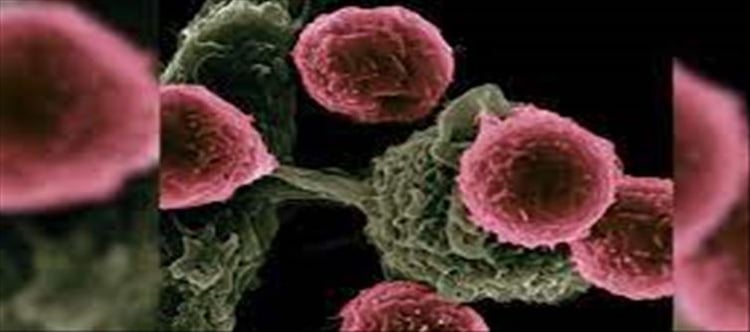


Scientists have found in laboratory experiments that vibrating molecules kill 99 percent of cancer cells. Scientists and researchers in the medical field are making significant efforts to develop cures for the deadly cancer that causes millions of deaths every year. In that regard, a joint research team consisting of experts from Rice university, texas A&M university, and the university of texas at Austin has discovered something amazing. Accordingly, they have discovered a method to eliminate cancer cells by exploiting the unique properties of certain molecules that exhibit intense vibrations upon light stimulation.
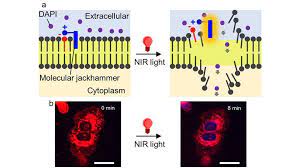 According to a press release, a small dye molecule used for medical imaging produces plasmons when the atoms vibrate in unison. Researchers have found that when it is stimulated by near-infrared light, the cell membrane of cancer cells ruptures." According to information published in Nature Chemistry, the method was 99 percent effective against human melanoma cells in a laboratory study. Furthermore, half of the mice with melanoma became cancer-free after treatment.'
 Scientists have discovered that light-induced vibrations of the entire molecule can disrupt melanoma cell membranes. “This is a completely new generation molecule. We call these molecular jackhammers," said james Tour, a chemist at Rice University. His lab has previously used nanoscale composites with light-activated fin-like chains of unidirectionally rotating molecules to pierce through the outer membrane of infectious bacteria, cancer cells, and treatment-resistant fungi.
In contrast to the molecularly inspired nanoscale drills of Nobel laureate Bernard Feringa, molecular jackhammers employ a completely novel and unprecedented application method. james Toure has stated that these are a million times faster in mechanical motion than previous Feringa-type molecules. Near-infrared light has been reported to penetrate much deeper into the body than visible light, reaching organs or bones without damaging tissue. This discovery is seen as a major breakthrough in cancer research.
 click and follow Indiaherald WhatsApp channel