


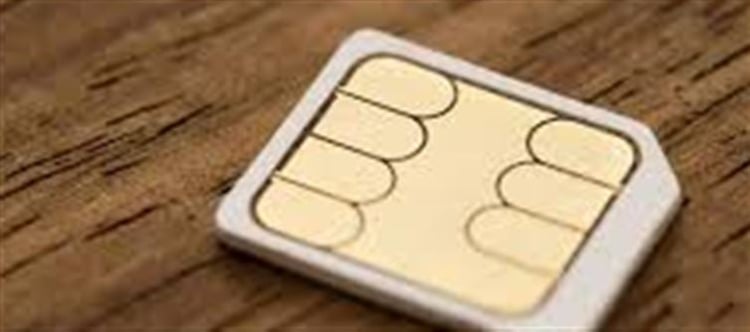

Most of us use a SIM (Subscriber Identity Module) card every day, yet few people notice that one of its corners is cut off. This tiny detail isn’t random — it’s a practical design feature with important benefits.
🧠 What Is a SIM Card?
Before we explain the cut corner, here’s what a SIM card does:
- It’s a small smart card that connects your phone to a mobile network.
- It securely stores your International mobile Subscriber Identity (IMSI) and related authentication information.
- Thanks to this tiny chip, your phone can make calls, send messages, and use mobile data.
❓ What Does the Cut Corner Do?
🔄 Guides Correct Orientation
The main reason the SIM card has a cut corner is to help users insert it in the right direction into the phone’s SIM tray. The cut makes it obvious which way the card should face — preventing incorrect insertion that could damage the card or the phone’s SIM contacts.
⚙️ Prevents Damage
If a SIM card is placed incorrectly:
- The metal contacts might not align with the phone’s connectors.
- You could damage the SIM chip or break the tray.
- Your phone won’t connect to the network.
The cut acts like a key in a lock — it ensures the card only fits when orientated correctly.
🛠️ Standardization Across Devices
The design isn’t just helpful — it’s standardized worldwide. From larger classic SIM cards to modern nano‑SIMs, all maintain a similar shape with a cut corner so that:
- SIM cards fit properly in all brands of phones.
- Manufacturers can design SIM trays with a consistent layout.
- Users avoid trial‑and‑error during insertion.
This consistency has been part of the design since early SIM standards were defined.
📏 A Bit of History
Originally, SIM cards were much larger — about the size of a credit card — and the cut helped users even then to insert them correctly. As phones got smaller, the SIM cards were miniaturized (mini, micro, nano) but the cut corner stayed, because it works — and it’s simple.
📌 Fun Fact
Even when you cut a larger SIM down to a micro or nano SIM, the corner cut remains — and it still serves the same essential purpose of guiding correct insertion every time.
🧩 In Summary
Here’s why your SIM card has that cut corner:
✔ Shows the correct way to insert
✔ Prevents damage to the SIM or phone
✔ Ensures proper alignment with device connectors
✔ Helps maintain global standards for SIM shape and trays
It’s a small design detail with a big impact — helping millions of users avoid errors and ensuring seamless connectivity every time you insert the SIM card.
Disclaimer:
The views and opinions expressed in this article are those of the author and do not necessarily reflect the official policy or position of any agency, organization, employer, or company. All information provided is for general informational purposes only. While every effort has been made to ensure accuracy, we make no representations or warranties of any kind, express or implied, about the completeness, reliability, or suitability of the information contained herein. Readers are advised to verify facts and seek professional advice where necessary. Any reliance placed on such information is strictly at the reader’s own risk.
 click and follow Indiaherald WhatsApp channel