


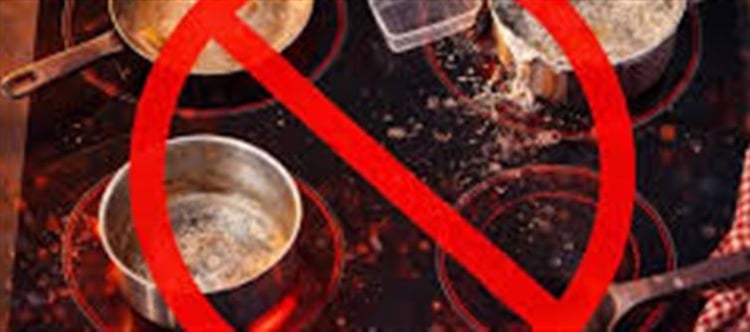

Induction cooktops are becoming increasingly popular for their fast heating, energy efficiency, and easy cleaning. But to get the best performance and avoid damage, it’s important to use them correctly. Here are five common mistakes that many users make — and how to avoid them.
1. Using the Wrong Cookware
❌ Mistake: Non‑Compatible Pots and Pans
Induction cooktops only work with cookware that has a magnetic base. If your pots and pans are aluminum, copper, glass, or non‑magnetic stainless steel, the cooktop won’t heat properly.
✅ What to Do:
- Use induction‑compatible cookware — cast iron or magnetic stainless steel works best.
- To test compatibility, place a magnet on the base — if it sticks strongly, it’ll work.
2. Placing Cookware Off‑Centre
❌ Mistake: Misaligned Pots
Induction cooktops heat through magnetic fields generated beneath the cooking zone. If your pot isn’t centered on the induction ring, heat distribution becomes uneven and cooking performance drops.
✅ What to Do:
- Always center the cookware on the designated cooking zone.
- For larger or odd‑shaped vessels, ensure they cover the active induction area evenly.
3. Using Excessive Power Unnecessarily
❌ Mistake: Always Cooking on Maximum Heat
Induction cooktops heat up very quickly. Many users make the mistake of always setting the temperature to the highest level — even when not needed. This can cause food to burn, stick, or cook unevenly.
✅ What to Do:
- Adjust power based on what you’re cooking:
- Use high heat for boiling water,
- Medium–low heat for simmering or gentle cooking.
- Most induction units also have preset modes (like boiling, frying) — use them.
4. Ignoring Manufacturer Guidelines and Safety Instructions
❌ Mistake: Skipping the Manual
Every induction cooktop model has specific guidelines on load limits, ventilation needs, and cleaning instructions. Ignoring these can reduce performance or even damage the appliance.
✅ What to Do:
- Read the user manual before first use.
- Pay attention to maximum wattage recommendations, placement guidelines, and maintenance tips.
- Make sure the cooktop has adequate ventilation — don’t block side vents.
5. Not Cleaning Spills Promptly
❌ Mistake: Leaving Residue or Stains
While induction cooktops are easier to clean than gas stoves, leaving spills — especially sticky sauces or sugar — unattended can scar the glass surface or lead to burnt residues.
✅ What to Do:
- Wipe spills immediately (after cooling) with a soft damp cloth.
- For tough stains, use a non‑abrasive cleaner designed for glass cooktops.
- Avoid steel wool or abrasive pads that can scratch the surface.
Bonus Tips for Better Induction Cooking
✅ Avoid sliding cookware across the glass surface — lift it to prevent scratches.
✅ Use cookware with flat bottoms — warped or dented bases reduce contact and efficiency.
✅ Monitor induction fan operation — if the fan runs constantly, check for blocked vents or accumulated dust.
Wrap‑Up: Make the Most of Your Induction Cooktop
Induction cooktops offer powerful and efficient cooking, but only when used correctly. By avoiding these common mistakes — from using incompatible cookware to ignoring proper cleaning and alignment — you’ll enjoy faster heat, better cooking results, and longer life from your appliance.
Disclaimer:
The views and opinions expressed in this article are those of the author and do not necessarily reflect the official policy or position of any agency, organization, employer, or company. All information provided is for general informational purposes only. While every effort has been made to ensure accuracy, we make no representations or warranties of any kind, express or implied, about the completeness, reliability, or suitability of the information contained herein. Readers are advised to verify facts and seek professional advice where necessary. Any reliance placed on such information is strictly at the reader’s own risk.
 click and follow Indiaherald WhatsApp channel