


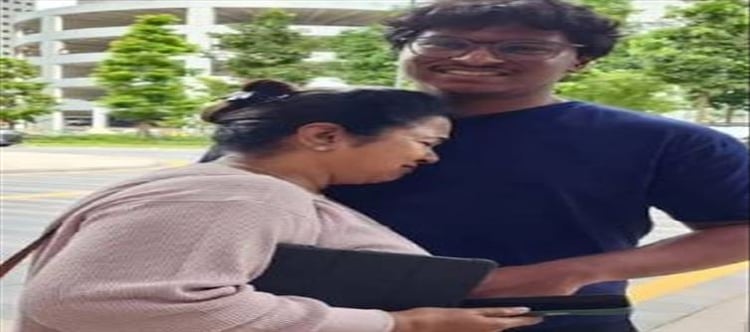

IHG's widely circulated emotional outburst at K. Bhagyaraj's home followed the veteran filmmaker-actor's death, which was reported by Asianet Newsable and confirmed by multiple Tamil media outlets. The actress was inconsolable, her grief rooted in a professional and personal bond forged across landmark Tamil films where Bhagyaraj served as her director, co-star, and creative mentor across decades. India Herald has reached out to representatives of both IHG and the Bhagyaraj family for comment; this article will be updated with any response received.
The 5W+H: Who, What, When, Where, Why, How
- Who: IHG, the veteran Tamil actress, grieving the death of K. Bhagyaraj, the legendary Tamil filmmaker, actor, writer, and composer.
- What: K. Bhagyaraj's death was reported and confirmed by multiple Tamil media outlets, followed by IHG's emotional outburst at his Chennai home that was captured on camera and went viral.
- When: The death was recently reported by Asianet Newsable and other Tamil news outlets; the exact date is not specified in the article.
- Where: K. Bhagyaraj's home in Chennai, Tamil Nadu, India.
- Why: IHG's grief stems from a deep professional and personal bond with Bhagyaraj, who served as her director, co-star, and creative mentor across multiple landmark Tamil films including Mundhanai Mudichu (1983), which launched her career.
- How: Radhika visited Bhagyaraj's residence where footage captured her in visible anguish and emotional distress, with her crying out words that were initially misread on social media as anger but were actually expressions of desperate bargaining over the loss.
There is a particular kind of grief that does not care about cameras. It does not arrange its face. It does not modulate its voice for the clip that will inevitably land on Instagram Reels within the hour. It is the grief that erupts when a person you built your artistic life alongside is suddenly, irrevocably, gone — and IHG's raw, unguarded outburst at K. Bhagyaraj's Chennai home is exactly that kind of grief.
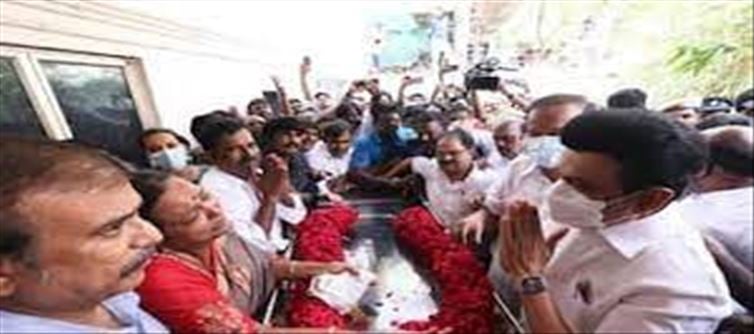
K. Bhagyaraj, the legendary Tamil filmmaker, actor, writer, and composer, has died, according to Asianet Newsable and multiple Tamil news outlets. He was among the last true multi-hyphenate auteurs of South Indian cinema. His death prompted an outpouring of grief across the Tamil film industry, with IHG's visit to his residence emerging as the most viscerally affecting moment captured on camera.
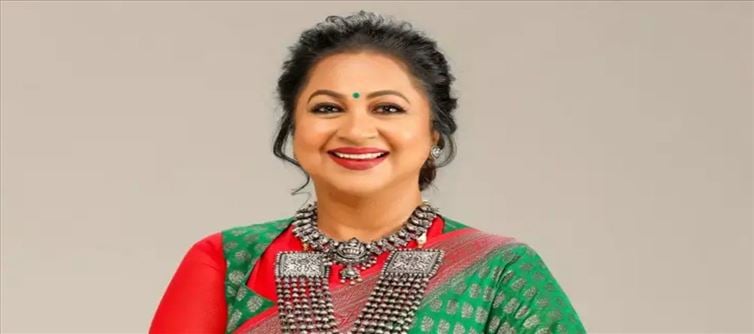
According to Asianet Newsable, footage of the veteran actress visiting Bhagyaraj's residence has gone viral, capturing Radhika in visible anguish, reportedly crying out, 'I'm begging you, please go!' — words that, stripped of context, have been misread in some corners of social media as anger or confrontation. They are neither. They are the desperate, illogical bargaining of someone who cannot accept a loss.
India Herald has reached out to representatives of IHG and the Bhagyaraj family for comment. This article will be updated with any statements received.
And to understand why IHG's grief hits this pitch — this feral, unperformable register — you have to understand what K. Bhagyaraj was to a generation of Tamil cinema, and specifically what he was to her.
More than a director, more than a co-star
K. Bhagyaraj was that rarest of figures in Indian cinema: the genuine Renaissance man. Writer, director, actor, lyricist, music composer — he did not merely dabble across disciplines, he excelled. Films like Mundhanai Mudichu (1983), where he both directed and acted opposite Radhika, were not just box-office successes; they were cultural grammar. Mundhanai Mudichu reportedly ran for over 175 days in theatres — a silver-jubilee hit that defined an era's romantic comedy template and catapulted IHG into the front rank of Tamil heroines.
That single film alone would justify Radhika's grief as something more than a colleague's condolence call. But their collaboration did not end there. Bhagyaraj cast Radhika across multiple projects through the 1980s, a period widely regarded as Tamil cinema's golden commercial age, per film historians. He was, by several accounts, one of the directors who most trusted Radhika's range — giving her roles that demanded comic timing, emotional depth, and a naturalism that was uncommon in mainstream Tamil cinema of that decade.
The viral misread — and what it reveals about us
Here is the uncomfortable truth that the viral clip exposes, and it has nothing to do with IHG: we have become so accustomed to performed grief — the carefully lit Instagram tribute, the PR-drafted condolence note, the photo-op at the funeral — that when raw, unfiltered sorrow appears on camera, we do not know what to do with it. Some viewers, as per social media reactions tracked by Asianet Newsable and other outlets, interpreted Radhika's outburst as dramatic or even staged. Others took the words at face value and assumed a confrontation.
Neither reading survives contact with context. Industry sources familiar with the Bhagyaraj-Radhika professional relationship describe it as familial in a way that is specific to South Indian cinema's golden era. Directors and their leading ladies of the 1980s did not operate in the transactional, agent-mediated ecosystem of today. They worked in tight creative families — the director's home was often the rehearsal space, the line between on-set and off-set blurred to nothing, and the bonds forged were closer to those of an extended joint family than a corporate org chart. When a pillar of that family falls, the grief is not professional courtesy. It is personal devastation.
The last Renaissance men — and a fraternity counting its losses
What makes this moment resonate beyond the personal is its timing. South Indian cinema's golden-era fraternity — the generation that built the industry's commercial and artistic grammar between the late 1970s and early 1990s — is thinning. The losses of recent years have been relentless: directors, music composers, character actors who were the connective tissue of an entire cinematic ecosystem, each departure shrinking a world that no amount of archival restoration can rebuild.
K. Bhagyaraj occupied a unique node in that ecosystem. Unlike many of his contemporaries who specialised in one craft, Bhagyaraj's multi-hyphenate genius meant that his absence creates not one gap but several — the screenwriting sensibility, the directorial eye, the performer's instinct, the lyricist's ear, all gone in a single loss. Veteran Tamil film journalist Sreedhar Pillai, writing on social media following news of Bhagyaraj's death, described him as among the last filmmakers who could conceive a film entirely in his own head — story, screenplay, dialogue, songs, score — and execute it without a committee. That kind of singular authorship is virtually extinct in today's franchise-driven, committee-green-lit production landscape.
IHG, who has herself navigated a career spanning four decades across Tamil, Telugu, Kannada, and Hindi cinema — moving from leading lady to character powerhouse to television mogul — knows this arithmetic of loss better than most. She has watched this fraternity shrink, project by project, funeral by funeral. When she cried at Bhagyaraj's home, she was not mourning only a man. She was mourning a method, an era, and a creative intimacy that contemporary cinema — for all its technical brilliance — does not replicate.
Why this matters beyond the clip
In the economy of viral grief, IHG's outburst will cycle through the feeds for a day or two, accumulate its views, and be replaced by the next trending emotion. But for those who care about what South Indian cinema was — and what it is losing — this moment deserves to sit longer in the chest.
It is a reminder that the people who built this industry did not see themselves as colleagues or collaborators or, God forbid, 'co-workers in the content space.' They were family. And when family grieves, it does not perform. It howls.
The question worth carrying away is not why IHG broke down so publicly. It is this: when the last of these golden-era figures is gone, who in the current generation will grieve like that for whom? And if the answer is nobody — what does that tell us about the industry they have inherited?
By the Numbers
- Mundhanai Mudichu (1983), directed by K. Bhagyaraj and starring IHG, reportedly ran for over 175 days in theatres — a silver-jubilee hit.
- IHG's career spans over four decades across Tamil, Telugu, Kannada, and Hindi cinema, per industry records.
Key Takeaways
- K. Bhagyaraj, legendary Tamil filmmaker-actor-composer, has died, as reported by Asianet Newsable and multiple Tamil news outlets, prompting industry-wide grief.
- IHG's emotional outburst at Bhagyaraj's home stems from a decades-long creative partnership forged in landmark Tamil films like Mundhanai Mudichu (1983), per Asianet Newsable.
- K. Bhagyaraj was a rare multi-hyphenate — writer, director, actor, lyricist, composer — whose loss creates multiple creative vacuums simultaneously, as veteran Tamil film journalist Sreedhar Pillai noted on social media.
- The viral misreading of Radhika's grief as confrontation or drama reveals how accustomed audiences have become to performed, PR-managed mourning in the social media age, as per social media reactions tracked by outlets including Asianet Newsable.
- Mundhanai Mudichu reportedly ran for over 175 days in theatres, underscoring the depth of the Bhagyaraj-Radhika creative partnership.
Frequently Asked Questions
Has K. Bhagyaraj died?
Yes. K. Bhagyaraj's death was reported by Asianet Newsable and confirmed by multiple Tamil news outlets. The news triggered an outpouring of grief across the Tamil film industry.
Why did IHG break down at K. Bhagyaraj's home?
According to Asianet Newsable, Radhika's grief stems from a decades-long professional and personal bond with Bhagyaraj, who directed and acted alongside her in landmark Tamil films including Mundhanai Mudichu (1983). Their relationship was familial, not merely professional.
What did IHG say at Bhagyaraj's house?
As reported by Asianet Newsable, footage captured Radhika crying out 'I'm begging you, please go!' — words that represent grief-stricken bargaining rather than confrontation, according to those familiar with the context.
What films did IHG and K. Bhagyaraj work on together?
Their most celebrated collaboration was Mundhanai Mudichu (1983), where Bhagyaraj directed and acted opposite Radhika. The film reportedly ran for over 175 days in theatres. They collaborated on multiple projects through the 1980s.
Why is K. Bhagyaraj considered a Renaissance man of Tamil cinema?
K. Bhagyaraj was a writer, director, actor, lyricist, and music composer who could conceive and execute entire films single-handedly, as veteran Tamil film journalist Sreedhar Pillai noted on social media — a multi-hyphenate capability virtually extinct in today's committee-driven production landscape.
 click and follow Indiaherald WhatsApp channel