
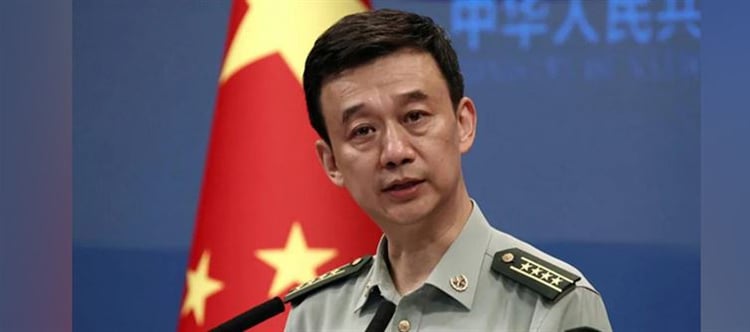


The Blunt Accusation That Ignited a Global Debate
Geopolitical tensions between Washington and beijing rarely lack drama, but sometimes the rhetoric becomes especially sharp. That’s exactly what happened when Chinese Ministry of Defense spokesperson Wu Qian delivered a pointed critique of the United States’ military history and global presence. His message was blunt, direct, and designed to land hard: according to beijing, America’s long record of wars and its vast overseas military network make it a central driver of instability in the international system.
Whether one agrees with the claim or not, the statement taps into a much larger global argument about power, security, and who really shapes the world’s conflicts.
1. The “War Addict” Accusation
Wu Qian argued that the united states has spent most of its national history engaged in military conflict. In his words, America has been “at war for all but 16 years” since its founding more than two centuries ago. For Chinese officials, this statistic is meant to illustrate a pattern: that U.S. foreign policy frequently relies on military power to resolve geopolitical disputes.
Critics of U.S. policy often point to conflicts ranging from vietnam and iraq to afghanistan as examples of interventionist strategy. Supporters of Washington, however, counter that many of these operations were carried out in the name of alliances, counterterrorism, or international security commitments.
2. The Global Network of Bases
Another centerpiece of the criticism is the scale of America’s global military footprint. The united states maintains hundreds of military bases and facilities across dozens of countries. From europe to Asia and the Middle East, these installations allow the U.S. to project military power rapidly across regions.
beijing frames this network as evidence of global militarization. Washington, meanwhile, describes it as the backbone of security partnerships that deter conflicts and support allies.
3. A Clash of Narratives
Ultimately, Wu Qian’s remarks reflect a broader ideological struggle between the world’s two largest powers. china portrays the U.S. as a destabilizing force that fuels conflict through military dominance. The united states, in contrast, argues that its alliances and presence help maintain international order.
And that’s the real story beneath the headlines: not just a criticism, but a battle of narratives over who defines global stability in the 21st century. 🌍
 click and follow Indiaherald WhatsApp channel