


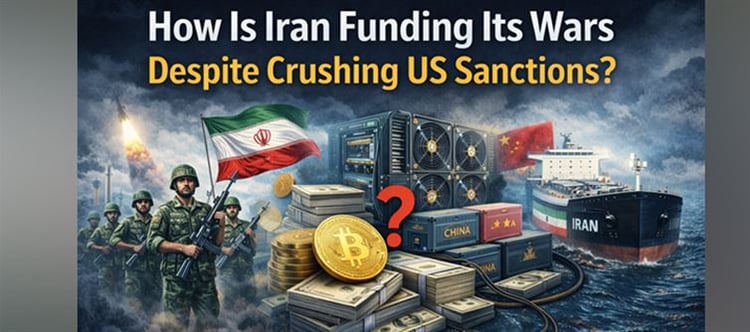

The Question the World Isn’t Asking
Every headline about iran today seems to revolve around missiles, military threats, and rising war tensions. But behind the smoke and rhetoric lies a far more intriguing question that rarely gets asked:
How does iran keep funding itself despite some of the toughest economic sanctions ever imposed?
For years, the united states and its allies have tried to isolate iran financially. Tehran was cut off from the SWIFT banking system, blocked from dollar transactions, and largely excluded from global banking networks. On paper, that kind of economic pressure should have crippled the country.
Yet iran continues to operate, trade, and even sustain costly geopolitical conflicts.
1. The Crypto Strategy Few people Notice
One of the most surprising ways iran has adapted is through Bitcoin mining.
Around 2019, the country quietly began expanding large-scale cryptocurrency mining operations. With its vast energy reserves and heavily subsidized electricity, iran discovered something powerful: it could produce Bitcoin far cheaper than most of the world.
2. The Shocking Cost Advantage
The economics are staggering.
In iran, the estimated cost of mining a single Bitcoin can be as low as $1,300–$1,500. Compare that to countries with high electricity costs—like Italy—where mining one Bitcoin could theoretically cost hundreds of thousands of dollars.
With global Bitcoin prices far higher than Iran’s production cost, the margins can be enormous. That profit effectively becomes a financial lifeline outside the traditional banking system.
3. oil Still Flows—Mostly to China
Cryptocurrency isn’t the only channel keeping Iran’s economy alive. Despite sanctions, Iranian oil continues to move through shadow trade networks, with a large share reportedly heading to China.
For Beijing, the relationship offers discounted energy and strategic influence in the Middle East.
4. The Geopolitical Chessboard
China’s broader goal may go far beyond cheap oil. Analysts often point to a larger geopolitical strategy:
Reducing American influence in the Middle East
Strengthening China’s economic ties across the region
Encouraging oil trade in yuan rather than dollars
Such moves could slowly weaken the long-standing petrodollar system that has dominated global energy markets for decades.
The Bigger Picture
What’s unfolding isn’t just about oil or cryptocurrency. It’s about power, influence, and the future shape of the global economy.
Bitcoin mining, shadow oil trade, and geopolitical alliances may look like separate stories. In reality, they’re all part of a deeper shift—one where economic tools are becoming just as powerful as missiles in shaping the balance of global power.
 click and follow Indiaherald WhatsApp channel