


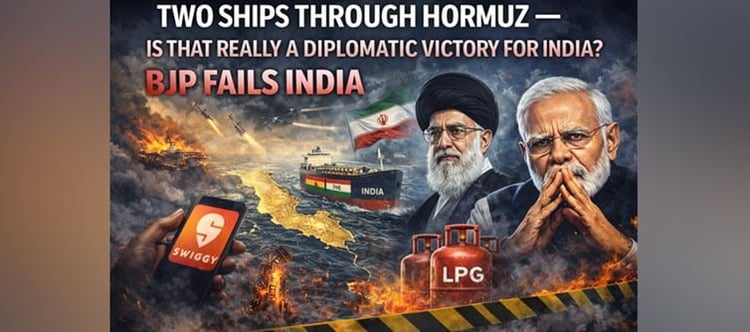

When Crisis Is Branded as Victory
As tensions escalate around the Strait of Hormuz, the messaging coming out of political circles in india has been strikingly contradictory. On one hand, officials suggest that shortages during wartime environment are “normal.” On the other hand, the safe passage of two indian vessels through the strait—granted with Iran’s permission—is being projected as a major diplomatic win for prime minister Narendra Modi.
But when you look at the larger picture, that narrative raises more questions than answers.
1. The Warning Signs Were Visible for Weeks
Iran had repeatedly warned that it could restrict or disrupt traffic through the Strait of Hormuz, one of the most critical oil shipping routes on the planet.
For weeks, global analysts and governments were openly discussing the rising tensions in the region. The real surprise, critics argue, is that India’s foreign policy establishment seemed to be reacting rather than preparing.
2. Other Countries Prepared for the Worst
Several major energy-dependent nations, including China and Japan, reportedly moved early to secure three to four months of oil reserves in anticipation of possible disruptions.
For a country like India—one of the world’s largest energy consumers—there is little public evidence that similar precautionary steps were taken in advance to prevent shortages.
3. The bangladesh Comparison
Another uncomfortable reality complicates the “diplomatic victory” narrative.
bangladesh, too, reportedly secured Iranian permission for its oil tankers to pass through the same shipping route. If a smaller regional player could negotiate similar access, critics ask, can india realistically present the passage of its ships as an extraordinary diplomatic achievement?
4. Rising Danger in the Gulf
The risks in the region are far from theoretical. A Thai vessel, Mayuree Naree, reportedly faced an attack while heading toward Kandla port in Gujarat, underscoring just how volatile the waters around Hormuz have become.
The Bigger Question
Meanwhile, the situation inside india has grown serious enough that authorities are considering measures like the Essential services Maintenance Act (ESMA) to manage potential supply disruptions.
Which leads to a fundamental question:
When shortages loom, tensions rise, and emergency laws come into play—can the situation truly be described as a diplomatic success?
 click and follow Indiaherald WhatsApp channel