
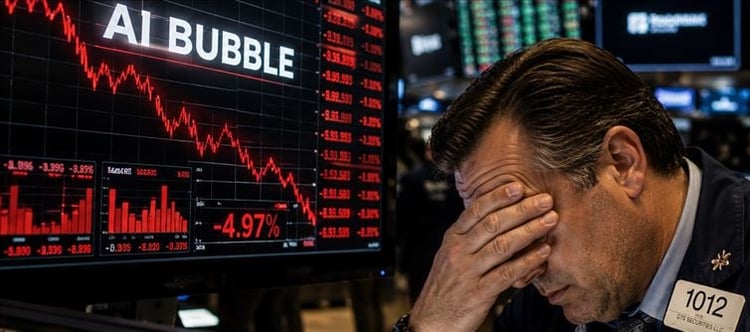


For the past two years, artificial intelligence has been sold to the world with one irresistible promise: fewer employees, lower costs, faster productivity, bigger profits. Every earnings call sounded the same. AI would automate work, reduce headcount, and create unprecedented efficiency. Investors loved it. Stocks exploded. Companies rushed into an arms race worth hundreds of billions of dollars.
Now the first real warning signs are emerging.
According to reports circulating across the tech industry, microsoft reportedly gave massive internal access to Anthropic’s Claude tools after investing billions into the company. Usage exploded across engineering teams. Then the bills arrived. Suddenly, the same company that aggressively promoted adoption reportedly began scaling back licenses and pushing employees toward cheaper internal alternatives.
And the pattern isn’t isolated.
Uber reportedly saw AI coding adoption surge across engineering teams, with some developers allegedly burning through thousands of dollars in monthly AI compute costs individually. Internal gamification accelerated usage further — until the company reportedly exhausted its annual AI budget within months.
That’s the part Wall Street may still be underestimating.
Because the economics of large-scale AI deployment are becoming deeply complicated. AI models are getting cheaper per token, yes — but usage is exploding exponentially faster. More powerful agents consume vastly more compute, more context, more memory, and more infrastructure resources. The more transformative AI becomes, the more expensive it potentially becomes to operate at enterprise scale.
Even leaders inside NVIDIA are openly acknowledging something uncomfortable: in some cases, compute costs are beginning to rival or even exceed human labor costs.
That changes the entire conversation.
For years, markets rewarded companies simply for announcing AI strategies. But eventually, markets stop listening to presentations and start reading invoices.
And if productivity gains fail to outpace infrastructure burn, this stops looking like a clean efficiency revolution and starts looking like one of the most capital-intensive technology races in modern history.
That gap — between AI hype and AI economics — may become the most important financial story of this decade.
 click and follow Indiaherald WhatsApp channel