


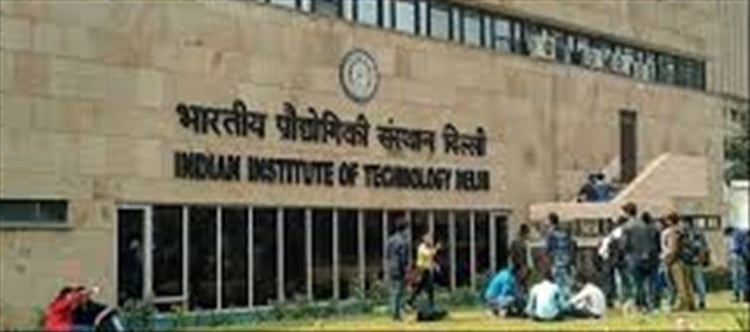

IIT delhi has introduced a direct pathway for top-performing NIT students to pursue M.Tech without clearing GATE. According to Times Now, students with strong academic records at NITs can now apply directly, signalling IIT Delhi's acknowledgment that GATE scores alone may have been an imperfect filter for identifying postgraduate research talent in India.
This is an india Herald analysis piece. It includes reporting on a policy development alongside editorial interpretation of its significance.
For decades, the Graduate Aptitude Test in Engineering has been the velvet rope — and the bottleneck — of India's postgraduate engineering ecosystem. Hundreds of thousands of engineering graduates sit for it each year, many of them already proven performers at the country's National Institutes of technology, only to find that a single exam-day performance overrides four years of sustained academic excellence. Now, IIT delhi has done something quietly radical: it has opened its M.Tech doors to top NIT students without requiring GATE at all.
According to Times Now, IIT Delhi's new direct higher education pathway allows students from NITs who have demonstrated strong academic performance during their undergraduate years to apply for M.Tech programmes without clearing GATE. The move targets a specific cohort: students whose consistent four-year track records make a standardised entrance exam redundant at best, and a deterrent at worst.
The Subtext of a Policy Change
On the surface, this is a procedural tweak — one prestigious institution adjusting one admissions criterion. But zoom out, and the subtext is worth examining. IIT delhi appears to be acknowledging what faculty in India's top engineering colleges have debated for years: whether GATE, as currently constituted, reliably identifies the students best suited for research and advanced study — or whether it primarily identifies students who are good at GATE.
There is a crucial distinction. A student who graduates near the top of their batch at NIT Trichy, NIT Warangal, or NIT Surathkal has already survived one of the world's most competitive undergraduate filters — JEE — and then performed at a high level for four continuous years. Asking that student to prove themselves once more through a single-window exam, competing alongside lakhs of candidates from vastly different academic backgrounds, can introduce noise rather than signal. IIT Delhi's new pathway is, in essence, a bet that the signal was always in the transcript, not just the test.
It is important to note that GATE's defenders — and they are numerous within the IIT system that administers the exam and at the Ministry of education — have long argued that a standardised national exam is the most objective, scalable, and corruption-resistant mechanism for postgraduate admissions across India's vast and uneven engineering landscape. The exam ensures a common benchmark that transcript-based evaluation, with its institution-to-institution grading variations, cannot easily replicate. As of the date of publication, neither the IIT system's GATE organising committee nor the Ministry of education has issued a public response to IIT Delhi's new pathway. india Herald has reached out to both for comment and will update this analysis if responses are received.
The Talent Drain GATE May Have Been Accelerating
According to the Ministry of Education's All india Survey on Higher education (AISHE) 2021-22 report, india produces over 1.5 million engineering graduates annually. Of those, only a fraction attempt GATE, and a far smaller fraction score high enough for IIT M.Tech seats. But the most telling pattern, visible across publicly available placement reports from top NITs, is this: the majority of high-performing students — the very cohort IIT delhi now wants — choose industry placements or foreign master's programmes over GATE preparation. The opportunity cost of spending six to twelve months preparing for a single exam, when competitive campus placement offers or funded MS programmes abroad are already in hand, has arguably been bleeding India's research pipeline.
By removing the GATE barrier for this specific talent pool, IIT delhi is not lowering its standards. It is competing — for the first time with a genuinely competitive offer — against the private sector and foreign universities that have been attracting India's best engineering minds before they ever consider domestic research careers.
What This Means for NITs — and the GATE Ecosystem
The ripple effects could be substantial. If IIT Delhi's experiment succeeds — measured by the quality of students it attracts and their research output — other IITs are likely to follow. That, in turn, could reshape the very purpose of GATE. Rather than serving as the sole gateway to postgraduate engineering education in india, GATE could evolve into what some educators argue it should have been all along: one of several indicators, weighted alongside academic performance, research aptitude, and project work.
For NIT students specifically, the policy is a validation that has been a long time coming. According to the Ministry of education and the NIT Council, there are 31 NITs across India. These institutions occupy a peculiar position in indian higher education: universally acknowledged as elite, yet perpetually overshadowed by the IIT brand. This direct pathway implicitly elevates the NIT undergraduate degree, treating it as a credential sufficient to warrant IIT-level postgraduate admission on its own merit.
The Bigger Question india Needs to Ask
But here is the question that this policy change opens and does not answer: if a GATE waiver makes sense for top NIT students, why only NIT students? india has a handful of other institutions — BITS Pilani, certain IIITs, strong state university programmes — whose top graduates may be demonstrably ready for IIT-level postgraduate work without sitting for GATE. The logic of the waiver, once extended, is difficult to contain. And that is not necessarily a flaw — it may be the point.
India's postgraduate engineering education system has long been structured around the assumption that gatekeeping through a single standardised exam is the fairest and most efficient selection mechanism. IIT Delhi's move quietly suggests that fairness and efficiency are not always the same thing — and that in trying to be fair to everyone, a single-exam system may not always serve the best candidates optimally. Critics of this view, however, rightly point out that without a universal benchmark, subjective admissions risk reintroducing biases that standardised testing was designed to eliminate. The tension between these two positions is unlikely to be resolved by a single policy change.
The real test will not be in the policy announcement but in the data that emerges over the next two to three admissions cycles. If the directly admitted NIT cohort outperforms or matches their GATE-admitted peers in research output, thesis quality, and placement outcomes, the case for systemic reform will be difficult to ignore. If not, IIT delhi will have run a valuable experiment and can adjust accordingly.
Either way, what has changed is the conversation. For the first time, one of India's most revered institutions has said, in effect: We trust the work you did for four years enough to weigh it against one exam on one morning. That is not a small thing. In a country that has built its entire engineering meritocracy on the sanctity of the entrance test, it might be the beginning of a much larger reckoning — one whose outcome depends not on rhetoric but on results.
More from india Herald


Key Takeaways
- IIT delhi now allows top NIT students to apply for M.Tech without GATE, per Times Now — a first-of-its-kind direct pathway from an IIT.
- The move suggests IIT delhi views GATE scores alone as an imperfect filter for postgraduate research talent, though defenders of GATE argue a standardised exam remains the most objective national benchmark.
- High-performing NIT graduates have increasingly opted for industry placements or foreign MS programmes over GATE preparation, potentially draining India's research pipeline.
- If successful, the policy could prompt other IITs to adopt similar GATE waivers, reshaping the entire postgraduate admissions ecosystem.
- The waiver raises a broader question: if the logic applies to top NIT students, should it extend to top graduates of BITS, IIITs, and other elite programmes?
- Neither the GATE organising committee nor the Ministry of education has publicly responded to IIT Delhi's new pathway as of the date of publication.
Frequently Asked Questions
Can top NIT students now get into IIT delhi M.Tech without GATE?
Yes. According to Times Now, IIT delhi has introduced a direct admission pathway for high-performing NIT students, allowing them to apply for M.Tech programmes without clearing GATE.
What GATE rank is usually required for IIT delhi M.Tech?
GATE cutoffs for IIT delhi vary significantly by discipline and year. Only students in the top percentiles historically secure admission through the GATE route. Exact cutoff ranks fluctuate annually and are published by IIT delhi after each admissions cycle.
Is NIT considered Tier 1 or Tier 2?
NITs are widely classified as Tier 1 engineering institutions in india, second only to IITs in the national hierarchy. IIT Delhi's new direct pathway further validates the NIT undergraduate degree as an elite credential.
Can we do a PhD at IIT without GATE?
Several IITs already offer direct PhD admission for exceptional candidates through interviews and research aptitude assessments, bypassing GATE. IIT Delhi's new M.Tech waiver extends a similar logic to the master's level for top NIT graduates.
Will other IITs also waive GATE for NIT students?
No official announcements have been made by other IITs as of the date of publication, but if IIT Delhi's experiment yields strong research outcomes, the policy could set a precedent for the broader IIT system.
 click and follow Indiaherald WhatsApp channel