
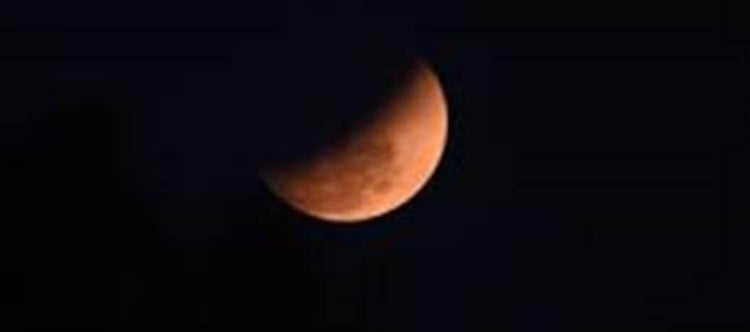


Global: Astronomy enthusiasts around the world witnessed the first lunar eclipse of the year, a spectacular celestial event that offered breathtaking views of the moon as it passed through Earth’s shadow. The phenomenon attracted photographers, amateur astronomers, and curious onlookers eager to capture the rare spectacle.
🌙 About the Lunar Eclipse
A lunar eclipse occurs when the Earth comes between the sun and the Moon, casting a shadow on the lunar surface. Depending on the alignment, the eclipse can be partial, penumbral, or total, often giving the moon a reddish or coppery hue, popularly called a “Blood Moon.”
This year’s first eclipse provided the following:
- Clear visibility in several parts of the world
- A partial or total eclipse, depending on the observer’s location
- An opportunity for photography and sky observation enthusiasts to document the event
📸 Capturing the Celestial Beauty
Photographers and skywatchers shared spectacular images showing:
- The gradual darkening of the Moon
- The distinct reddish tint during totality
- The surrounding night sky with stars and constellations
These photos not only celebrate the eclipse visually but also help in educating the public about astronomical phenomena.
🌍 Global Enthusiasm
The eclipse sparked widespread interest across continents.
- Astronomy clubs and observatories organized viewing sessions and webinars
- Social media was flooded with images and live streams of the moon in eclipse.
- Skywatchers shared tips for photographing the event safely using telescopes and cameras.
🔭 Scientific Significance
Lunar eclipses provide scientists with opportunities to:
- Study the Earth’s shadow and atmospheric effects on sunlight
- Measure subtle changes in the Moon’s brightness and color
- Engage the public in astronomy education
📝 Conclusion
The first lunar eclipse of the year has delighted both casual observers and professional astronomers, leaving behind a collection of stunning photographs and lasting memories. Sky enthusiasts are already looking forward to the next celestial events of the year, continuing to spark curiosity about the wonders of the universe.
Disclaimer:
The views and opinions expressed in this article are those of the author and do not necessarily reflect the official policy or position of any agency, organization, employer, or company. All information provided is for general informational purposes only. While every effort has been made to ensure accuracy, we make no representations or warranties of any kind, express or implied, about the completeness, reliability, or suitability of the information contained herein. Readers are advised to verify facts and seek professional advice where necessary. Any reliance placed on such information is strictly at the reader’s own risk.
.jpg)
 click and follow Indiaherald WhatsApp channel