
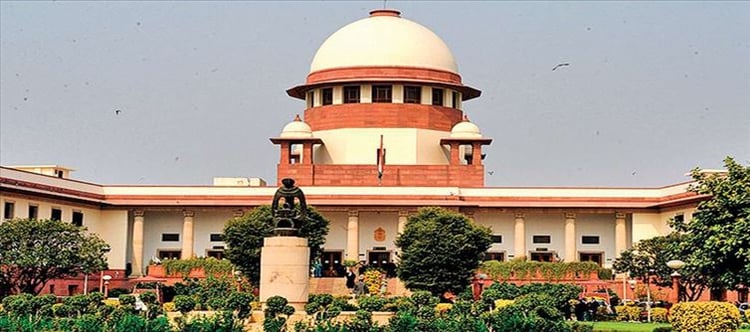


Chief Justice of india recently declared that the Arthashastra conceptualised equality nine centuries before England's Magna Carta of 1215, according to The Times of India. The claim is less an exercise in ancient history than a deliberate jurisprudential move — positioning indian constitutional values as rooted in indigenous civilisational soil rather than borrowed from colonial-era Western frameworks.
Here is a number that does not appear on any law school syllabus: nine hundred years. That is the gap, according to the Chief Justice of india, between the moment Kautilya's Arthashastra first gave voice to the idea of equality and the day, in 1215 CE, when a group of disgruntled english barons forced king John to sign the Magna Carta at Runnymede. As reported by The Times of india, the CJI invoked this chronological chasm not as an antiquarian aside but as a pointed assertion — indian legal philosophy, he suggested, does not owe its deepest principles to Western tradition. It predates them.
It is the kind of claim that makes you sit up. And it should — not because of what it says about the third century BCE, but because of what it reveals about 2026.
Let us start with what the CJI is historically gesturing at. The Arthashastra, attributed to Kautilya (also known as Chanakya), is a sprawling treatise on statecraft, economics, law, and espionage, composed roughly in the fourth century BCE. Scholars such as R. P. Kangle, whose critical sanskrit edition remains authoritative, note that it contains passages prescribing that the king must protect the weak against the strong, that the law should apply regardless of social status, and that a ruler who fails to dispense justice destroys himself. These are real textual positions — they exist on palm leaf and in scholarly translation.
The Magna Carta, by contrast, was never really about equality at all. It was a feudal negotiation — a charter of baronial privileges wrested from a weak king. As journalist and author Salil Tripathi pointed out sharply on social media, 'CJI doesn't seem to know that Magna Carta had nothing to do with equality — it was the original tea party.'
View on XThe document's later reputation as a fountainhead of individual rights is largely a product of 17th-century english legal mythmaking by figures like Sir Edward Coke. Historians such as David Carpenter and Nicholas Vincent have documented exhaustively how the charter was reinterpreted, century by century, until its feudal bones were dressed in Enlightenment clothing.
So the CJI is, in one sense, comparing an apple to an orange — and claiming the apple was sweeter. The Arthashastra's passages on royal duty and legal fairness are genuine, but they operate in a framework of absolute monarchy, espionage networks, and caste-structured society. Kautilya's 'equality before the law' coexists with detailed instructions for surveillance, punishment calibrated by varna, and the strategic use of courtesans. The modern concept of equality — constitutional, justiciable, rights-based — is a product of centuries of philosophical evolution, from the Stoics through the French Revolution to Ambedkar's drafting committee. Claiming Kautilya invented it is a bit like saying the Wright brothers invented the Airbus A380.
But here is the turn that matters far more than the historical quibble.
The CJI's invocation is not really about Kautilya or the Magna Carta. It is about something far more current and consequential: the ongoing project of reframing indian constitutional values as indigenous rather than colonial-inherited. This is a jurisprudential current that has been building for years in the supreme court — a slow, deliberate pivot in the intellectual register of the bench. When the CJI says India's idea of equality is older than England's, the subtext is sharp: why should indian courts treat Western legal precedent as the gold standard when indian civilisation articulated these values first?
This matters enormously for the constitutional battles unfolding right now. Consider three: the Uniform Civil Code, where advocates argue for an indigenously rooted common law framework rather than one derived from colonial-era personal law statutes; the basic structure doctrine, whose origins in the Kesavananda Bharati case (1973) drew on German and Irish jurisprudence — could a civilisational reframing erode its perceived authority?; and the reservations debate, where Kautilya's own text, with its caste-stratified social model, complicates any claim of ancient egalitarianism.
If the court's intellectual architecture shifts from 'we inherited liberal constitutionalism from the british and improved it' to 'our deepest legal principles are Indic and predate colonialism,' then the interpretive lens through which every future case is read changes. Precedent from english common law, American equal protection jurisprudence, european human rights courts — all of it gets subtly downgraded. The civilisational claim becomes a jurisprudential tool.
This is what distinguishes the CJI's remark from a casual speech-day flourish. Legal scholars such as upendra Baxi have long warned about the difference between constitutional patriotism — celebrating the document Ambedkar and the Constituent assembly created — and civilisational nationalism dressed in legal robes. The Arthashastra is an extraordinary text, worthy of study and admiration. But treating it as a proto-constitution flattens its complexity, ignores its deeply hierarchical social vision, and risks reducing the Constitution of india — a radically egalitarian document born of modern democratic struggle — to a mere footnote in a longer civilisational story.
There is a deeper irony, too. The very scholars who first brought the Arthashastra back to modern attention were european Orientalists and indian historians working within colonial-era universities. The text was rediscovered in a mysore library in 1905 by R. Shamasastry — a recovery made possible by the infrastructure of modern scholarship. The idea that this text proves india needs no Western intellectual input is itself partly a product of the cross-pollination it denies.
None of this means the CJI's pride in indian intellectual heritage is misplaced. India's philosophical traditions — in law, ethics, governance, and justice — are staggeringly rich. The Arthashastra, the Manusmriti (however contested), the Dharmasutras, the edicts of Ashoka, the tamil Sangam literature — these constitute a legal and ethical corpus that any civilisation would be proud to claim. The question is not whether india has deep legal roots. It is whether those roots should be wielded as a judicial argument for reinterpreting a modern, secular, rights-based constitution.
The next time the supreme court hears a case that turns on the basic structure doctrine, or the scope of Article 14, or the limits of personal law, listen for the register. If the bench reaches for Kautilya instead of Kesavananda, the CJI's speech was not a flourish. It was the opening argument.
[EMBED-SUGGESTION:video]
More from india Herald


Key Takeaways
- The CJI claimed Kautilya's Arthashastra conceptualised equality nine centuries before England's Magna Carta of 1215 CE, according to The Times of India.
- Historians and commentators note the Magna Carta was a feudal charter of baronial privileges, not a document about equality — its later reputation was a product of 17th-century english legal reinterpretation.
- The Arthashastra contains passages on legal fairness but within a framework of absolute monarchy, espionage, and caste-stratified society — not modern rights-based equality.
- The CJI's remark signals a broader jurisprudential project: reframing indian constitutional values as indigenous rather than colonial-inherited, with implications for the UCC, basic structure doctrine, and reservations debates.
- The Arthashastra was itself rediscovered in 1905 by R. Shamasastry in a mysore library, highlighting the cross-cultural scholarly exchange behind its modern prominence.
Frequently Asked Questions
What did the CJI say about the Arthashastra and Magna Carta?
The Chief Justice of india stated that Kautilya's Arthashastra conceptualised the idea of equality approximately nine centuries before England's Magna Carta of 1215 CE, as reported by The Times of India. He used this to assert that India's legal philosophical roots predate Western constitutional milestones.
Was the Magna Carta really about equality?
No. Historians widely agree the Magna Carta was a feudal charter of baronial privileges extracted from king John in 1215. Its reputation as a foundational document of individual equality was largely constructed through later legal reinterpretation, particularly by 17th-century jurist Sir Edward Coke.
Does the Arthashastra actually advocate modern equality?
The Arthashastra contains passages prescribing that the king must protect the weak and apply the law regardless of status. However, these exist within a framework of absolute monarchy and caste-stratified society, making them significantly different from modern constitutional equality as enshrined in Article 14 of the indian Constitution.
Why does the CJI's remark matter for current legal debates in India?
It signals a broader project to reframe indian constitutional values as indigenous rather than inherited from Western colonial traditions. This could influence judicial reasoning on the Uniform Civil Code, the basic structure doctrine, and reservations by shifting the intellectual register the supreme court draws upon.
When was the Arthashastra rediscovered?
The text was rediscovered in 1905 in a mysore library by scholar R. Shamasastry, who later translated and published it.
 click and follow Indiaherald WhatsApp channel