


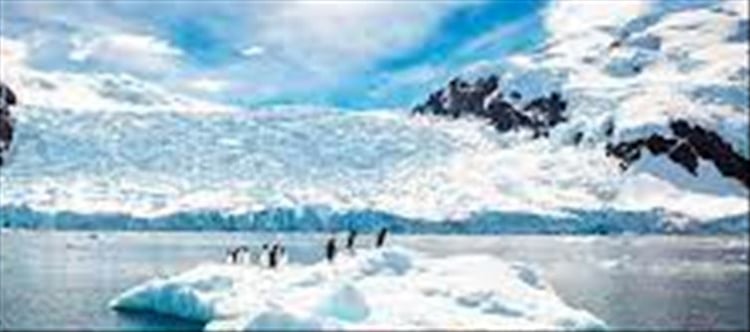

As the Earth's rapidly warming and melting the Arctic ice sheet, a report has found that bacteria, which are undetectable, can spread viruses and antibodies. The report says that the melting of ice could expose nuclear submarines, nuclear reactors, and mine damage during the Cold War.
Frozen Territory
Soviet K27 submarine sank in the Kara sea in 1981. Permafrost is seen as a major factor in the release of greenhouse gases into the atmosphere. The research suggests that the effects may be far-reaching and that the potential for exposure to radiation, radiation, unknown viruses, and other chemicals of concern may be less well known.
Although the Russian government has embarked on a major clean-up operation, the experiment notes that more experiments have been carried out with radioactive substances such as caesium and plutonium between the sea bed, vegetation and ice.
The nuclear-powered research centre under Camp Ice Century in greenland, USA, also produced significant nuclear and diesel waste. It faces a long-term threat posed by changes in the greenland ice sheet.
Arctic Territory
On Earth, only a few places, such as Permafrost, which is more than three meters deep and permanently frozen, are not exposed to antibiotics. The study suggests that more than 100 different microorganisms in Siberia's deep permanent ice sheet may be resistant to antibiotics and that if the membrane melts, it may mix with water to form new bacterial strains with new antibiotic resistance.
Fossil fuels
Waste products of fossil fuels have been in the environment since the beginning of the Industrial Revolution. The report says that tens of thousands of hectares of landfill have been polluted by mining in the area for decades.
Chemicals that can cause high concentrations of contaminants that have previously accumulated inside the permafrost can re-enter the atmosphere and enter the human food chain. Over the past 70 years, more than a thousand dwellings have been built under permanent freezing for reasons such as resource extraction, military missions, and scientific projects. These are chemicals that are trapped in permanent frost, causing pollution but is not yet well understood. The extent of this impact could not be ascertained.
Changes in the Arctic's climate and environment will affect every part of the Earth because it releases carbon into the atmosphere and raises sea levels. This article identifies how other hazards could come from the warming Arctic. It has been like not only greenhouse gases, but also refrigerators for harmful things. We also need to understand these harmful microorganisms, pollutants, nuclear materials and the dangers they pose.
 click and follow Indiaherald WhatsApp channel