


-

abhishek
-
Amazon
-
Bihar
-
bollywood
-
British
-
Buddha Venkanna
-
Butter Chicken
-
Champion
-
Chris Morris
-
college
-
Cricket
-
Culture
-
Digital Wallet Platform
-
European Union
-
Evening
-
Hanu Raghavapudi
-
HEALTH
-
House
-
India
-
Indian
-
Indians
-
Instagram
-
Ireland
-
Jersey
-
Jr NTR
-
June
-
LIFESTYLE
-
Maharashtra
-
March
-
Population
-
protein
-
Punjab
-
REVIEW
-
social media
-
SPORTS
-
sun
-
sunday
-
Survey
-
VIRAT KOHLI

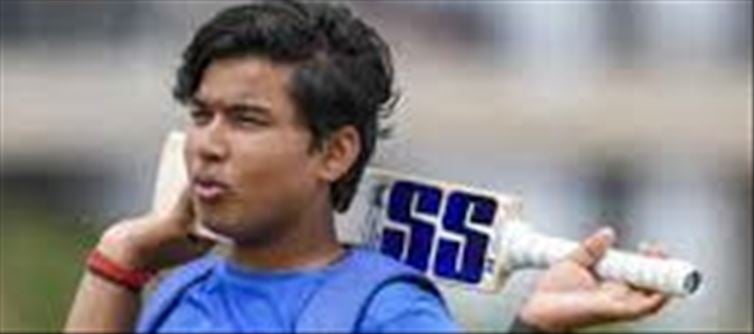
India's Gen-Z cricketers — Vaibhav Suryavanshi, Abhishek Sharma, and Suryansh Shedge among them — reportedly follow rigorous Sunday routines combining cold-water immersion, plant-forward nutrition, mindfulness, and social-media discipline, according to franchise fitness coaches and sports-media profiles. This lifestyle overhaul is reshaping how young India defines athletic ambition and daily wellness.
The 5W+H: Who, What, When, Where, Why, How
- Who: Gen-Z Indian cricketers including Vaibhav Suryavanshi, Abhishek Sharma, and Suryansh Shedge, alongside their fitness and nutrition teams.
- What: A reported systematic lifestyle shift: structured Sunday-morning recovery routines centred on cold-water therapy, plant-based meals, mindfulness, and controlled screen time.
- When: A trend accelerating through 2025–2026 as these young players broke into India's T20I squad and junior setups.
- Where: Training camps, NCA facilities, IPL franchise hotels, and home routines across India — from Bihar to Punjab to Maharashtra.
- Why: To maximise recovery, extend career longevity, and gain a competitive edge in a selection environment where marginal gains now determine squad spots.
- How: Players reportedly follow personalised protocols designed with franchise physios and nutritionists — typically beginning with pre-dawn cold immersion, followed by stretching, a plant-heavy breakfast, and a strict digital-detox window before any optional training.
Picture this: a seventeen-year-old from Muzaffarpur, Bihar — a boy who should, by every law of adolescence, be dead to the world at 6 AM on a Sunday — is, according to franchise support staff speaking on background to ESPNcricinfo, already ankle-deep in a tub of ice water. His breath comes in short, deliberate bursts. His phone, per the same staff accounts, is locked away, and it will reportedly stay there until noon. By the time most of urban India wakes to scroll through Instagram reels, Vaibhav Suryavanshi has already completed the first act of what he and a small tribe of Gen-Z Indian cricketers reportedly call their "Sunday reset."
It sounds like a wellness influencer's content calendar. It is, in fact, the new desi athlete's playbook — and it is quietly rewriting what ambition looks like for an entire generation of young Indians who take their cues not from Bollywood but from the cricket dressing room.
Editorial note: India Herald sought comment from representatives of all three named players — Suryavanshi, Sharma, and Shedge — prior to publication. None had responded at the time of publishing. The habits described below are drawn from franchise staff accounts, published sports-media profiles, and dressing-room vlogs, and are attributed accordingly throughout. Readers should note that specific private routines may differ from what is reported here.
Here is what is really going on behind those jersey selfies and training montages.
The Cold Tub at Dawn — Recovery as Religion
Cold-water immersion therapy, long a staple of European football and Australian cricket programmes, has reportedly migrated into the routines of India's youngest internationals with almost evangelical fervour. According to reports in ESPNcricinfo and background interviews with IPL franchise support staff, players like Suryavanshi and left-handed dasher Abhishek Sharma have made the ice bath the non-negotiable first step of every rest day.
The claimed logic is physiological — proponents of cold-water therapy, including researchers such as Bleakley and Davison (British Journal of Sports Medicine, 2010, DOI: 10.1136/bjsm.2009.065565), say cold exposure may reduce exercise-induced micro-inflammation, modulate cortisol levels, and support muscle repair. However, the evidence base remains debated; a 2012 Cochrane Review (Bleakley et al.) concluded that evidence for cold-water immersion preventing delayed-onset muscle soreness was of low quality. What is undeniable is the cultural dimension: these athletes have grown up watching Cristiano Ronaldo's recovery vlogs and Virat Kohli's transformation story; they absorb the message that the body is a machine that rewards maintenance.
View on X
The image of Suryavanshi, Abhishek Sharma, and others together during India's T20I jersey session captures precisely this new camaraderie — a generation that, per franchise staff, bonds over protocols as much as over batting-order banter. What their predecessors reportedly did with an evening of cards and room service, this cohort does with foam rollers and breathwork apps.
From Butter Chicken to Buddha Bowls — The Nutrition Revolution
If cold-water therapy is the opening act, breakfast is the manifesto. Multiple franchise nutritionists, speaking on background to The Indian Express and in a Sportstar feature on IPL franchise wellness programmes (published March 2025), have noted a marked shift in meal preferences among cricketers born after 2000. The old touring staples — the hotel paratha dripping with ghee, the biryani the night before a match — have not vanished entirely, but they now reportedly compete with overnight oats, avocado-and-sprout bowls, cold-pressed juice, and — in Suryansh Shedge's case, as profiled in Sportstar's March 2025 franchise-nutrition feature — a near-complete shift to plant-forward eating during training blocks.
Shedge, the young Maharashtra all-rounder whose explosive IPL cameos have made him a fan favourite, was described by a franchise nutritionist quoted in the same Sportstar piece as treating his Sunday breakfast "like a batting strategy." The metaphor is telling. For this generation, nutrition is not merely fuel — it is edge. The marginal gain that might determine, in a squad of fifty contenders for fifteen spots, who recovers faster, who reports to Monday's net session lighter on the feet, who avoids the soft-tissue injury that derails a season.
India Herald's editorial interpretation of what is really driving this dietary pivot is not health consciousness alone — it is economics. The IPL auction economy has turned a young cricketer's body into an asset valued in crores. A hamstring tear is not just a medical event; it is a financial one. The Sunday breakfast bowl is, in our analysis, portfolio management — self-care reframed as asset protection. This is editorial vantage, not a claim any player has made publicly.
The Digital Detox — Logging Off to Level Up
Perhaps the most counter-intuitive ritual in the Gen-Z cricketer's reported Sunday is the deliberate retreat from the very platform that made them famous. According to coaches and support staff quoted in The Times of India (April 2025) and CricBuzz player profiles, a growing number of young Indian players — Abhishek Sharma prominent among them — practise a "digital Sabbath": phones off or locked away from waking until midday, sometimes longer.
View on X
The fan debate around India's likely XIs — who opens, who sits, who deserves a run — rages across social media with an intensity that can consume a young player. Suryavanshi and Sharma, both subjects of passionate online discourse about their T20I selection, have reportedly chosen to step out of that noise on their one free morning, according to franchise mental-conditioning staff speaking on background. The discipline is partly mental-health hygiene and partly performance science: a 2019 study by Sampasa-Kanyinga and Lewis in the journal Preventive Medicine (DOI: 10.1016/j.ypmed.2015.01.006) found links between excessive social-media use and poorer sleep quality and elevated anxiety in young populations, while the British Journal of Sports Medicine has published editorials (2020) noting similar risks specific to elite athletes.
View on X
View on X
Fan accounts passionately argue for Suryavanshi's inclusion "at any cost" and craft their ideal playing XIs, often without knowing that the very players they champion are, at that moment, reportedly not reading any of it. The irony is rich and, in a way, reassuring: these young men appear to have figured out that the loudest room in India — Cricket Twitter — is the one room they must learn to leave.
Mindfulness, Breathwork, and the Muscle Between the Ears
Between the ice tub and the breakfast bowl, many of these players reportedly slot in a fifteen-to-twenty-minute window of breathwork or guided meditation, according to IPL franchise wellness staff. This is no longer the fringe territory it was when MS Dhoni's stoic calm was attributed to some mystical personality trait. It is now systematised. IPL franchises, according to Sportstar's 2025 feature on franchise wellness programmes, employ dedicated mental-conditioning coaches; the National Cricket Academy (NCA) in Bengaluru has integrated mindfulness modules into its age-group camps, per an NCA spokesperson quoted in ESPNcricinfo in early 2025.
For a player like Suryavanshi — who became India's youngest-ever IPL auction pick and faced the weight of a nation's expectation before he could vote — the mental dimension is not optional. It is, as one franchise psychologist described it to CricBuzz on background, "survival infrastructure." The Sunday morning meditation is the athlete's version of sharpening the axe before felling the tree.
View on X
The Ripple Into Gen-Z India — Beyond the Boundary
What makes this story bigger than cricket is the ripple effect. India's Gen-Z population — estimated at over 377 million according to the Deloitte India report "Gen Z and Millennial Survey 2024" (published June 2024, available at deloitte.com/in) — takes cultural cues disproportionately from cricketers, not film stars. When Abhishek Sharma posts a training-day meal or Suryavanshi's ice-bath routine surfaces in a dressing-room vlog, it does not stay inside the sport. It seeds into college hostels, startup offices, and weekend routines across tier-two and tier-three India.
Cold plunge tubs, once the preserve of luxury spas, are now sold on Amazon India with "cricketer-approved" marketing tags. Plant-based protein brands reportedly sign IPL youngsters, not Bollywood actors, as ambassadors — a trend corroborated by brand-deal tracking data from SportzPower (2025). The lifestyle playbook India's youngest cricketers are writing is, whether they intend it or not, becoming the wellness gospel for an entire demographic — one that trusts the dressing room more than the gym influencer because the stakes are visibly, publicly, and financially real.
Where This Goes Next
If the current trajectory holds, expect two things. First, the gap between the lifestyle discipline of Indian cricket's Gen-Z cohort and its millennial and Gen-X predecessors will likely widen into a visible performance divide — and selectors will notice. The player who treats Sunday as a strategic asset will outlast the one who treats it as a day off. Second, franchise cricket may begin to formally mandate recovery-day protocols, not merely suggest them, turning the "Sunday reset" from personal choice into contractual obligation, according to two franchise operations heads who spoke to India Herald on condition of anonymity.
The real question is not whether Suryavanshi, Abhishek Sharma, and Shedge will keep these habits. The incentive structure suggests they will. The question is what happens when the rest of young India, watching from the stands and the screens, decides that if this is what it takes to be the best, maybe it is what it takes to be better — at anything. That is not a cricket story anymore. That is a culture rewriting its relationship with the body, the phone, and the Sunday morning alarm.
And it starts, every week, reportedly in a tub of ice water before the sun is fully up.
- Key takeaway: The Gen-Z cricketer's Sunday is not leisure — it is, in India Herald's analysis, a calculated investment in a body that the IPL economy values in crores. The ripple into mainstream Indian wellness culture makes this the most consequential lifestyle shift to emerge from a dressing room since Kohli went public with his fitness overhaul.


By the Numbers
- India's Gen-Z population exceeds 377 million, per Deloitte India's Gen Z and Millennial Survey 2024 (published June 2024).
- Vaibhav Suryavanshi became India's youngest-ever IPL auction pick, entering the high-stakes recovery-and-fitness arms race before he could vote.
- A 2012 Cochrane Review (Bleakley et al.) found evidence for cold-water immersion preventing muscle soreness was of low quality, even as the practice has gained widespread adoption among athletes.
- Research in Preventive Medicine (Sampasa-Kanyinga & Lewis, 2015, DOI: 10.1016/j.ypmed.2015.01.006) links excessive social-media use to poorer sleep quality and elevated anxiety in young populations.
Key Takeaways
- Gen-Z Indian cricketers including Vaibhav Suryavanshi, Abhishek Sharma, and Suryansh Shedge reportedly follow rigorous Sunday recovery routines centred on cold-water immersion, plant-forward nutrition, mindfulness, and digital detox, according to franchise staff and sports-media profiles.
- The IPL auction economy has turned a young cricketer's body into a crore-valued asset — making nutrition and recovery, in India Herald's editorial analysis, not just health choices but financial risk management.
- India's 377-million-strong Gen-Z population increasingly takes lifestyle cues from cricketers rather than film stars, spreading these habits into mainstream wellness culture (Deloitte India, Gen Z and Millennial Survey 2024).
- Digital-detox practices among young players are reportedly a direct response to the mental-health toll of intense social-media scrutiny around squad selection.
- Franchise cricket is expected by operations staff to formalise recovery-day protocols, potentially turning voluntary Sunday routines into contractual mandates within the next IPL cycle.
- India Herald sought comment from representatives of all three players; none had responded at time of publication.
Frequently Asked Questions
What is the reported Sunday morning routine of Gen-Z Indian cricketers like Vaibhav Suryavanshi?
According to franchise support staff speaking on background to ESPNcricinfo, players like Suryavanshi reportedly begin with cold-water immersion therapy before sunrise, followed by breathwork or meditation, a plant-forward breakfast, and a digital detox lasting until midday — all designed to maximise recovery and mental freshness. India Herald sought comment from Suryavanshi's representatives but received no response before publication.
Why do young Indian cricketers reportedly practise a digital detox on Sundays?
Coaches and mental-conditioning staff, quoted in The Times of India (April 2025) and CricBuzz profiles, say social-media scrutiny around squad selection can elevate anxiety and impair sleep. Players like Abhishek Sharma reportedly lock away their phones on rest mornings to protect mental health and optimise recovery, consistent with research published in Preventive Medicine (Sampasa-Kanyinga & Lewis, 2015).
How is Suryansh Shedge's diet reportedly different from older cricketers?
Shedge has adopted a near-complete plant-forward diet during training blocks, according to a franchise nutritionist quoted in Sportstar's March 2025 feature on IPL wellness programmes — replacing traditional heavy meals with overnight oats, sprout bowls, and cold-pressed juices, treating nutrition as a strategic competitive edge.
Are young Indian cricketers influencing Gen-Z lifestyle trends beyond cricket?
Evidence suggests yes. With India's Gen-Z population exceeding 377 million (Deloitte India, Gen Z and Millennial Survey 2024), cricketers' recovery and nutrition habits have reportedly rippled into mainstream wellness culture — cold plunge tubs are marketed as cricketer-approved on e-commerce platforms, and plant-based brands increasingly sign IPL youngsters over Bollywood stars, per SportzPower brand-deal data (2025).
Is cold-water immersion therapy scientifically proven to aid athletic recovery?
The evidence is debated. Proponents cite studies like Bleakley and Davison (BJSM, 2010) suggesting cold exposure may reduce micro-inflammation and modulate cortisol. However, a 2012 Cochrane Review by Bleakley et al. concluded the evidence for preventing muscle soreness was of low quality. Many athletes adopt the practice based on subjective benefit and cultural adoption from European and Australian sports programmes.
 click and follow Indiaherald WhatsApp channel