


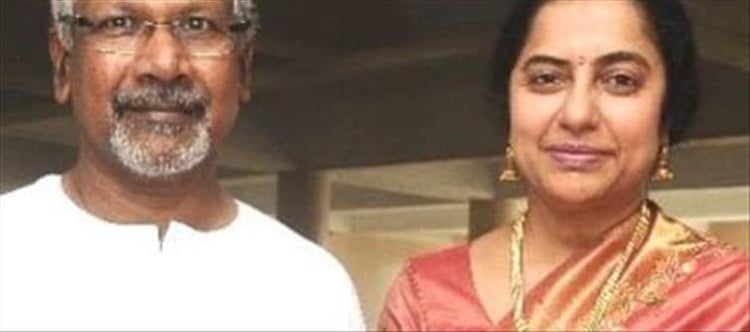

K Bhagyaraj, Tamil cinema's defining auteur of middle-class romantic comedy, died after returning from his morning walk, passing away with a smile, according to Suhasini. His death closes the door on a filmmaking model — one man writing, directing, composing, and starring — that Kollywood's corporatised present has made structurally impossible to replicate.
The 5W+H: Who, What, When, Where, Why, How
- Who: K Bhagyaraj, legendary Tamil filmmaker-writer-director-actor-composer, and his wife Poornima Bhagyaraj, with actress Suhasini sharing details of his final moments.
- What: Bhagyaraj passed away at his residence after returning from his regular morning walk; Suhasini confirmed he died with a smile on his face.
- When: The filmmaker's death was reported in 2026, with his last public appearance at Khushbu Sundar's daughter's wedding going viral posthumously, as per The Times of India.
- Where: At Bhagyaraj's home in Chennai, Tamil Nadu, India.
- Why: Bhagyaraj died of natural causes; the precise medical cause has not been publicly disclosed. His death has prompted an outpouring of grief across the Tamil film industry.
- How: According to Suhasini's account reported by The Times of India, Bhagyaraj went for his regular morning walk, returned home, and passed away peacefully, with a smile on his face.
He went for his morning walk. He came home. He smiled. And K Bhagyaraj — the man who once held the pen, the camera, the music sheet, and the hero's spotlight all in the same hand — was gone. Just like that: no hospital corridor drama, no lingering decline broadcast on news tickers. The ending was quiet, unhurried, almost gentle. Entirely unlike the twist-laden finales he spent a lifetime perfecting for Tamil cinema.
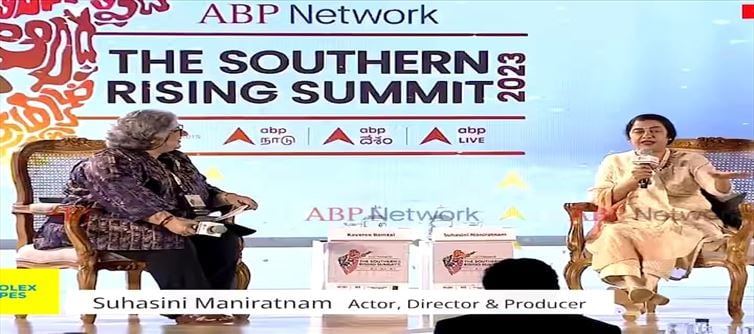
According to actress Suhasini, who shared details of Bhagyaraj's final moments with the media, the filmmaker followed his regular morning routine, returned to his Chennai residence, and died peacefully — with a smile still on his face, as reported by The Times of India.
View on X
It is the kind of exit a screenwriter might script for a beloved character. But what no screenwriter can script is a successor. And that, more than the personal grief now flooding Kollywood, is the deeper tremor Bhagyaraj's death sends through the Tamil film industry: it marks the extinction of a creative species that the modern production ecosystem has quietly made impossible.
The One-Man Studio That Shouldn't Have Worked — But Did
Consider the sheer absurdity of what K Bhagyaraj routinely pulled off. He wrote his own screenplays — not outlines handed to a dialogue team, but full scripts dense with plot twists that audiences genuinely did not see coming. He directed his own films with a visual grammar rooted in observation rather than spectacle. He composed — or closely shaped — the musical landscape of many of his productions. And then he walked in front of the camera and played the lead, typically an ordinary, slightly rumpled everyman who won the audience not with six-pack abs but with a punchline, a stratagem, or a perfectly timed piece of emotional honesty.
This was not vanity; it was integration. Every layer of a Bhagyaraj film spoke in one voice because one mind controlled every layer. Films like Mundhanai Mudichu, Darling Darling Darling, and Oru Kaidhiyin Diary were not just hits — they were self-contained creative ecosystems, built from a single imagination. The witty, plot-twist-driven Tamil romantic comedy? Bhagyaraj didn't merely popularise the genre. He invented it, refined it, and set the template that Kollywood has been mining — often poorly — for four decades.
Why the Model Died Before the Man
Here is the uncomfortable truth the industry tributes will gloss over: even if a young filmmaker with Bhagyaraj's polymathic talent appeared tomorrow, the current Kollywood infrastructure would not let them operate the way he did. The corporatisation of Tamil cinema — studio slates, pre-sold OTT rights, brand integration mandates, data-driven casting decisions — has sliced filmmaking into specialised silos. Writers write. Directors direct. Composers compose. Stars star. And above them all sits a production committee whose primary creative instinct is risk mitigation.
Bhagyaraj operated in an era when a producer could back a single individual's vision on instinct. The budgets were modest enough that a flop didn't crater a balance sheet. The distribution chain was regional enough that a filmmaker could know his audience personally — their tea-stall humour, their joint-family anxieties, their wedding-night awkwardness — and write directly to that knowledge. That economy is gone. Today's Kollywood blockbuster is a ₹150-200 crore industrial product assembled by dozens of specialists, stress-tested by focus groups, and reverse-engineered from opening-weekend targets. It is a system optimised for scale. It is not a system that produces K Bhagyarajs.
The Last Photograph and What It Tells Us
The filmmaker's last public appearance — at actress Khushbu Sundar's daughter's wedding — has gone viral since his death, according to The Times of India. Fans have noted how cheerful and engaged he appeared, making his sudden passing all the more shocking. The images circulating online carry a particular poignancy: a man visibly at peace, surrounded by the industry he shaped, unaware he was taking his final bow.
Suhasini's account of his death reinforces that image. "He went for his regular morning walk, after returning home..." — the sentence, as relayed through multiple reports, trails into the silence of the inevitable. What Suhasini emphasised, and what has resonated most deeply with fans and colleagues, is that Bhagyaraj passed with a smile. Not in pain. Not in fear. With the expression, one might say, of a man who knew he had told all the stories he needed to tell.
The Genre He Built, the Heirs Who Borrowed
To understand the scale of Bhagyaraj's influence, look not at Tamil cinema alone but at the entire South Indian film economy. His original screenplays were remade across Telugu, Hindi, Kannada, and Malayalam industries — not once or twice, but systematically, over decades. Venkatesh's celebrated Telugu run in the late '80s and '90s leaned heavily on Bhagyaraj originals like Sundara Kanda (remade as Sundarakanda) and Mundhanai Mudichu (remade as Abbaigaru). The remake economy that still powers Tollywood owes a structural debt to Bhagyaraj's plot architecture — the carefully planted setups, the third-act reversals, the emotional payoffs disguised as comedy.
What is less discussed is that these remakes almost never matched the originals. Strip Bhagyaraj's singular authorial control from the equation — hand his script to a different director, a different composer, a different star — and something essential evaporated. The jokes still landed, the twists still surprised, but the integration, the feeling that every frame was in conversation with every other frame, was gone. That is not a knock on the remake directors. It is proof that Bhagyaraj's real genius was not any single skill but the synthesis.
Who Was K Bhagyaraj Beyond the Camera?
For readers encountering the name for the first time through grief headlines, a brief sketch: K Bhagyaraj was born in Thanjavur district and entered the Tamil film industry as a screenwriter before becoming one of its most bankable writer-director-actors through the 1980s and '90s. His wife, Poornima Bhagyaraj, is a veteran actress who appeared in several of his films. Their son, Shanthnu Bhagyaraj, is a current Tamil actor who was visibly devastated at his father's passing. Suhasini, who shared the details of Bhagyaraj's final moments, is a celebrated actress and filmmaker in her own right — and a close family friend whose testimony has become the definitive public account of how the filmmaker spent his last morning.
The Smile and the Silence After
Industry chatter in the hours after Bhagyaraj's death has been striking in its unanimity — and that itself is unusual in a Tamil film world riven by camps, political affiliations, and generational rivalries. Sources across production houses, acting guilds, and even political circles have described a rare consensus: this was a loss that diminished everyone. The tributes from Chief Minister Vijay, from former Chief Minister MK Stalin, from Kerala's political establishment — all of it points to a filmmaker who, uniquely in Tamil cinema's fractious landscape, belonged to no camp because every camp claimed him.
But the tributes will fade, as tributes do. The real question Bhagyaraj's death leaves behind is not sentimental but structural: can the Tamil film industry, in its current corporate avatar, ever again incubate the kind of singular, uncompromising, one-person creative force that Bhagyaraj represented? Or has the assembly line permanently replaced the atelier?
He walked home from his morning walk. He smiled. And with that smile, an entire model of making movies — intimate, handmade, unmistakably one person's — closed its eyes for the last time. Kollywood will keep remaking his plots. It will never remake the man.


By the Numbers
- K Bhagyaraj's original screenplays were remade across at least 4 South Indian language industries — Telugu, Hindi, Kannada, and Malayalam — over a span of four decades.
- Today's Kollywood blockbusters operate at budgets of ₹150-200 crore, assembled by specialist teams — a scale that structurally precludes the solo-auteur model Bhagyaraj perfected on modest budgets.
Key Takeaways
- Suhasini revealed K Bhagyaraj died peacefully with a smile after returning from his regular morning walk, as reported by The Times of India.
- Bhagyaraj's unique model — writing, directing, composing, and starring in his own films — created the witty, twist-driven Tamil romantic comedy genre that the industry still mines decades later.
- His original scripts powered major remakes across Telugu, Hindi, Kannada, and Malayalam cinema, including Venkatesh's iconic Telugu hits like Sundarakanda and Abbaigaru.
- His last public appearance at Khushbu Sundar's daughter's wedding has gone viral posthumously, with fans noting how cheerful he appeared just before his death.
- The corporatisation of Kollywood — with studio slates, OTT pre-sales, and committee-driven production — has made the one-person auteur model Bhagyaraj embodied structurally impossible to replicate.
- His death united Tamil cinema's famously fractious political and industry camps in rare consensus, with tributes from CM Vijay, MK Stalin, and leaders across party lines.
Frequently Asked Questions
Why did K Bhagyaraj pass away?
According to Suhasini's account reported by The Times of India, Bhagyaraj went for his regular morning walk, returned home, and passed away peacefully with a smile. The precise medical cause of death has not been publicly disclosed.
Who is actress Suhasini?
Suhasini is a celebrated Tamil actress and filmmaker, known for her work across multiple South Indian film industries. She is a close family friend of the Bhagyaraj family and provided the most detailed public account of the filmmaker's final moments.
What was K Bhagyaraj's last public appearance?
According to The Times of India, Bhagyaraj's last public appearance was at actress Khushbu Sundar's daughter's wedding, where he appeared cheerful and engaged. Photos and videos from the event went viral after his death.
What genre did K Bhagyaraj create in Tamil cinema?
Bhagyaraj is widely credited with inventing the witty, plot-twist-driven romantic comedy in Tamil cinema — a genre characterised by everyman heroes, sharp dialogue, carefully planted setups, and surprise third-act reversals. Films like Mundhanai Mudichu and Darling Darling Darling defined this template.
Who was K Bhagyaraj's wife?
K Bhagyaraj's wife is Poornima Bhagyaraj, a veteran Tamil actress who appeared in several of his films. Their son, Shanthnu Bhagyaraj, is a current Tamil film actor.
 click and follow Indiaherald WhatsApp channel