




ukraine war 100th day..! Fear of Global food crisis?
It has been Russia's 100th day of the attack on Ukraine. people all over the world, mostly take wheat, corn, and rice as their 3 foods in their daily diet. These three foods make up almost 40 percent of the world's population. Wheat production is projected to fall by four million tonnes this year, or 0.51 percent, according to U.S. Department of Agriculture estimates. Similarly, there is expected to be a slight decline in maize production.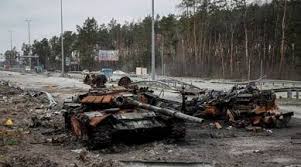 However, rice production is expected to touch 515 million tonnes. The decline in the above food production is minimal. However, as food exports have been hampered by the Ukraine-Russia war, there has been a warning that even a slowdown in food production could have a greater impact.
 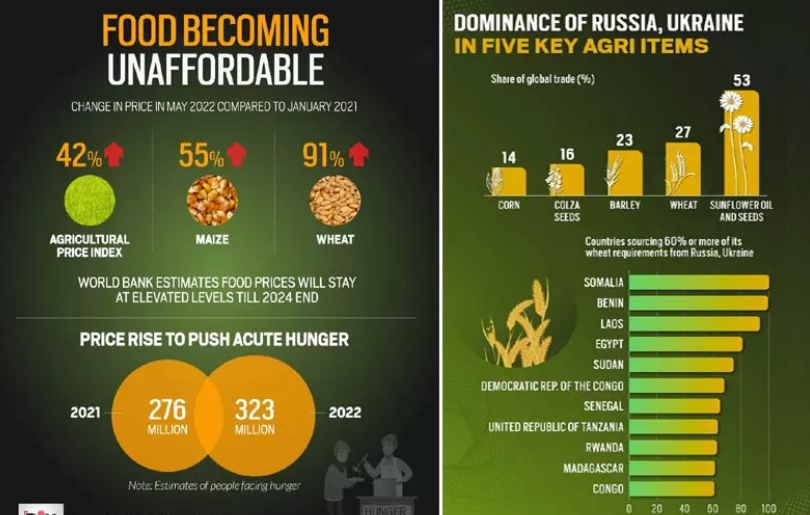 Ukraine and russia are the two largest exporters of maize and wheat, two of the world's most widely used foodstuffs. 25 African countries depend on wheat imported from two countries, ukraine and Russia. It is estimated that these countries import more than one-third of their total wheat demand.
 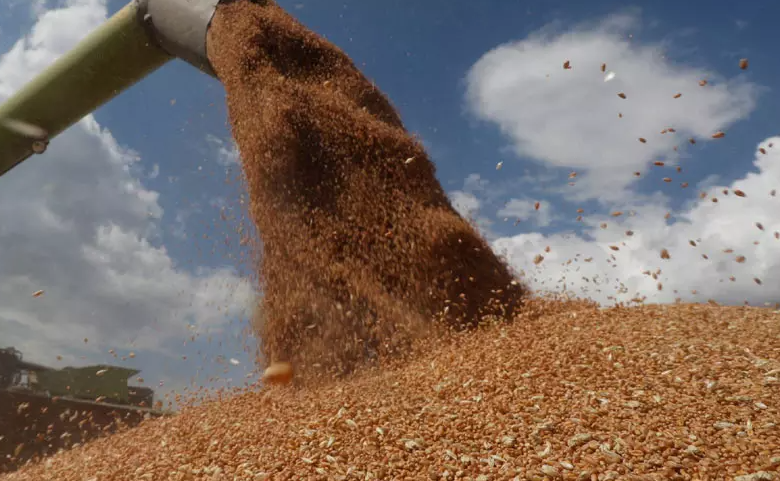 Similarly, 15 countries depend on imports from ukraine and russia for 50 percent of their wheat demand. In the current context, most of these countries are forced to look for alternatives. In this situation, many more food-exporting countries, such as ukraine and russia, have imposed some restrictions on the trade-in of food items.It is becoming impossible for the public to buy even the
  food items that they normally buy and use. This has pushed most people to the brink of extreme food security. For example, wheat prices have risen 91 percent globally since january 2021. According to World bank data, the price of maize rose by 55 percent during the same period. Around the world, 45 countries, mostly located in Africa, South Asia, and Latin America, are bearing the brunt of some of the worst effects of the crisis. Yemen, Lebanon, Haiti, Nigeria, Sri Lanka, Ethiopia, and Sudan, which are heavily dependent on food exports, have been hit hardest by various factors. The World Food Program predicts that if this trend continues, a dire situation will arise. Accordingly, food prices have been steadily rising since mid-2020. The current surge has pushed most countries into food shortages between 2008 and 2011.
It has been Russia's 100th day of the attack on Ukraine. people all over the world, mostly take wheat, corn, and rice as their 3 foods in their daily diet. These three foods make up almost 40 percent of the world's population. Wheat production is projected to fall by four million tonnes this year, or 0.51 percent, according to U.S. Department of Agriculture estimates. Similarly, there is expected to be a slight decline in maize production.
However, rice production is expected to touch 515 million tonnes. The decline in the above food production is minimal. However, as food exports have been hampered by the Ukraine-Russia war, there has been a warning that even a slowdown in food production could have a greater impact. Ukraine and russia are the two largest exporters of maize and wheat, two of the world's most widely used foodstuffs. 25 African countries depend on wheat imported from two countries, ukraine and Russia. It is estimated that these countries import more than one-third of their total wheat demand. Similarly, 15 countries depend on imports from ukraine and russia for 50 percent of their wheat demand. In the current context, most of these countries are forced to look for alternatives. In this situation, many more food-exporting countries, such as ukraine and russia, have imposed some restrictions on the trade-in of food items.It is becoming impossible for the public to buy even the food items that they normally buy and use. This has pushed most people to the brink of extreme food security. For example, wheat prices have risen 91 percent globally since january 2021. According to World bank data, the price of maize rose by 55 percent during the same period. Around the world, 45 countries, mostly located in Africa, South Asia, and Latin America, are bearing the brunt of some of the worst effects of the crisis. Yemen, Lebanon, Haiti, Nigeria, Sri Lanka, Ethiopia, and Sudan, which are heavily dependent on food exports, have been hit hardest by various factors. The World Food Program predicts that if this trend continues, a dire situation will arise. Accordingly, food prices have been steadily rising since mid-2020. The current surge has pushed most countries into food shortages between 2008 and 2011. click and follow Indiaherald WhatsApp channel