
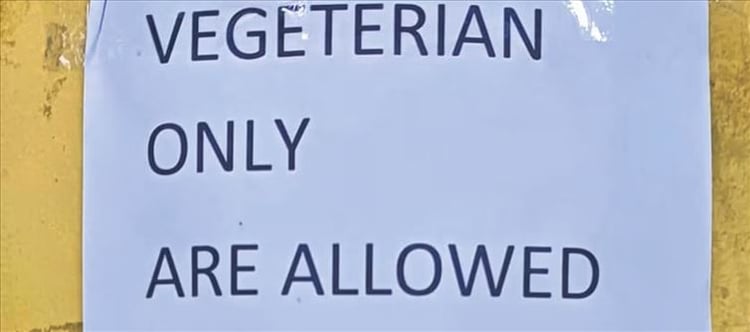


Declaring that the judgment sets a "dangerous precedent," this is the first public statement from the student media group. Emphasizing the distinctions between living in a dorm and a house, Insight emphasized how crucial it is to adjust to a new setting. The paper recognized the need for mutual assistance, but it considered it absurd to accept the demand for division in the name of inclusion. According to the report, this can result in the establishment of exclusive areas based on individual preferences, which would not be consistent with the inclusion tenets.
When the mess council of IIT-B's dormitories 12, 13, and 14 agreed to set aside six different tables for vegetarian meals, commotion broke out. Even though many IIT bombay community members had doubts about this choice, monday night's Insight piece sparked a heated debate among students about the wider ramifications of this isolation.
The article listed the current examples of inclusion in mess settings, such as having Jain cuisine available and serving meals before dawn during Ramadan and before dusk during Paryushan. These services are provided without restricting or interfering with the options open to any student. Nonetheless, the article argues that a campus cannot be considered "inclusive" if it just accommodates the interests of a single group.
Insight claims that in order to establish a friendly campus, it is essential to have empathy for the issues and worries that all students face, but this empathy shouldn't be misdirected.
The article went on to say that decisions about common areas might be abused if personal preferences are allowed to take precedence. It also highlighted concerns about how this practise would undermine the integrity of dorm elections, since candidates can vow to divide communal spaces according to personal preferences in order to win over votes from particular student populations. This would exacerbate division during dorm elections.
 click and follow Indiaherald WhatsApp channel