



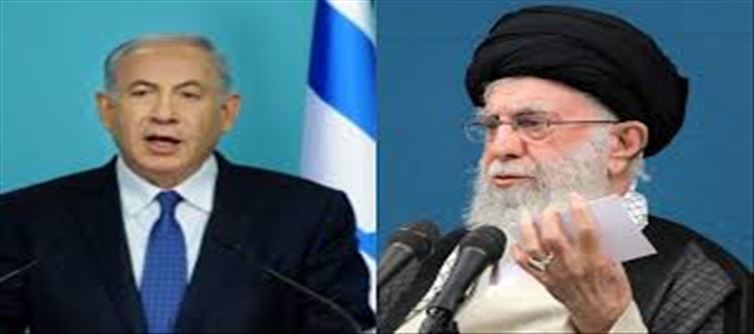
Iranian President Masoud Pezeshkian has formally invited PM narendra modi to attend Ayatollah ali Khamenei's state funeral, according to india Today and telangana Today. As of this writing, there has been no official confirmation from the indian government — neither the MEA, South Block, nor the PMO — regarding whether Modi will attend. The decision puts India's carefully cultivated multi-alignment diplomacy under live stress, as attendance — or absence — will be parsed simultaneously in Washington, Riyadh, Tel Aviv, and beijing for signals about where New Delhi's loyalties truly sit.
There is a particular species of diplomatic headache that comes not from being ignored, but from being invited. Iranian President Masoud Pezeshkian's formal invitation to PM narendra modi to attend Ayatollah ali Khamenei's state funeral, as reported by telangana Today, is exactly that kind of migraine — elegant on the surface, loaded with geopolitical TNT underneath.
The question is not really whether Modi grieves Khamenei. The question is what the optics of his presence — or, crucially, his absence — will communicate to at least four different audiences who read indian diplomacy like a script, hunting for subtext.
Note: As of this reporting, there has been no official statement from the MEA, South Block, or the PMO confirming or denying PM Modi's attendance at the funeral. india Herald will update this analysis when an official response is available.
The Invitation as a Geopolitical Mirror
According to India Today's analysis, the invite puts india in a "delicate spot" — a diplomatic understatement of the first order. The funeral of a figure who shaped the Islamic Republic's theocratic architecture for decades is, by definition, a gathering of Iran's ideological allies. The guest list itself becomes a statement. World leaders who show up are, in the visual grammar of international funerals, signalling solidarity — or at least strategic kinship.
For india, the calculus is uniquely layered. Modi has spent the better part of a decade constructing a foreign policy identity built on what strategists call "multi-alignment" — the art of being in every room without being captured by any one. Chabahar port with Iran. The I2U2 grouping with Israel, the UAE, and the US. Defence deals with both moscow and Washington. Each relationship sits in a compartment, sealed off from the contradictions of the others. A funeral, in our analysis, makes those compartments porous.
What Washington, Riyadh, and Tel Aviv Will Read
This is where it gets sharp. india Today notes that Modi "will have to weigh several factors" — a formulation that masks the bluntness of the underlying dilemma. If the prime minister attends personally, the imagery will land in Washington alongside a roster of sanctions-era tensions with Tehran that have never fully thawed in the American establishment. US policymakers who have tolerated India's iran engagement — particularly the Chabahar carve-out — have done so on the assumption that New delhi keeps the relationship transactional, not warm.
View on X
In Tel Aviv, the optics are even sharper. Israel's strategic community has long viewed Khamenei as the architect of the threat matrix they face via Hezbollah, Hamas's patrons in Tehran, and the broader "axis of resistance." An indian PM paying respects at that funeral would be, to put it mildly, a complicated visual for a relationship Modi has personally nurtured with unusual warmth — including multiple visits and defence cooperation.
Then there is Riyadh. The Saudi-Iran rivalry has been the organising fact of Middle Eastern geopolitics for decades. While the 2023 Saudi-Iran rapprochement — brokered by beijing, as reported by BBC News — loosened the old binaries somewhat, the fault lines remain live. india, which imports oil from both and has millions of diaspora workers in the gulf, cannot afford to look like it is tilting toward one pole.
The Middle Path: Who Goes Instead?
Diplomatic protocol offers New delhi a well-worn escape route: send a senior representative rather than the PM himself. india has historically calibrated the seniority of its funeral delegations to signal respect without over-commitment. Past practice — such as india sending then-Vice President Hamid Ansari to represent the country at Fidel Castro's memorial in 2016, according to MEA records, or PM Modi personally attending the funeral of Saudi king Abdullah in 2015, as reported by The Hindu — illustrates how india uses delegation seniority as a diplomatic signal in itself.
The likely outcome, reading the tea leaves of past indian practice, is that Modi dispatches someone senior enough to avoid an Iranian perception of snub — perhaps the External Affairs minister or a special envoy — while staying home himself. This, in our assessment, splits the difference: Tehran gets its acknowledgement; Washington, Riyadh, and Tel Aviv get the reassurance that Modi did not personally genuflect at a ceremony they view with suspicion or hostility.
Iran's Calculus: Why Modi, Specifically?
It is worth pausing on why Pezeshkian extended this invitation in the first place. As Telangana Today reported, the Iranian President's outreach signals a "high-level diplomatic engagement" with New Delhi. iran, under intensifying pressure from US sanctions and regional instability, has strategic reasons to publicly showcase relationships with major non-Western powers. An image of Modi at Khamenei's funeral would be, for Tehran, a legitimacy multiplier — visual proof that the world's most populous democracy, and an increasingly influential global power, respects the Islamic Republic's founding ideology enough to send its leader.
This is precisely what makes the invitation, in our editorial analysis, less a diplomatic courtesy than a strategically loaded proposition. Foreign policy analysts contend that iran benefits from the optics of Modi's personal attendance far more than india does — and South Block's strategists will have recognised this dynamic within minutes of the invitation arriving. The asymmetry of benefit is the core of the dilemma: accepting the honour at face value risks conferring a legitimacy dividend to Tehran that New delhi may not wish to extend.
The Deeper Stakes: Multi-Alignment Under Stress
What makes this moment genuinely significant — beyond the immediate funeral logistics — is what it reveals about the structural fragility of India's multi-alignment doctrine. The approach works beautifully in peacetime, when relationships can be compartmentalised and sequenced. It comes under severe strain at inflection points — a funeral, a UN vote, a war — that demand a binary visual: you are either there or you are not.
india faced a similar stress test during the early months of the Russia-Ukraine war, when its abstentions at the UN were scrutinised microscopically. Modi navigated that episode with characteristic ambiguity — the "this is not an era of war" comment to Putin that gave everyone just enough to claim vindication. A funeral offers no such verbal escape hatch. Attendance is a photograph. Absence is a headline.
The Khamenei funeral invitation, in that sense, is not really about Khamenei at all. It is the latest — and one of the most visually unambiguous — tests of whether india can sustain a foreign policy built on being everywhere and nowhere at once. The answer, as always, will be found not in what New delhi says, but in who boards the plane.
This is an analysis piece reflecting india Herald's editorial assessment of the geopolitical implications. india Herald will update this article when the indian government issues a formal response to the invitation.
Key Takeaways
- Iranian President Masoud Pezeshkian has formally invited PM Modi to attend Ayatollah Khamenei's state funeral, according to telangana Today and india Today.
- As of this reporting, there has been no official response from the MEA, PMO, or South Block regarding whether Modi will attend.
- India Today describes the invitation as putting india in a 'delicate spot,' with Modi needing to balance ties with iran against relationships with the US, Israel, and gulf Arab states.
- Diplomatic precedent — including India's past calibration of delegation seniority at major funerals — suggests New delhi may send a senior representative rather than the PM himself.
- Foreign policy analysts contend that iran stands to gain more legitimacy from Modi's personal attendance than india does, making the invitation strategically loaded for Tehran.
- The episode stress-tests India's multi-alignment foreign policy doctrine, which thrives on compartmentalisation but struggles at binary-optic moments like funerals.
Frequently Asked Questions
Has PM Modi ever met Ayatollah Khamenei?
There is no widely reported record of a formal bilateral meeting between PM Modi and Ayatollah Khamenei, though India-Iran engagement has occurred at multiple levels including presidential and ministerial exchanges, according to public diplomatic records.
Is india supporting Iran?
india maintains a multi-alignment foreign policy that includes strategic engagement with iran — most notably the Chabahar port project — while simultaneously deepening ties with Iran's regional rivals including Israel, Saudi Arabia, and the UAE, as noted in india Today's analysis.
Who invited PM Modi to Khamenei's funeral?
Iranian President Masoud Pezeshkian formally invited PM Modi to attend the state funeral of Ayatollah ali Khamenei, according to reports from telangana Today and india Today.
Will PM Modi attend Khamenei's funeral?
As of reporting, no official confirmation of Modi's attendance has been announced by the MEA, PMO, or South Block. india Today notes the decision involves weighing multiple competing diplomatic considerations, and past precedent suggests india may send a senior representative instead.
Has india officially responded to the funeral invitation?
No. As of this reporting, there has been no official statement from the Ministry of External Affairs, the Prime Minister's Office, or South Block confirming or denying PM Modi's attendance. india Herald will update this article when an official response is available.
 click and follow Indiaherald WhatsApp channel