


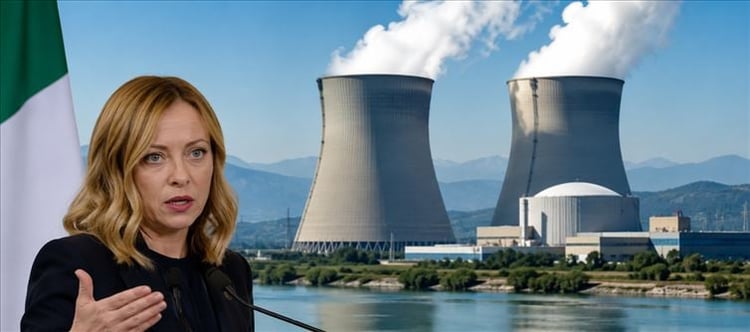

Trump's claim of a historic iran nuclear agreement forces india to recalculate on three fronts: Chabahar port operations that depend on sanctions waivers, crude oil imports from iran worth billions, and New Delhi's delicate balancing act between Washington and Tehran. According to telangana Today, iran has not confirmed it agreed to abandon nuclear weapons — making India's wait-and-watch posture both prudent and precarious.
Here is the part no official readout from the Ministry of External Affairs will say aloud — and to be clear, this is this publication's editorial assessment, not a sourced claim about government thinking: india likely does not know whether to celebrate or brace for impact. When donald trump stood before cameras and declared that iran had agreed to dismantle its nuclear weapons programme — what he called a 'historic peace agreement' — the immediate question for indian strategists was not whether the deal was real. It was: how long will it last, and what does it cost us either way?
According to Telangana Today, trump claimed iran had consented to abandon nuclear weapons entirely. But the fine print, as always with Trump-era diplomacy, is where the vertigo begins. Iran's own public posture has been far more ambiguous — with Tehran reportedly pushing back on the characterisation of what was agreed, as noted in the same telangana Today report.
That ambiguity is not an abstraction for India. It is the difference between billions of dollars in trade flowing freely and billions stuck in sanctions limbo.
Chabahar: India's Major Bet on Iranian Goodwill
India's Chabahar port project — its flagship answer to Pakistan's Gwadar and China's Belt and Road stranglehold — has survived this long on the oxygen of US sanctions waivers. According to Reuters reporting from May 2024, india signed a ten-year agreement to operate Chabahar port, a deal that multiple indian government statements have described as valued at approximately $370 million in direct operational terms, with broader associated investments that indian media outlets including The Hindu and Economic Times have estimated in the range of $1.6 billion when factoring in rail and road connectivity projects. Every time Washington tightened the screws on Tehran, New delhi spent diplomatic capital arguing that Chabahar was a humanitarian and Afghan transit corridor, not a sanctions-busting enterprise. If Trump's deal genuinely lifts the nuclear overhang, those waivers become moot. India's port operations could finally function without the perpetual anxiety of secondary sanctions.
But if the deal is more performative than permanent — and the history of Trump's first-term withdrawal from the JCPOA offers a sobering precedent — india could find itself exposed on both flanks: having invested heavily in Iranian infrastructure while facing a Washington that snaps the sanctions back on.
View on X
Oil Imports: The Billions at Stake
Before the original US sanctions tightened under Trump's first term, india was Iran's second-largest oil customer. According to data cited by the US Energy Information Administration and corroborated by India's Petroleum Planning and Analysis Cell, india imported roughly 500,000 barrels per day of Iranian crude at peak levels. That figure collapsed to near-zero by 2019. indian refineries pivoted — expensively — to Saudi, Iraqi, and Russian crude. A genuine normalisation of US-Iran relations would reopen the Iranian tap, potentially saving indian refiners billions in procurement costs and giving New delhi leverage in OPEC+ negotiations.
But refiners are not naive. According to analysis published by the Oxford Institute for Energy Studies, indian oil companies have historically required durable legal certainty before committing to long-term procurement contracts with sanctioned nations. Trump's track record on iran agreements — he tore up the last one — makes corporate india understandably skittish.
The Senate Fracture trump Cannot Ignore
Adding to New Delhi's calculation: Trump's own party is not unified. According to reporting by ap and CNN, Senate Republicans have publicly broken with the President on iran war powers. Separately, widely reported confrontations between trump and Republican senators over iran strategy — including a heated exchange with senator Bill Cassidy reported by multiple US outlets including Politico — have made global headlines. For india, this internal American fracture is not just Washington theatre — it signals that whatever trump signs today, congress could undermine tomorrow.
In the assessment of this publication — and this framing reflects editorial analysis, not a sourced diplomatic position — the US may need this deal more than iran does, a reality that shifts the leverage calculus in ways New delhi must account for.
India's Diplomatic Tightrope: israel, iran, and the Gulf
The geopolitical geometry is dizzying. india maintains warm ties with israel — a relationship that deepened under Modi — while simultaneously cultivating iran for energy and connectivity. A US-Iran detente, paradoxically, could complicate India's israel relationship if it is perceived as legitimising Tehran's regional ambitions. gulf monarchies, particularly saudi arabia and the UAE, would also recalibrate. According to data from India's Ministry of Commerce, India-Gulf bilateral trade was valued at approximately $90 billion in the 2023-24 fiscal year — partnerships that would feel the tremors of any regional realignment.
This is what india Herald's editorial board assesses as the unstated calculus inside India's foreign policy establishment: a Trump-Iran deal does not simplify India's choices. It multiplies them. When both sides claim victory, the real question is who pays the cost of the ambiguity — and in this case, middle powers like india are squarely in the payment queue.
What New delhi Is Actually Watching
Forget the press conference rhetoric. indian foreign policy professionals, according to analysis published by the Carnegie india programme and the Observer Research Foundation, are tracking three specific markers:
First, whether the international Atomic Energy Agency (IAEA) gets unfettered inspection access — trump has confirmed inspectors will visit, according to telangana Today, but Tehran's cooperation remains the real test. Second, whether the US Treasury issues formal, durable sanctions relief or merely executive waivers that a future president can revoke. Third, whether Iran's pushback on the deal's characterisation hardens into outright rejection — a scenario that would leave india stranded between a triumphant Washington and a humiliated Tehran.
The mood among indian strategic commentators — as reflected in published analysis by institutions including the Institute for Defence Studies and Analyses — is what you might call informed scepticism laced with hope. The scepticism about Trump's rhetorical excesses sits alongside genuine recognition that a nuclear-free iran would be transformative for indian interests. The outrage and the optimism coexist, uneasily, as they always do when trump is the author of the plot twist.
For india, the real 'historic' moment is not the announcement. It is whatever comes sixty days after it — when the inspectors report, the sanctions architecture is tested, and the deal either becomes policy or becomes another cautionary tale about the gap between a presidential claim and geopolitical reality.
Key Takeaways
- Trump claims iran agreed to abandon nuclear weapons under a 'historic peace agreement,' but iran has not fully confirmed the characterisation, according to telangana Today.
- India's Chabahar port investment — estimated at $1.6 billion including connectivity projects, according to indian media reports — depends on US sanctions waivers; a genuine deal could liberate operations, but a collapse could leave india exposed.
- India was once Iran's second-largest oil customer at roughly 500,000 barrels per day, according to US Energy Information Administration data; sanctions reduced this to near-zero, and indian refiners need durable legal certainty before re-engaging.
- Senate Republicans have publicly broken with trump on iran war powers, according to ap and CNN reporting, signalling that any deal may face Congressional challenge — a risk india must factor in.
- New delhi is tracking three markers: IAEA inspection access, formal vs. executive sanctions relief, and whether Iran's pushback hardens into rejection, per analysis by Carnegie india and the Observer Research Foundation.
- India's israel and gulf relationships add further complexity — a US-Iran detente does not simplify New Delhi's choices but multiplies them.
Frequently Asked Questions
What deal did trump make with Iran?
According to telangana Today, trump claimed iran agreed to abandon nuclear weapons under a 'historic peace agreement.' However, iran has not fully confirmed this characterisation, and the specifics — including inspection protocols and sanctions relief timelines — remain contested.
Why does the Trump-Iran deal matter for India?
india has significant investments in Iran's Chabahar port (estimated at $1.6 billion including connectivity projects, per indian media reports), was once Iran's second-largest oil customer according to US Energy Information Administration data, and maintains delicate diplomatic ties with both Washington and Tehran. The deal's success or failure directly affects India's energy security, connectivity strategy, and sanctions exposure.
Does iran agree with trump on the nuclear deal?
Iran's public response has been ambiguous. While trump claims full agreement to dismantle nuclear weapons, Tehran has reportedly pushed back on how the agreement is being characterised, according to telangana Today's reporting, creating uncertainty about the deal's durability.
Why is trump fighting Iran?
The US-Iran confrontation stems from decades of tension over Iran's nuclear programme, regional influence, and support for proxy groups. trump escalated with sanctions and military posturing, while also pursuing a deal — a strategy critics call contradictory and supporters call 'maximum pressure diplomacy.'
Does trump support israel or Iran?
trump has historically aligned closely with israel, but his pursuit of an iran deal introduces complexity. A US-Iran detente could concern israel if it legitimises Tehran's regional role — a tension india also watches carefully given its ties to both nations.
 click and follow Indiaherald WhatsApp channel