


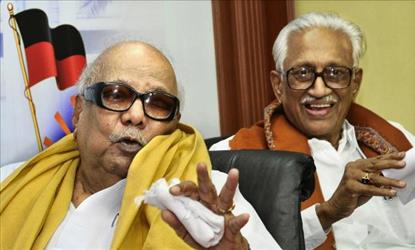

The indian Union Muslim League has formally ended its nearly six-decade-old alliance with the DMK and declared support for Vijay's Tamilaga Vettri Kazhagam (TVK), according to Scroll.in. The move signals not merely a personality-driven gamble on a film star's political vehicle, but a calculated bid by IUML's tamil Nadu leadership to secure greater political representation — seats, ministries, and voice — that IUML leaders say the DMK had steadily denied its smallest allies. The DMK has not issued a formal public response to IUML's allegations as of this report.
In tamil Nadu's coalition bazaar, loyalty has always been a negotiable commodity — but some partnerships were presumed permanent. The indian Union Muslim League's alliance with the DMK was one of them: nearly sixty years of shared rallies, shared governments, shared rhetoric about social justice and secular solidarity. That it has now ended — formally, publicly, and with a pointed embrace of Vijay's Tamilaga Vettri Kazhagam — is a significant shift in the state's political landscape. And it tells us far more about what IUML leaders say has gone wrong inside the DMK's big tent than it does about what TVK has got right.
According to Scroll.in, the IUML has officially ended its alliance with the DMK and thrown its weight behind TVK. The party's tamil Nadu unit head, Kader Mohideen, has been quoted in the Scroll.in report and in tamil media press conferences in recent months articulating the reasons for the departure.
In press interactions covered by tamil media outlets, IUML leaders have expressed pointed frustration about what they describe as inadequate seat allocations and minimal ministerial representation within the DMK-led coalition. The tone of these interactions — visible in publicly available press conference footage — suggests a leadership that views the break as irreversible rather than a negotiating tactic. India Herald has reached out to the DMK for a response to IUML's specific claims about seat-share compression and representation; no official statement has been issued by the DMK as of publication.
The Arithmetic of Resentment
To understand IUML's exit, you need to understand the math of diminishing returns — at least as IUML's leadership frames it. The DMK's coalition management under M.K. stalin assembled a sweeping front that demolished the AIADMK combine. But IUML leaders have argued, across multiple press interactions reported by outlets including Scroll.in, that this coalition efficiency for the senior partner came at the cost of ruthless seat-share compression for junior allies. Their stated complaint is that the party was expected to mobilize voters in specific constituencies but was given vanishingly few seats to contest and almost no ministerial berths in return.
It should be noted that these are IUML's characterizations. The DMK has not publicly confirmed or denied these specific claims about seat allocations and ministerial representation, and india Herald will update this report when a DMK response is available.
Multiple smaller DMK allies have reportedly expressed similar concerns. But IUML is the first to act on them with this degree of finality — and the reason, analysts suggest, is that for the first time in decades, there is somewhere else to go. TVK, Vijay's political vehicle, is assembling a rival front. According to Scroll.in's reporting, IUML's move to TVK reflects an expectation of more generous seat allocations and a more prominent coalition role, though the specific terms of any seat-sharing arrangement have not been publicly confirmed by either party.
Vijay's Pull — or DMK's Push?
The temptation in covering this story is to frame it as the gravitational pull of Vijay's star power. And yes, TVK's emergence as a potential electoral contender has redrawn the map of possibilities. But the more honest reading — the one IUML's own leaders have articulated — is that this is primarily a push story, not a pull story. IUML did not leave because Vijay dazzled them. They left, by their own account, because the DMK gave them insufficient reason to stay.
Consider the broader pattern as described by IUML leadership and political commentators. IUML leaders have argued that the DMK treated its minority-community allies as constituency-level mobilizers rather than genuine coalition partners entitled to proportional representation. According to estimates cited by political analysts and consistent with election commission of india demographic data, Muslim voters constitute roughly 5.5 to 6 percent of tamil Nadu's electorate. Political scientists studying tamil Nadu's assembly segments have estimated that this population is concentrated enough to influence outcomes in approximately 15 to 20 constituencies — a significant factor in the state's tight electoral arithmetic.
What IUML Brings to TVK — and What It Risks
IUML's organizational presence in tamil Nadu is modest but real: it has pockets of influence in districts like Ramanathapuram, Thanjavur, and parts of Chennai, where its community networks can be electorally relevant. For TVK, adding IUML is not a trophy alliance — it is a tactical acquisition of ground-level organizational networks that a party still building its grassroots infrastructure would find valuable.
But IUML is taking a genuine risk. The DMK remains the dominant force in tamil Nadu politics, and abandoning its coalition means IUML is betting that TVK can either form the next government or at minimum become the principal opposition. If TVK underperforms, IUML could find itself in the political wilderness — locked out of both the ruling alliance and the opposition front, its bargaining position weakened rather than strengthened.
The DMK's Dilemma: Shrug It Off or Recalibrate?
How seriously should the DMK take this? On one hand, IUML's departure does not mathematically doom the ruling front — the party's direct vote-share contribution is limited. On the other hand, coalition politics is about signaling. If IUML's exit emboldens other restive small allies — if it becomes the proof of concept that leaving the DMK is survivable — then the real impact is not what IUML takes away but what it demonstrates is possible.
The DMK has not publicly commented on IUML's departure or on the specific allegations about seat-share treatment. india Herald will update this story when a DMK response is available. The party's eventual response — whether it scrambles to replace IUML's constituency-level role, engages in outreach to remaining allies, or dismisses the departure as inconsequential — will reveal much about how the ruling front reads the political moment.
The Question That Outlasts the news Cycle
This break forces a question that coalition partners across indian politics are increasingly asking: does permanent loyalty to a dominant party translate into proportional representation and policy influence? Or does it create a dynamic where the junior partner's leverage diminishes with every election cycle of unquestioned support?
IUML's answer, in 2026, is that loyalty without commensurate representation is unsustainable. Whether TVK rewards them with a genuinely larger political role, or whether this gamble leaves them stranded between two fronts, will be one of the defining subplots of tamil Nadu's next election. Either way, the era of the unquestioned junior ally in Dravidian coalition politics may be shifting — and the DMK's biggest challenge may not be Vijay's charisma, but the quiet recalculation of partners who have finally decided the terms of alliance must change.
Key Takeaways
- IUML has formally ended its nearly 60-year alliance with the DMK and declared support for Vijay's TVK, per Scroll.in — one of the longest coalition partnerships in tamil Nadu politics is over.
- The break is driven, according to IUML leaders, by accumulated frustration over what they describe as shrinking seat allocations and near-zero ministerial representation within the DMK front. The DMK has not publicly responded to these claims.
- IUML brings ground-level organizational networks in key tamil Nadu districts — a tactical asset for TVK's coalition-building, but a risky bet if TVK underperforms electorally.
- The real concern for the DMK may not be IUML's modest vote-share departure but the precedent it sets for other restive small allies contemplating their own exits.
- Muslim voters constitute an estimated 5.5-6% of tamil Nadu's electorate, per election commission demographic data and political analysts' estimates — concentrated enough to influence approximately 15-20 constituencies in tight races.
Frequently Asked Questions
Why did IUML leave the DMK alliance after nearly 60 years?
According to Scroll.in, IUML's tamil Nadu leadership grew increasingly frustrated over what they described as shrinking seat allocations and minimal ministerial representation within the DMK-led coalition, prompting them to seek a new alliance with Vijay's TVK. The DMK has not publicly responded to these specific claims.
What is IUML's full form and who leads it in tamil Nadu?
IUML stands for indian Union Muslim League. Its tamil Nadu unit is led by Kader Mohideen, who has been quoted in Scroll.in and tamil media outlets about the party's reasons for leaving the DMK alliance.
Does IUML support TVK or DMK in 2026?
As of 2026, IUML has officially ended its DMK alliance and declared support for TVK (Tamilaga Vettri Kazhagam), the political party founded by actor Vijay, according to Scroll.in.
How many seats can IUML influence in tamil Nadu elections?
While IUML's direct vote-share is modest, Muslim voters constitute an estimated 5.5-6% of tamil Nadu's electorate, according to estimates by political analysts consistent with election commission of india demographic data. Analysts estimate this population is concentrated enough to influence outcomes in approximately 15-20 assembly constituencies.
Will IUML contest seats under TVK's alliance in 2026 tamil Nadu elections?
Scroll.in's reporting indicates IUML's move to TVK reflects an expectation of more generous seat allocations, though the specific terms of any seat-sharing arrangement and IUML's candidate list for 2026 have not been publicly confirmed by either party.
Has the DMK responded to IUML's departure?
As of publication, the DMK has not issued a formal public response to IUML's exit or to IUML's specific claims about seat-share compression and inadequate representation. india Herald will update this report when a DMK response is available.
 click and follow Indiaherald WhatsApp channel