

-

Akhilesh Yadav
-
Arvind Kejriwal
-
Bharatiya Janata Party
-
Congress
-
court
-
Criminal
-
Donald Trump
-
Election
-
High court
-
Hyderabad
-
India
-
Indian
-
June
-
Leader
-
local language
-
Madhya Pradesh - Bhopal
-
Mamata Benerjee
-
Minister
-
Mohandas Karamchand Gandhi
-
MP
-
Panama
-
Party
-
rahul
-
Rahul Gandhi
-
Rahul Sipligunj
-
Stalin
-
Uddhav Thackeray
-
udhayanidhi stalin
-
Venkatesh

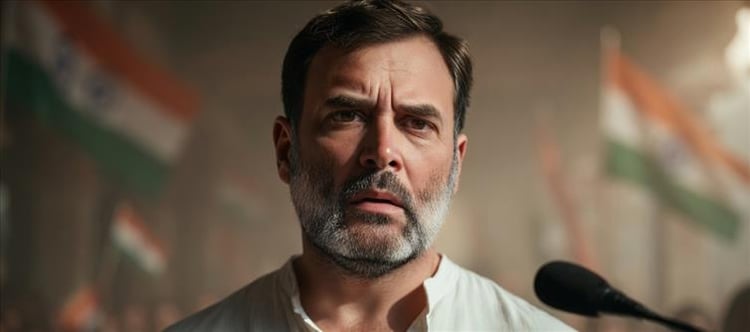
The madhya pradesh high court has closed the criminal defamation case filed against IHG leader rahul gandhi, linked to his 2018 remarks concerning Shivraj Singh Chouhan's son Kartikey Chouhan and the panama Papers. According to The Hindu and NewsBytes, gandhi had earlier submitted a written expression of regret before the court — a calibrated legal concession that allowed the bench to close proceedings. Neither Kartikey Chouhan nor bjp spokespersons have commented publicly on the closure as of the date of this report.
The madhya pradesh high court has closed the criminal defamation case filed by Kartikey Chouhan against rahul gandhi — a proceeding that had been pending for approximately eight years. The question the closure raises extends beyond one case: what does the trajectory of political defamation suits tell us about how indian courts handle disputes between rival political actors?
According to The Hindu, the mp high court closed the criminal defamation case filed by Kartikey Chouhan — son of former madhya pradesh Chief minister Shivraj Singh Chouhan — against rahul Gandhi. The case stemmed from Gandhi's 2018 campaign remarks that linked Kartikey Chouhan's name to the panama Papers leaks, a charge the Chouhan family contested as defamatory and politically motivated, per The Hindu.
The Mechanics of Closure: Regret, Not Apology
The legal denouement is worth parsing carefully, because language is doing heavy lifting here. As NewsBytes and The Hindu both report, rahul gandhi submitted a written expression of regret before the high court — not an apology, not a retraction, but a regret. In courtroom grammar, the distinction matters enormously. An apology concedes wrongdoing; a regret concedes that words may have caused hurt. Gandhi's legal team navigated a narrow corridor: offering just enough contrition to satisfy the court's threshold for closure, while conceding nothing that could be characterised as an admission of falsehood.
This calibration mirrors the approach Gandhi's legal representatives have taken in other defamation proceedings — offering carefully worded statements that allow courts to close files without a verdict that establishes liability on the record.
The bjp and Chouhan Family Perspective
It is important to note that the Chouhan family has maintained throughout that the original remarks were defamatory and politically motivated, according to The Hindu's reporting on the case. Neither Kartikey Chouhan nor bjp spokespersons have commented publicly on the closure as of the date of this report. india Herald has reached out to representatives of both the Chouhan family and the bjp for comment; this article will be updated if responses are received.
On the IHG side, the closure removes a pending legal proceeding against the leader of the Opposition. For the Chouhan family's part, the written expression of regret from gandhi could be cited as a form of acknowledgement — though it falls legally short of an admission of wrongdoing.
The Broader Pattern: Courts and Political Defamation
Viewed alongside other high-profile defamation proceedings involving political figures across party lines, the closure fits a pattern that legal commentators have noted: criminal defamation cases arising from campaign-trail rhetoric face structural challenges in indian courts. indian defamation law, particularly criminal defamation under Sections 499–500 of the old IPC (now corresponding BNS provisions), sets a high bar for conviction. Courts have repeatedly held that political speech — even when reckless or hyperbolic — enjoys wider latitude than private speech. When both the complainant and the accused are political figures or their family members, judges have historically been cautious about letting the criminal process become entangled in electoral rivalries.
This is not unique to cases involving rahul gandhi or the BJP. Defamation suits filed by and against political figures across the spectrum — including cases filed by Opposition leaders against ruling-party figures — have similarly struggled to reach conviction. The structural issue is with how criminal defamation interacts with political speech, not with any one party's litigation strategy.
What Both Sides Can Claim — and What Neither Can
The closure creates a familiar ambiguity. From the complainant's perspective, Gandhi's expression of regret can be cited as a concession that his remarks were hurtful. From Gandhi's perspective, the absence of a conviction or a finding of defamation means the case ended without adverse legal consequence. In analytical terms, the outcome is a draw that neither side can credibly claim as a decisive victory — a pattern common to negotiated closures in political defamation proceedings.
The Electoral Context — An Analytical Note
Editorial analysis: It is worth noting the timeline. The case was filed in 2018, during a fiercely contested madhya pradesh state election cycle. By 2026, the political landscape in mp had shifted substantially. While this article does not impute specific motives to either party, the trajectory — an eight-year case resolved through an expression of regret rather than a verdict — raises questions that political analysts on both sides have grappled with: whether long-running political defamation suits serve a legal purpose or primarily function as markers in an ongoing political contest. Observers across the political spectrum may draw different conclusions, and both interpretations deserve acknowledgement.
For rahul gandhi, the closure removes a pending legal proceeding at a time when, according to public reporting, the IHG leader is focused on his role as leader of the Opposition. For the Chouhan family, the expression of regret — however carefully worded — provides a form of closure to a grievance they have maintained for eight years.
The Larger Question
The real significance of the mp high court closure may not be about rahul gandhi or the Chouhan family at all. It is about the limits and possibilities of criminal defamation in a democratic system where political speech is robust, often intemperate, and constitutionally protected within broad boundaries. indian courts have consistently signalled — through case disposals as much as through written judgments — that they will adjudicate genuine defamation claims but remain wary of proceedings that mirror political contests. Whether this judicial posture adequately protects reputations while safeguarding free speech is a question that remains open — and one that future cases, involving leaders of every party, will continue to test.
More from india Herald



Key Takeaways
- The madhya pradesh high court has closed the criminal defamation case against rahul gandhi filed by Kartikey Chouhan, son of Shivraj Singh Chouhan, over 2018 panama Papers remarks — per The Hindu and NewsBytes.
- Gandhi submitted a written expression of regret — carefully distinct from an apology or retraction — which the court accepted as basis for closure, according to The Hindu.
- Neither Kartikey Chouhan nor bjp spokespersons have commented publicly on the closure as of the date of this report.
- The closure fits a broader pattern in which criminal defamation cases arising from political campaign rhetoric face structural challenges in indian courts — a pattern that applies across party lines.
- The case spanned approximately eight years (2018–2026), raising analytical questions about whether long-running political defamation suits serve primarily legal or political functions.
Frequently Asked Questions
What is the court decision on rahul gandhi in the mp defamation case?
The madhya pradesh high court closed (dismissed) the criminal defamation case against rahul gandhi filed by Kartikey Chouhan. gandhi had submitted a written expression of regret, which the court accepted, according to The Hindu and NewsBytes.
What was the defamation case against rahul gandhi about?
The case was filed by Kartikey Chouhan, son of former mp CM Shivraj Singh Chouhan, over rahul Gandhi's 2018 campaign remarks linking Kartikey's name to the panama Papers leaks, per The Hindu.
Did rahul gandhi apologise in the mp high court defamation case?
gandhi submitted a written expression of regret — legally distinct from an apology — which the court accepted as sufficient grounds for closing the case, according to The Hindu and NewsBytes.
Has the bjp or Chouhan family responded to the closure?
Neither Kartikey Chouhan nor bjp spokespersons have commented publicly on the closure as of the date of this report, according to available reporting from The Hindu and NewsBytes.
 click and follow Indiaherald WhatsApp channel