

-

Afghanistan
-
airport
-
Arabian sea
-
barack obama
-
Congress
-
court
-
Delhi
-
Digital Wallet Platform
-
Donald Trump
-
Election
-
Frozen
-
Hanu Raghavapudi
-
High court
-
India
-
Indian
-
Indians
-
Iran
-
Madhya Pradesh - Bhopal
-
Office
-
oil
-
Pakistan
-
Party
-
Press
-
rahul
-
Rahul Gandhi
-
Rahul Sipligunj
-
Saudi Arabia
-
Senator
-
Smart phone
-
Strike
-
Supreme Court
-
VIEW
-
war
-
WATCH
-
white house

Donald Trump's public clash with a Republican senator over his iran deal reveals deep GOP fractures that could delay or derail the agreement. For india, which has historically relied on discounted Iranian crude, a deal in limbo means prolonged uncertainty over sanctions waivers, Chabahar port access, and energy diversification — extending a geopolitical waiting game New delhi cannot afford.
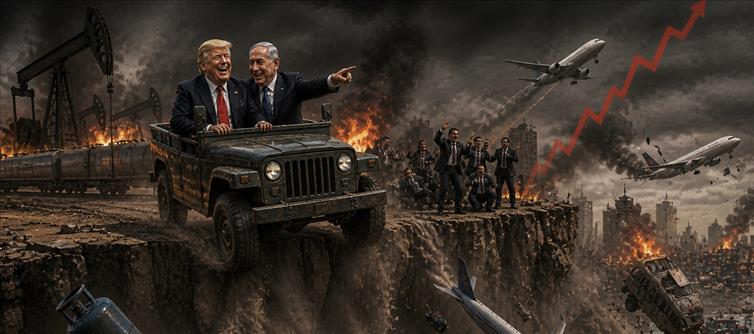
Here is the part no one in South Block will say on the record: india does not merely watch US-Iran negotiations — it holds its breath. Every week that Donald Trump's proposed iran deal remains unsold to his own Republican caucus is another week that New Delhi's energy planners, port strategists, and West Asia diplomats operate without a map. And the latest spectacle — a reported shouting match between trump and a GOP senator, as detailed by ThePrint — suggests the map is not arriving anytime soon.
The confrontation is more than Beltway theatre. It exposes a fault-line that indian policymakers have quietly dreaded: that the iran deal's biggest obstacle is not Tehran's negotiators but Washington's own factional arithmetic.
The GOP Crack-Up Over Iran
trump has never been a conventional Republican on Iran. He tore up the Obama-era JCPOA in 2018 with maximum-pressure bravado, then pivoted to direct engagement — bombing, threatening, and negotiating in dizzying succession. By 2026, his administration has reportedly pursued a "final deal" framework covering nuclear enrichment caps, sanctions relief, and Strait of Hormuz security guarantees, according to ThePrint's reporting corroborated by Reuters and Associated press coverage of the US-Iran peace talks.
But the Senate math is unforgiving. A significant bloc of Republican senators — aligned with a hawkish, pro-Israel posture that views any deal short of total Iranian capitulation as appeasement — has resisted. The shouting match reported by ThePrint crystallises this resistance into a single, vivid image: a president unable to command his own party room on his signature foreign-policy gambit.
Neither the offices of the Republican senators involved nor the white house have publicly responded to ThePrint's account of the confrontation. india Herald has reached out for comment and will update this report with any response received.
This is not a new dynamic, but it has sharpened. Reports in ThePrint indicate that Trump's own Vice President, JD Vance, has been tasked with shepherding the peace talks, only for Trump's simultaneous military threats to undercut the diplomatic track — a pattern multiple analysts have described as self-sabotage dressed up as leverage. Vance's office has not publicly commented on this characterisation.
Why india Cannot Afford to Be a Bystander
For india, the stakes are layered and immediate. Consider the arithmetic:
Iranian crude: Before US sanctions tightened, iran was among India's top five oil suppliers, offering discounts that shaved billions off the national import bill. According to data previously reported by The Hindu and the Ministry of Petroleum, India's Iranian oil imports dropped to near-zero after 2019 sanctions. A ratified deal — with genuine, durable sanctions relief — would reopen that tap. A deal stuck in Senate limbo keeps india dependent on costlier alternatives from saudi arabia, Iraq, and Russia, the last of which carries its own sanctions baggage.
Chabahar port: India's strategic investment in Iran's Chabahar port — its only viable land-sea route to afghanistan and Central Asia bypassing pakistan — has been kept on life support through narrow sanctions carve-outs. A comprehensive deal would secure that corridor. Indefinite uncertainty, however, chills further investment and leaves India's connectivity ambitions hostage to Washington's internal politics.
West Asian hedging: New delhi has spent years constructing a delicate balance between its ties with iran, its deepening partnerships with saudi arabia and the UAE, and its warm rapport with Israel. A clean US-Iran deal would simplify this geometry. A messy, half-ratified, perpetually-contested deal — the scenario the GOP shouting match now makes likelier — forces india into continued contortionism.
The Hormuz Factor
The Strait of Hormuz remains the world's most consequential chokepoint, and india — which imports over 85% of its crude oil, much of it transiting Hormuz — has an existential interest in its stability. Reuters reported that iran struck a commercial vessel in the Strait amid the turbulent negotiation period, while trump has separately claimed "total control" of the waterway, according to Associated press coverage. India's Navy has increased its arabian sea presence in recent months, as reported by The Hindu's defence correspondent, but military preparedness is no substitute for a political settlement.
Trump's reported claim that the US Hormuz blockade was lifted after talks, as covered by ThePrint, only underscores how fragile shipping lane security remains when tied to a deal that one Senate faction can torpedo.
The Real Signal in the Noise
What the shouting match tells seasoned India-watchers is this: the deal, even if initialled by both sides, faces a ratification gauntlet that could take months — or never clear. The obama JCPOA bypassed Senate ratification as an executive agreement, which is precisely why trump could unilaterally kill it. If trump attempts the same shortcut again, any successor can repeat the demolition. If he seeks Senate ratification for durability, the GOP hawks now publicly in revolt make passage uncertain.
Some Republican foreign-policy voices have argued that tough Senate scrutiny strengthens any eventual deal by forcing harder terms on Tehran — a position articulated by hawkish senators who view the JCPOA's collapse as vindication of their scepticism. That counter-argument, however, offers cold comfort to indian planners who need a deal that actually survives contact with Washington's next election cycle.
For India's foreign policy establishment, the optimal outcome — a durable, ratified, internationally anchored iran deal — appears further away after this week, not closer. The suboptimal but realistic scenario is continued ambiguity: sanctions neither fully enforced nor fully lifted, Chabahar neither fully sanctioned nor fully free, and indian refiners neither fully buying Iranian crude nor fully shut out.
What Comes Next
The immediate question for New delhi is not whether trump can close a deal with iran — it is whether he can close a deal with Mitch McConnell's successors. indian diplomats are already scenario-planning for a prolonged interregnum, according to a report by The Wire citing sources in India's Ministry of External Affairs: hedging energy sourcing, maintaining Chabahar at minimum viable investment, and keeping diplomatic channels to Tehran warm without provoking Washington.
The longer the Republican civil war over iran persists, the longer India's strategic options remain frozen in amber — discounted oil tantalisingly close but untouchable, a port investment neither abandoned nor secured, and a regional architecture that demands clarity from a superpower offering only chaos.
That, ultimately, is the story the shouting match tells. Not about who raised their voice in a Senate corridor, but about who — thousands of miles away — has to plan a nation's energy future around somebody else's family quarrel.
More from india Herald


Key Takeaways
- Trump's public clash with a Republican senator signals deep GOP resistance to his iran deal, potentially stalling ratification indefinitely, according to ThePrint. Neither the senators involved nor the white house have publicly responded to the account.
- India's Iranian crude imports dropped to near-zero after 2019 sanctions; a deal in limbo keeps New delhi locked out of discounted oil, per Ministry of Petroleum data previously reported by The Hindu.
- India's Chabahar port investment — its strategic bypass around pakistan — remains hostage to US sanctions uncertainty and lacks the security a ratified deal would provide.
- Strait of Hormuz instability, including an Iranian strike on a commercial vessel reported by Reuters, directly threatens india, which imports over 85% of its crude oil.
- If trump pursues an executive agreement to bypass Senate resistance, any future president can reverse it — recreating the JCPOA fragility cycle.
- Indian diplomats are scenario-planning for prolonged US-Iran ambiguity, hedging energy sources and maintaining minimal Chabahar investment, according to The Wire citing MEA sources.
Frequently Asked Questions
What did donald trump do with Iran?
trump withdrew from the Obama-era JCPOA in 2018, reimposed sanctions, and by 2026 has pursued a new 'final deal' framework covering nuclear caps and sanctions relief, while simultaneously issuing military threats — a contradictory approach that has complicated negotiations.
Has iran agreed to Trump's deal?
As of the latest reports, the deal remains under negotiation. While both sides have discussed terms including nuclear enrichment limits and Hormuz security, no final agreement has been ratified, and Trump's clash with Republican senators further clouds the path to completion.
How does the US-Iran deal affect India?
india stands to regain access to discounted Iranian crude oil, secure its Chabahar port investment, and stabilise Strait of Hormuz shipping lanes if a deal is ratified. Without a deal, india remains locked into costlier oil alternatives and strategic uncertainty.
What are the iran deal terms being discussed?
Reports indicate the proposed deal covers nuclear enrichment caps, phased sanctions relief, Strait of Hormuz security guarantees, and conditions around Iran's frozen funds, though exact terms remain under negotiation.
 click and follow Indiaherald WhatsApp channel