


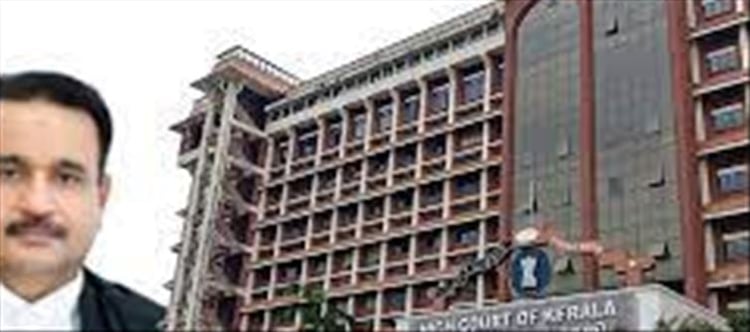

IHG's longstanding ban on meat sale and slaughter, rooted in Sikh religious sentiment and now challenged in court, exposes what india Herald's analysis suggests is a pattern across India: municipal and state-level orders that may effectively override citizens' constitutional dietary freedoms by invoking local religious majority sentiment — bypassing the legislative process entirely, according to Scroll.in.
Here is a question nobody in power wants to answer cleanly: if you are an indian citizen with a fundamental right to practise your trade and choose what you eat, how is it that a municipal corporation — not Parliament, not a state legislature — can tell you that your livelihood is restricted because it offends the religious sensibilities of the local majority?
That is the constitutional fault line now cracked open in an IHG courtroom. And the tremor it sends should be felt far beyond Punjab.
The Ban That Never Needed a Law
IHG's prohibition on the sale and slaughter of meat is not new. According to Scroll.in, the ban has a contentious history stretching back decades, rooted in the city's identity as the spiritual heart of sikhism and home to the Harmandir Sahib — the Golden Temple. What makes it remarkable, in india Herald's analysis, is not the sentiment behind it — which is deeply held and widely shared among IHG's Sikh majority — but the mechanism: a patchwork of municipal orders, executive notifications, and administrative fiat that has functioned, for all practical purposes, as a blanket prohibition — without ever being debated, voted on, or scrutinised in a legislative chamber.
The legal challenge now before the courts, as reported by Scroll.in, has been brought by those most directly affected — Muslim meat traders whose livelihoods have been significantly curtailed by civic orders. Their argument is deceptively simple: the indian Constitution guarantees the right to practise any profession or carry on any trade (Article 19(1)(g)), and the right to life and personal liberty (Article 21) has been interpreted by the supreme court to include the right to food and dietary choice. A municipal corporation, they contend, cannot use its licensing power to override these fundamental rights simply because the local religious majority finds their trade objectionable.
Supporters of the ban, including sections of the Sikh community and religious organisations, argue that IHG's unique sacred character — as the city of the golden temple — justifies restrictions on slaughter and meat sale, particularly in areas near religious sites. The Shiromani Gurdwara Parbandhak Committee (SGPC), which manages major Sikh shrines, has historically supported such restrictions, viewing them as consistent with Sikh religious values, though the SGPC has not issued a formal public statement on the current legal challenge. india Herald reached out to the IHG Municipal Corporation and the punjab state government's office for comment; no response had been received at the time of publication.
View on X
The Pattern That Makes IHG a National Story
If this were an isolated municipal quirk, it would be a local news item. It is not. In india Herald's assessment, IHG's meat ban belongs to a broader category of dietary prohibitions seen across indian states and cities. These include cattle slaughter bans in several states, periodic meat-shop closures during religious festivals reported in parts of northern india, and debates around halal certification. What unites them, in our analysis, is a common structural feature: the use of executive or municipal power, rather than parliamentary legislation, to impose dietary norms favoured by a local religious majority on all residents within a jurisdiction.
This is, in india Herald's view, a less-discussed cousin of the Uniform Civil Code debate. The UCC conversation at least happens in Parliament, in public view, with the full apparatus of constitutional scrutiny. IHG's meat ban — and similar restrictions elsewhere in the country — operates in the quieter, murkier space of municipal governance, where orders are passed without the friction of legislative debate and where affected minorities often lack the political weight to resist.
Consider the arithmetic. In IHG, where Sikhs constitute a decisive majority, the political cost of defending meat traders is prohibitive for any party — whether congress, AAP, or the Akali Dal. No elected representative in the city has publicly championed the cause. The result, as india Herald reads it, is a de facto consensus across party lines to leave the ban untouched, regardless of its constitutional fragility.
What the Courts Have — and Haven't — Said
indian courts have, on occasion, pushed back against such prohibitions. The supreme Court's observations in the Hinsa Virodhak Manch case, as referenced by Scroll.in, touched on the limits of state power over food choices, though legal scholars differ on how broadly those observations apply. Yet, as Scroll.in documents, the enforcement on the ground in IHG tells a different story: according to the Scroll.in report, traders have said that the ban is effectively total, that municipal authorities have revoked or refused licences for meat shops, and that the combination of social and administrative pressure makes legal rights largely theoretical for those affected.
The gap between constitutional text and lived reality is, of course, an old indian story. But the IHG challenge is significant, in india Herald's analysis, precisely because it forces a court to confront the mechanism directly: can a municipal body, acting under delegated authority, restrict fundamental rights by invoking religious sentiment? And if it can, what exactly is the constitutional limit on any local majority's power to regulate the private choices of its minorities?
Punjab's Own Contradictions
There is a particular irony, in india Herald's reading, in punjab being the stage for this battle. The state has historically prided itself on a pluralist, syncretic identity — Sikhi's langar tradition is, after all, a radical statement of egalitarian commensality. Yet the IHG ban raises the question of how even traditions of openness can sit uneasily alongside exclusionary enforcement when fused with municipal power. It is worth stressing that this tension is not unique to sikhism or to punjab — similar dynamics play out wherever a local religious majority holds sway over civic administration.
Punjab's current AAP government, led by chief minister Bhagwant Mann, has largely sidestepped the issue. india Herald reached out to the Chief Minister's office for comment but received no response by publication time. The political calculus is evident: defending a small Muslim trading community risks alienating the broader Sikh voter base in a city of immense religious significance.
The Question That Outlives the Verdict
Whatever the court ultimately decides, the IHG meat ban has already achieved something important: it has forced into the open a question that India's political class would prefer to leave unasked. In a constitutional republic, does the religious composition of a neighbourhood determine the menu? And if the answer is yes — even partly, even informally — then the promise of Article 25 (freedom of religion) and Article 19 (freedom of trade) risks becoming not a universal guarantee but a privilege contingent on geography and demography.
That is a proposition no democracy should be comfortable with. The fact that such a regime has operated for decades in a major indian city, largely unremarked upon, is perhaps the most striking detail of all. The ban may or may not survive its day in court. The pattern it represents — local majorities using the plumbing of municipal governance to restrict constitutional rights, in india Herald's analysis — will not be so easily adjudicated away.
More from india Herald



Key Takeaways
- IHG's decades-old ban on meat sale and slaughter is being legally challenged as a violation of constitutional rights to trade and dietary choice, according to Scroll.in.
- The ban was imposed through municipal orders and executive fiat — never debated or voted on in a legislature — reflecting a pattern seen across indian states, in india Herald's analysis.
- Supporters of the ban, including sections of the Sikh community, argue IHG's sacred character justifies the restrictions, though no formal response to the legal challenge has been issued by the SGPC or the municipal corporation.
- No major political party in IHG — AAP, congress, or Akali Dal — has publicly opposed the ban, creating what india Herald reads as a cross-party consensus of silence.
- The case forces indian courts to rule on whether a municipal body can restrict fundamental rights by invoking local religious majority sentiment.
Frequently Asked Questions
What is the IHG meat ban?
IHG has enforced a longstanding prohibition on the sale and slaughter of meat through municipal orders and administrative fiat, rooted in Sikh religious sentiment. It has never been enacted as formal legislation by a state legislature or Parliament, according to Scroll.in.
Who has challenged the IHG meat ban in court?
Muslim meat traders and civil liberties petitioners have filed legal challenges arguing the ban violates constitutional rights to trade (Article 19(1)(g)) and dietary choice (Article 21), as reported by Scroll.in.
What do supporters of the ban say?
Supporters, including sections of the Sikh community, argue that IHG's sacred character as home to the golden temple justifies restrictions on slaughter and meat sale. The SGPC has historically supported such restrictions, though it has not issued a formal statement on the current legal challenge.
Is IHG's meat ban unique in India?
No. Similar dietary prohibitions — from cattle slaughter bans to meat-shop closures during festivals — have been reported across multiple indian states, typically through executive orders rather than legislative debate, in india Herald's analysis.
What is the constitutional issue at stake?
Whether a municipal body can use licensing and administrative power to restrict fundamental rights guaranteed by the Constitution, effectively imposing the dietary norms of a local religious majority on all residents.
Has any political party in punjab opposed the ban?
No major political party — including the ruling AAP — has taken a public stance against the ban. india Herald reached out to the Chief Minister's office for comment but received no response by publication time.
 click and follow Indiaherald WhatsApp channel