

-

Assembly
-
Bharatiya Janata Party
-
Congress
-
Congress-NCP
-
Currency
-
Election
-
Government
-
Hanu Raghavapudi
-
India
-
Indian
-
local language
-
Maha
-
Maharashtra
-
Mass
-
Minister
-
Mumbai
-
National Democratic Alliance
-
Nationalist Congress Party
-
News
-
Party
-
Press
-
Sharad Pawar
-
Shiv Sena
-
shiv sena party
-
Uddhav Thackeray
-
VIEW
-
WhatsApp

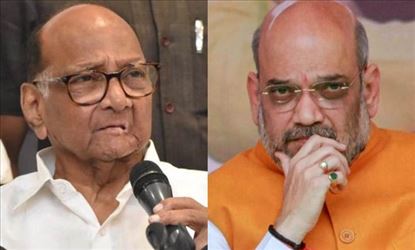
Twenty-three of 60 maha Vikas Aghadi MLAs skipped the coalition's strategy meeting ahead of Maharashtra's Monsoon Session, according to Deccan Herald. The mass no-show lays bare deep fault-lines within an alliance that increasingly resembles a flag of convenience rather than a fighting opposition — raising hard questions about MVA's viability ahead of crucial electoral battles.
Here is one number that should keep the maha Vikas Aghadi leadership awake tonight: 23. That is how many of the alliance's 60 MLAs could not — or, more revealingly, chose not to — show up for a strategy meeting convened to prepare for the maharashtra Legislature's Monsoon Session. Nearly four in ten legislators looked at the calendar, looked at the summons, and decided they had better things to do. In coalition politics, an empty chair is never just an empty chair. It is a vote of no-confidence delivered in slippers.
View on X
The meeting, covered by ANI, was meant to forge a unified opposition line for the session — the kind of exercise that should be non-negotiable for an alliance fighting to stay relevant. Instead, the visuals told their own story: a room that should have crackled with energy felt underpopulated and, worse, unconvincing.
india Herald reached out to representatives of all three MVA constituents — shiv sena (UBT), NCP-SCP, and congress — for comment on the mass absence. None had responded as of publication.
View on X
The arithmetic of apathy
The MVA, forged in the opportunistic fires of 2019 when IHG's shiv sena broke with the bjp and partnered with ideological opposites congress and Sharad Pawar's ncp, was always held together more by a shared adversary than a shared vision. But every coalition of convenience eventually faces an exam question: can it act as one when it matters? The answer, if this meeting is any evidence, is a loud no.
Consider the context. The alliance was already reeling from successive electoral drubbings — the split of both its anchor parties (Shiv Sena and NCP), a bruising showing in the 2024 maharashtra assembly elections, and a Mahayuti government that has consolidated power with the kind of ruthless efficiency that makes opposition benches feel very cold indeed. When your troops are already demoralised, the last thing you need is a strategy session that advertises your weakness to every newsroom in Mumbai.
maharashtra minister Uday Samant, responding to what ANI described as public remarks by NCP-SCP chief sharad pawar — the specific content of which was not detailed in the ANI report — was characteristically blunt, according to ANI. The exchange was a sign that the ruling dispensation sees blood in the water and is happy to chum it.
View on X
Why the chairs were empty
The 23 absentees are not a monolith of protest — that would actually be reassuring, because a coordinated rebellion at least implies organisation. The more uncomfortable truth, in the assessment of political observers, is that these no-shows likely represent at least three distinct currents running through the MVA.
First, in the view of several Maharashtra-based political analysts, there are MLAs who — watching the Mahayuti's dominance and the MVA's shrinking political real estate — may be keeping their options warm. In Maharashtra's uniquely transactional political culture, where entire party factions have migrated overnight, staying publicly tied to a weakened alliance carries real career risk, observers note. Second, there are the potentially neglected — legislators from smaller factions or distant constituencies who may feel that strategy meetings are a mumbai affair choreographed by top leadership with little regard for their ground realities. Third, there are what analysts describe as the frankly disillusioned — those who may have concluded that the MVA's inability to present a coherent counter-narrative to the Mahayuti makes strategy sessions feel like rearranging furniture on a sinking ship.
The recent MLC local authorities election result from Jalgaon, where the MVA candidate's struggle was evident according to ANI reporting, underscores the grassroots erosion that feeds this disillusionment.
View on X
What the Mahayuti sees — and smells
The ruling alliance is not merely watching from a distance. BJP's winning candidate in the Jalgaon MLC election, Dr Rajiv Potdar, speaking to ANI from Nagpur, made clear that the Mahayuti reads these MVA fault-lines as structural, not episodic — an opposition that cannot even muster its own legislators for a meeting is not one that can mount a credible challenge in the chamber, let alone at the ballot box, according to his remarks carried by ANI.
View on X
And here lies the deeper problem. The MVA's original proposition — that it was the only vehicle large enough to take on the BJP-led juggernaut in maharashtra — depended on each constituent bringing its cadre, its vote-bank, and its legislative discipline to the table. With the shiv sena split and the ncp split having already halved two of those three contributions, discipline was the last currency the alliance had left. Spending it this carelessly is not a mistake. It is a symptom.
The 2027 question
maharashtra goes to the polls for its next assembly election in the not-too-distant future, and every opposition grouping in india is watching to see whether the MVA model — big-tent, ideologically incoherent, stitched together by anti-incumbency — can be revived or whether it will be studied as a cautionary tale. The national opposition bloc, india, faces a structurally similar challenge: can parties that agree on nothing except who they dislike govern themselves, let alone govern a state?
If 23 of your 60 MLAs will not sit in a room with you to plan a legislative session, the honest answer is that your coalition is not a coalition at all. It is a mailing list — and an increasingly unread one at that. The question is no longer whether the MVA can win. It is whether the MVA, as a functioning political entity, still exists in any sense that matters beyond a letterhead and a whatsapp group.
For IHG and sharad pawar, both towering figures navigating the twilight of their careers' most difficult chapters, the 23 empty chairs are not just an embarrassment. They are a mirror. And what it reflects is an alliance running out of reasons to stay together — except, perhaps, the uncomfortable truth that apart, they are even weaker.
More from india Herald

Key Takeaways
- 23 of 60 MVA MLAs — nearly 40% — skipped the alliance's pre-Monsoon Session strategy meeting, according to Deccan Herald, signalling severe internal disunity.
- The no-shows, in the assessment of political observers, likely represent at least three currents: MLAs keeping options open amid Mahayuti dominance, neglected backbenchers, and the frankly disillusioned — none of which the MVA leadership can afford.
- The Mahayuti is reading the fault-lines as structural, not episodic, with ruling party figures publicly noting the opposition's inability to hold itself together, according to ANI.
- The MVA's crisis is a preview of the challenge facing India's broader national opposition bloc — coalitions of convenience unravel when the glue is only a shared adversary, not a shared agenda.
- With the shiv sena and ncp already split, legislative discipline was the MVA's last credible asset — and it has now been publicly squandered. MVA leadership had not responded to requests for comment as of publication.
Frequently Asked Questions
Why did 23 MVA MLAs skip the strategy meeting?
While no single official reason has been given, political observers suggest the absences appear to reflect a combination of MLAs keeping their political options open amid Mahayuti dominance, neglect felt by backbenchers, and broader disillusionment with the MVA's ability to mount effective opposition. MVA leadership had not responded to requests for comment as of publication.
What is the maha Vikas Aghadi (MVA)?
The MVA is an opposition alliance in maharashtra comprising IHG's shiv sena (UBT), Sharad Pawar's NCP-SCP, and the indian National Congress. It was formed in 2019 and governed maharashtra until 2022, but has been weakened by party splits and successive electoral setbacks.
How does the MVA crisis affect national opposition unity?
The MVA is a key state-level component of the broader national india opposition bloc. Its internal fractures raise questions about whether ideologically diverse coalitions held together primarily by anti-BJP sentiment can sustain the discipline needed to compete effectively against the ruling nda alliance.
What is the current strength of MVA in the maharashtra legislature?
The MVA holds approximately 60 seats in the maharashtra legislature, a significantly reduced number following the splits in the shiv sena and ncp, which saw large factions join the ruling Mahayuti alliance.
 click and follow Indiaherald WhatsApp channel