


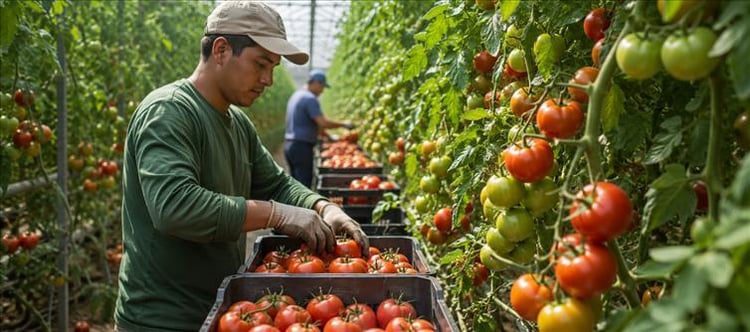

Trump's pitch to sell US farm exports to iran directly threatens India's carefully built iran trade architecture — including the Chabahar port corridor, the oil-for-rupees mechanism, and indian agricultural exports that filled the vacuum sanctions created. According to Firstpost, trump framed iran as a 'new market' for American farmers, signalling a post-sanctions commercial land-grab that could displace indian leverage. Neither the indian government nor Tehran has publicly responded to Trump's remarks as of publication.
India Herald Analysis
For nearly a decade, india did the unglamorous, patient work that nobody in Washington wanted to do: it kept a commercial channel to iran alive while the rest of the world sanctioned Tehran into a corner. indian wheat, rice, and sugar moved through creative rupee-payment mechanisms. indian engineers poured concrete at Chabahar. indian refiners quietly kept buying Iranian crude when American threats made every other buyer flinch. The reward was supposed to be strategic leverage — a port that bypassed Pakistan, a foothold on the international North-South Transport Corridor, a reliable energy partner who owed delhi a favour.
Now donald trump, whose first administration nearly killed that entire arrangement with maximum-pressure sanctions, wants to sell American grain to the very same Iran. According to Firstpost, trump has publicly pitched iran as a 'new market' for US farmers — a line that reads like a midwestern campaign promise but lands in New delhi like a strategic eviction notice.
The timing is not accidental. It never is with trump, and it never is in the Gulf.
The indian government — including the Ministry of External Affairs and the Commerce Ministry — has not publicly commented on Trump's remarks as of publication. Tehran has also not responded to the US proposal as of publication.
The Sanctions Dividend india Earned — and May Now Lose
India's trade relationship with iran was built in the cracks of American foreign policy. When Washington imposed crushing sanctions on Tehran, india negotiated workarounds: a rupee-payment channel through UCO bank, barter-like arrangements where indian goods flowed to iran in partial exchange for crude oil, and a quiet understanding that Chabahar — India's sole foreign port project — would remain exempt from US sanctions because it served Afghan connectivity. As Reuters reported during the peak sanctions period, india emerged as one of Iran's top agricultural trading partners precisely because Western suppliers were locked out.
indian basmati rice exporters, sugar mills, and wheat traders built real commercial presence in Iranian markets. The indian agricultural export ecosystem — particularly rice millers in haryana and Punjab, and sugar cooperatives in maharashtra and karnataka — found in iran a buyer who paid, if slowly, and who had few alternatives. That captive-market dynamic was the commercial upside of a geopolitically awkward relationship.
Trump's pitch to redirect American farm output into iran could, analysts warn, fundamentally undermine that dynamic. According to USDA data, US wheat production benefits from significantly higher economies of scale and federal subsidies that allow American producers to price aggressively in international markets. Trade analysts note that American corn, soybean, and dairy industries have the logistics, the subsidy architecture, and the political motivation — midterm farm-state votes — to potentially undercut indian suppliers on both price and volume if given market access.
View on X
Chabahar: A Port Without the Trade That Justifies It?
Chabahar has always been more strategic aspiration than commercial reality. india committed approximately $500 million to develop the shahid Beheshti terminal, according to Ministry of External Affairs statements and press reporting on the India-Iran bilateral agreements, but throughput has consistently lagged projections. The port's viability depends not just on afghanistan transit (now complicated by Taliban governance) but on bilateral India-Iran trade volumes robust enough to sustain regular shipping lines.
If American grain displaces indian agricultural exports to iran — a scenario multiple trade policy analysts now consider plausible — the trade volumes flowing through Chabahar could thin further. The port's value proposition to indian shipping lines would weaken. And the leverage india derives from being Iran's reliable commercial partner during tough times — the soft-power dividend of showing up when others didn't — risks evaporating the moment Washington decides it wants in on the same market.
This is the brutal arithmetic of post-sanctions commerce as analysts at the Observer Research Foundation and Carnegie india have noted in prior assessments of sanctions-era trade: the country that imposed the sanctions gets to lift them on its own terms and then potentially capture the commercial upside, while the country that endured American pressure to maintain the relationship risks being sidelined. india played the long game with Iran; trump is playing the short game with American farmers — and the short game, analysts observe, has more money behind it.
View on X
The Oil-for-Rupees Architecture Under New Stress
India's rupee-payment mechanism with iran was never elegant. It was born of necessity — a way to keep oil flowing when dollar-denominated transactions were sanctioned. But it created a bilateral financial architecture that, in principle, could be expanded: indian goods paid for in rupees that iran could use to buy more indian goods, a closed-loop system that reduced both countries' dollar dependence.
A US-Iran commercial opening threatens this architecture too. If iran can now trade freely with American suppliers in dollars, the incentive to maintain rupee channels weakens considerably. Tehran's calculation could shift: why accept rupees — with their limited convertibility and India's negotiating leverage built into every exchange — when dollars are back on the table? The oil-for-rupees trade was a product of Iranian necessity. Remove the necessity, and India's negotiating advantage is likely to erode.
View on X
The Factional Calculus Modi Cannot Ignore
Domestically, the political implications cut across party lines but land hardest on the BJP's rural coalition. indian agricultural exporters — rice millers, sugar cooperatives, spice traders — are concentrated in states the bjp either governs or needs. A potential loss of Iranian market share to American competition is not an abstract foreign-policy problem; it could become a price-realisation problem for farmers in haryana, a capacity-utilisation problem for mills in western UP, and an export-incentive question that the Commerce Ministry will need to answer before the next budget cycle.
The Modi government's iran policy has always been a high-wire act: close enough to maintain strategic assets like Chabahar, distant enough to avoid American sanctions. Trump's move threatens to collapse the wire. If the US and iran become commercial partners, India's claim to special-relationship status with Tehran weakens. If American grain enters iran at scale, India's agricultural export lobbies will likely demand either market-access negotiations with Tehran or compensatory support at home.
Neither is easy. iran will not voluntarily limit American imports to protect indian exporters. And domestic support — higher MSPs, expanded procurement, export subsidies — costs money the fiscal math does not comfortably allow.
View on X
What delhi Should Be Asking — But Probably Isn't
The real question is not whether trump will follow through. He pitches markets the way he pitches buildings — grandly, with details to follow, sometimes never. The real question is whether India's iran strategy has a Plan B for a world where sanctions are off, American commerce is on, and India's decade of patient relationship-building with Tehran yields diminishing returns.
Chabahar's value may need to be reframed — less as a bilateral India-Iran play and more as a Central Asian connectivity node, with Uzbekistan, Turkmenistan, and kazakhstan as the real end-markets. The oil relationship may need diversification insurance — more long-term contracts with gulf producers, faster renewable buildout to reduce crude dependency. And the agricultural export portfolio may need new destinations — Africa, Southeast Asia, the Pacific Islands — to replace volumes that American competition could erode in Iran.
None of this is impossible. All of it requires the kind of strategic recalibration that indian foreign policy typically undertakes slowly, committee by committee, MEA memo by MEA memo. The trouble is that trump does not operate on committee time.
View on X
india spent a decade earning its place in Iran's commercial ecosystem by being the partner who stayed. The cruel irony is that the very détente india quietly hoped for — a US-Iran thaw that would make Chabahar easier to operate, sanctions easier to navigate, oil easier to buy — may be the thing that makes india dispensable. The partner who stayed is useful only as long as the others haven't come back. They appear to be coming back now, and they're bringing Nebraska wheat with them.
More from india Herald


Key Takeaways
- Trump has publicly pitched iran as a 'new market' for US agricultural exports, according to Firstpost, directly threatening indian farm exporters who filled the sanctions-era vacuum in Iranian markets.
- India's Chabahar port investment (~$500 million in the shahid Beheshti terminal, per MEA statements) depends on bilateral trade volumes that could thin if American goods displace indian agricultural exports to Iran.
- The rupee-payment mechanism india built with iran — born of sanctions-era necessity — loses its strategic value if Tehran can resume dollar-denominated trade with the US.
- Indian basmati rice, sugar, and wheat exporters concentrated in BJP-governed states face potential commercial displacement, making this a domestic political risk as much as a foreign-policy one.
- India may need to reframe Chabahar as a Central Asian connectivity play rather than a bilateral India-Iran asset to preserve its strategic relevance.
Frequently Asked Questions
How does Trump's plan to sell US grain to iran affect India?
It threatens to displace indian agricultural exports — particularly rice, sugar, and wheat — that filled Iran's import needs during the sanctions era. Trade analysts warn it could also weaken India's negotiating leverage built on being Iran's reliable commercial partner when Western suppliers were absent.
What happens to India's Chabahar port if US-Iran trade normalises?
Chabahar's commercial viability depends on robust India-Iran trade volumes. If American goods displace indian exports, throughput at the port could decline further, undermining the strategic rationale for India's approximately $500 million investment, per MEA disclosures.
Will India's rupee-payment mechanism with iran survive?
It faces significant pressure. The mechanism was created because dollar transactions were sanctioned. If iran regains access to dollar-denominated trade with the US, the incentive to maintain rupee channels weakens considerably.
Which indian industries are most affected by US agricultural exports to Iran?
Basmati rice exporters in haryana and Punjab, sugar cooperatives in maharashtra and karnataka, and wheat traders across northern india are most exposed to potential displacement by cheaper, subsidised American farm products, according to trade analysts.
Has the indian government responded to Trump's iran remarks?
Neither the indian Ministry of External Affairs nor the Commerce Ministry has publicly commented on Trump's proposal as of publication. Tehran has also not responded.
 click and follow Indiaherald WhatsApp channel