


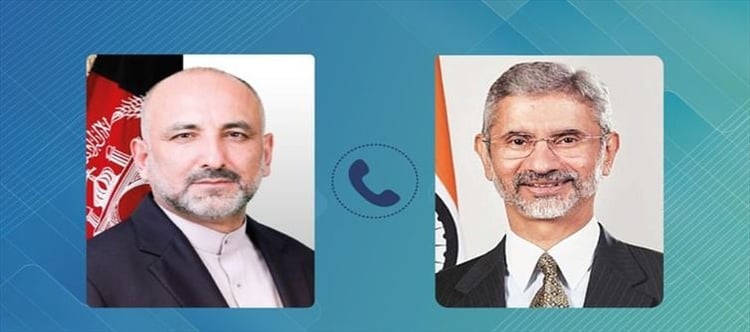

The Indian government issued a formal rebuttal through DD India and the Defence Ministry, stating that social media posts had distorted Defence Minister Rajnath Singh's Parliament address on Operation Sindoor by clipping remarks out of context. According to The Times of India, the Centre stressed it was 'important to place the defence minister's address in full, proper context,' signalling what analysts describe as acute anxiety over narrative control of its biggest military showcase.
The 5W+H: Who, What, When, Where, Why, How
- Who: The Indian government, through the Defence Ministry, DD India state broadcaster, and AIR News, issued the rebuttal regarding Defence Minister Rajnath Singh's Parliament address.
- What: The government issued a formal rebuttal stating that social media posts had distorted and clipped remarks from Defence Minister Rajnath Singh's Parliament address on Operation Sindoor out of context.
- When: During the June 2025 parliamentary session, with the rebuttal issued subsequently after selective clips began circulating on social media.
- Where: Parliament, where Rajnath Singh addressed the House, and social media platforms where the clips circulated and were amplified by Indian state broadcasting channels.
- Why: The government sought to correct what it described as misrepresentation of the Defence Minister's remarks and to assert control over the narrative surrounding Operation Sindoor and the cross-border military strikes.
- How: The Defence Ministry issued a formal statement, DD India aired a dedicated rebuttal segment on state television, and AIR News amplified the message across official channels, emphasizing the importance of placing the address in full, proper context.
Here is what you need to know about a government that controls the world's fourth-largest military, just executed its most ambitious cross-border strikes in decades, and now — visibly, formally, with the machinery of state broadcasting — appears rattled by a few social media clips. That characterisation is, to be clear, editorial analysis: the facts that follow let readers judge for themselves.
The Defence Ministry, according to a statement amplified by AIR News, declared that 'certain posts circulating on social media platforms have sought to misrepresent the remarks' of Defence Minister Rajnath Singh in Parliament on Operation Sindoor. The Times of India reported that the Centre stressed it was 'important to place the defence minister's address in full, proper context.' DD India, the government's own broadcaster, aired a dedicated rebuttal segment — a response architecture normally reserved for diplomatic crises or national emergencies, not parliamentary floor remarks.
View on X
That escalation is the story. Not the clips. Not the counter-clips. The escalation.
What Was Said — and What Was Clipped
During the parliamentary debate on Operation Sindoor, Rajnath Singh addressed the House on the military's conduct, the martyrs, and the operational details of the cross-border strikes. Opposition members, including Congress MP Gaurav Gogoi, pushed for a fuller accounting. Gogoi, in a post on X dated during the June 2025 parliamentary session, stated: 'During the debate on Operation Sindoor, I urged the Defence Minister to place the complete truth before Parliament.'
View on X
What followed was a now-familiar 2025 phenomenon: selective clips from Singh's address began circulating on social media, each trimmed to serve a particular narrative. Some framed his remarks as evasive on the question of martyrs' identities. Others used the same footage to project triumphalism. The same speech, two stories — and a government that decided neither version could be allowed to stand unchallenged.
The Unusual Machinery of Rebuttal
Consider the tools deployed. This was not a party spokesperson on a panel show, or a junior minister's tweet. The Defence Ministry itself issued a formal statement. DD India — state television, with all the institutional weight that implies — ran a dedicated segment. AIR News amplified it across official channels. The Times of India reported the Centre's insistence on 'full, proper context' as the core demand.
For a government that routinely lets social media storms exhaust themselves, this was a conspicuously different posture. The apparatus of rebuttal was, in its own way, as revealing as the original remarks. Governments rebut foreign adversaries at this pitch. They rebut border incursion denials at this pitch. They do not, as a rule, rebut clipped parliamentary footage at this pitch — unless, in the assessment of this newspaper, the political stakes demand it.
View on X
Who Benefits from the Distortion?
The opposition's calculus is straightforward. Operation Sindoor is, by any measure, the BJP-led government's most potent military credential since the 2019 Balakot strikes. If the narrative can be muddied — if questions about transparency on martyrs, about what was said and what was left unsaid, can be made to stick — the electoral shine dims. Congress, through voices like Gogoi, has consistently demanded that the government 'place the complete truth before Parliament,' a framing that implicitly suggests something is being withheld.
The government's calculus, in our editorial analysis, is the mirror image. Operation Sindoor is not merely a defence success; it functions as what political analysts would call electoral infrastructure — a credential around which campaign messaging is built. Every clip that reframes Singh's remarks as evasion rather than resolve chips away at the narrative of decisive leadership — a narrative the BJP cannot afford to lose before state and general election cycles. The formal rebuttal, escalated to the Defence Ministry and state broadcasting, appears designed to freeze the frame on the government's preferred version before the opposition's edit becomes the default.
View on X
The Deeper Anxiety: When Military Trophies Become Political Footballs
Here is the dimension that the press releases will not name. India's post-Operation Sindoor moment is the first time since Kargil that a live military action of this scale has been subjected to real-time social media narrative warfare — not by Pakistan, but by domestic political actors. The government's anxiety, as evidenced by the scale of its response, appears to be not that Rajnath Singh said something damaging, but that in a world of 15-second clips, it no longer controls what he 'said.'
This is a structural problem, not a one-cycle crisis. The BJP built its 2019 post-Balakot campaign on narrative dominance — the strikes happened, the imagery was managed, the messaging was seamless. Operation Sindoor is bigger, more complex, and is unfolding in a media ecosystem that has mutated since 2019. Platforms are faster, attention spans are shorter, and the opposition has learned to play the clip game. The Centre's formal rebuttal is, in this newspaper's analysis, an implicit admission that the old playbook of letting the deed speak for itself is no longer sufficient.
View on X
The PTI footage of the government releasing the names of military personnel martyred in Operation Sindoor — itself a response to sustained opposition pressure — underscores the point. What should have been a solemn, unifying moment became another front in the narrative war. Every detail released is immediately re-edited, re-clipped, and re-deployed.
The Speed of the State Response
The speed with which DD India's rebuttal was produced and aired was notable. The involvement of the Prime Minister's Office in shaping the counter-narrative has not been officially confirmed, but the response pattern — simultaneous deployment across DD India, AIR News, and the Defence Ministry's own channels — is consistent with the centralised narrative management that has characterised the Modi government's approach to national security communications, as documented by multiple press reports over the past decade. The fact that the rebuttal was aired on DD India, not merely posted on social media, indicates a deliberate choice to use the most authoritative state platform available — a signal aimed as much at the commentariat as at the casual social media user.
What This Means for the Next Electoral Cycle
Operation Sindoor will be a central plank of the BJP's campaign in every state election and the next general election, political analysts across the spectrum agree. The opposition knows this and is working to neutralise it — not by denying the operation, but by questioning the government's transparency, its treatment of martyrs, and the completeness of its parliamentary account. The 'misrepresentation' row is the first sustained test of whether the BJP can hold its preferred narrative against a determined, digitally fluent opposition.
The Centre's response — formal, institutional, escalated — suggests the answer is not yet certain. In our editorial assessment, a government confident in its narrative dominance does not deploy DD India to rebut social media clips. A government that senses the ground shifting does.
The question that should keep both sides up at night is this: in an era where every parliamentary syllable is clipped, spliced, and weaponised before the speaker sits down, who really controls the story of a nation's military triumph — the government that ordered it, the opposition that questions it, or the algorithm that decides which 15 seconds the country actually sees?


By the Numbers
- The Centre's formal rebuttal was disseminated through DD India (state TV), AIR News, and the Defence Ministry — three institutional channels deployed simultaneously, a response pitch typically reserved for diplomatic or national security crises, not parliamentary debate clips.
Key Takeaways
- The Defence Ministry issued a formal statement — amplified by DD India and AIR News — calling social media clips of Rajnath Singh's Operation Sindoor remarks a misrepresentation, per The Times of India.
- Congress MP Gaurav Gogoi publicly urged the Defence Minister to 'place the complete truth before Parliament,' framing the debate as one of government transparency.
- The escalation of the rebuttal to state broadcasting level is unusual for parliamentary remark disputes and signals, in editorial analysis, acute anxiety over narrative control of Operation Sindoor's political capital.
- Operation Sindoor is the first Indian military operation of this scale subjected to real-time domestic social media narrative warfare — a structural shift from the Balakot-era playbook.
- The opposition strategy is not to deny the operation but to question transparency on martyrs and parliamentary completeness — a subtler, harder-to-counter approach than outright criticism.
Frequently Asked Questions
What did Rajnath Singh say about Operation Sindoor in Parliament?
Defence Minister Rajnath Singh addressed Parliament on Operation Sindoor's conduct, martyrs, and operational details. The Centre later said social media clips had misrepresented his remarks by taking them out of context, according to The Times of India.
Why did the government issue a formal rebuttal on Operation Sindoor remarks?
The Defence Ministry stated that 'certain posts circulating on social media platforms have sought to misrepresent' Singh's remarks. The Centre stressed it was 'important to place the defence minister's address in full, proper context,' per The Times of India, deploying DD India and AIR News — an unusually elevated response.
Who is accused of misrepresenting Operation Sindoor remarks?
The Defence Ministry's statement pointed to unspecified social media posts. Congress MP Gaurav Gogoi separately urged the Defence Minister to present 'the complete truth' before Parliament, while various commentators circulated clipped versions of the speech.
How is Operation Sindoor becoming a political issue?
Opposition parties are questioning the government's transparency on martyrs' identities and the completeness of parliamentary disclosures, while the BJP treats the operation as a major national security credential — making narrative control, analysts say, a high-stakes electoral battleground.
 click and follow Indiaherald WhatsApp channel