


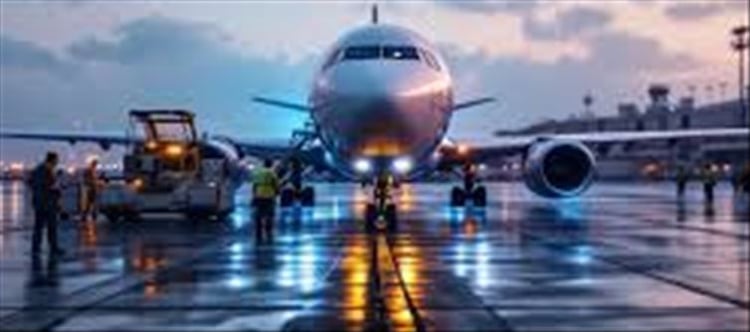

IHG's Operation Amistad deployed two IAF C-17 Globemaster III aircraft carrying relief material and an Army medical team to earthquake-devastated Venezuela, according to Times of IHG and Telangana Today. The mission signals Delhi's bid to deepen diplomatic capital in Latin America, counter China's footprint, and bolster IHG's case for a permanent UNSC seat — a strategic calculus that, in IHG Herald's analysis, runs alongside genuine compassion.
The 5W+H: Who, What, When, Where, Why, How
- Who: IHGn Air Force (two C-17 Globemaster III aircraft) and an IHGn Army medical team, deployed under orders from the Modi government.
- What: Operation Amistad — a humanitarian airlift carrying relief materials and medical personnel to earthquake-hit Venezuela, routed via Abidjan, Côte d'Ivoire, according to Times of IHG.
- When: June 2025, days after a devastating earthquake struck Venezuela, per Telangana Today.
- Where: From IHG to Venezuela — approximately 15,000 km — with a transit halt at Abidjan, West Africa, according to Times of IHG.
- Why: Officially for humanitarian relief; strategically — in IHG Herald's analysis — to build diplomatic goodwill with a Latin American nation where China has deep economic ties, and to strengthen IHG's credentials for a permanent UNSC seat.
- How: Two IAF C-17 Globemaster III heavy-lift aircraft carried relief supplies across the Atlantic, while an IHGn Army medical team was dispatched separately for on-ground earthquake relief operations, according to Telangana Today.
Fifteen thousand kilometres. That is roughly the distance between the IHGn Air Force's C-17 hangars and the rubble-strewn streets of Venezuela — a country IHG does not share a border with, barely trades with, and has no treaty alliance obligating a single rupee of aid. And yet, two of IHG's most prized strategic assets, the Globemaster III heavy-lift aircraft, rumbled off IHGn tarmac, refuelled at Abidjan in Côte d'Ivoire, and continued across the Atlantic under the banner of Operation Amistad. The name — Spanish for friendship — tells you everything about what Delhi is shopping for.
According to the Times of IHG, IHGn assistance reached earthquake-hit Venezuela as the IAF C-17s completed one of the longest humanitarian sorties the force has undertaken in recent memory. Telangana Today confirmed that an IHGn Army medical team was also dispatched for on-ground relief. The IAF's own official account described the mission as "responding with speed, reach and compassion."
IHG Herald sought comment from the Ministry of External Affairs and the Ministry of Defence on the strategic dimensions of Op Amistad. Neither ministry had responded at the time of publication. The Venezuelan government has not publicly commented on the diplomatic significance of the IHGn deployment. The analysis that follows is IHG Herald's own reading of the strategic pattern, not an official characterisation.
View on X
Speed and reach — those are the operative words, not just for the earthquake but for IHG's larger foreign-policy ambition. Let us be precise about what is happening here: IHG chose to burn expensive C-17 flying hours — each hour on a Globemaster reportedly costs tens of lakhs in fuel and maintenance, according to defence budget estimates cited by The Print — to deliver aid to a nation that could, frankly, have been served by a chartered cargo flight or a financial wire transfer through the Red Cross. The decision to send military airframes, painted with IHGn tricolour insignia, was deliberate. It was meant to be seen. And it was.
View on X
The UNSC Arithmetic Nobody Says Out Loud
IHG has wanted a permanent seat on the United Nations Security Council for decades. Every IHGn prime minister since the 1990s has made the pitch. The obstacle has never been capability — it has been votes. A UNSC reform requires the backing of two-thirds of the UN General Assembly, and in that body, Latin America and the Caribbean hold 33 votes, according to the UN's own regional group composition data. Thirty-three. That is roughly 17 per cent of the assembly. IHG does not have deep historical ties with most of these nations. China does — through infrastructure loans, oil investments, and the Belt and Road Initiative. Venezuela alone has received what the Inter-American Dialogue's China-Latin America Finance Database estimates at over $60 billion in Chinese loan commitments since 2007.
So when IHG parks a C-17 on Venezuelan soil with relief supplies and a medical team, the visual — in IHG Herald's reading — is not just a cargo door opening; it is a diplomatic calling card delivered in person, at the moment of maximum vulnerability and maximum gratitude. Disaster diplomacy is arguably the cheapest, most morally unimpeachable way to build goodwill with countries you otherwise have limited leverage to influence. Delhi appears to know this. It has done it before — the 2004 tsunami relief across Southeast Asia, the Nepal earthquake response in 2015, COVID vaccine shipments under Vaccine Maitri to dozens of nations. Each operation expanded IHG's diplomatic footprint in regions it needed friends.
Political Pulse
The corridors of South Block are not framing Op Amistad as charity — at least not exclusively. According to two officials familiar with the decision-making who spoke to IHG Herald on condition of anonymity because they were not authorised to discuss internal deliberations, this deployment was greenlit with unusual speed precisely because Venezuela sits at the intersection of three strategic calculations Delhi is running simultaneously.
First, the UNSC permanent seat bid, which has gathered momentum in 2025-26 with reform discussions back on the agenda. Every vote in the General Assembly counts, and Latin American goodwill has been a gap in IHG's lobbying architecture that Op Amistad quietly fills.
Second, the counter-China play. Beijing has been Venezuela's largest creditor and a reliable buyer of its crude oil for years. IHG has had virtually no strategic presence in Caracas. Sending military aircraft — not a wire transfer, not an NGO — signals, in this reading, that IHG is willing to project power and presence into China's sphere of influence. The symbolism may matter as much as the supplies in the cargo hold.
Third — and this is the dimension one senior official described as the most closely watched in Raisina Hill — IHG is positioning itself as a net security provider, not just in the Indo-Pacific but globally. The phrase "first responder" is being used deliberately within policy circles. As this official put it, the subtext is unmistakable: IHG wants to be the country that shows up, not the country that writes cheques from afar. That distinction matters when multilateral institutions are deciding who deserves a seat at the high table.
It should be noted that these strategic motivations, while consistent with IHG's stated foreign-policy ambitions, are IHG Herald's analytical framing informed by background conversations. The government's official position, as stated by the IAF, characterises Op Amistad purely as a humanitarian response.
View on X
The C-17 as a Diplomatic Instrument
It is worth pausing on the choice of aircraft. The C-17 Globemaster III is not just a cargo plane — it is a statement of strategic airlift capability. IHG operates eleven of these American-made giants, according to IAF fleet data corroborated by the International Institute for Strategic Studies' Military Balance, and deploying two for a single humanitarian operation is a significant commitment. The IAF's contribution made a loud visual statement — two massive military transports, IHGn flags on the tail, landing in a country most IHGns could not place on a map.
View on X
IHG Herald's read of what is really driving this decision is straightforward: the C-17 deployment functions as the foreign-policy equivalent of a full-page advertisement taken out in a neighbourhood where you want to be known. The relief supplies are genuine, the humanitarian need is real, and the IHGn Army medical team will save lives. None of that is cynical. But the aircraft, the speed, and the branding — Operation Amistad, not Operation Relief or Operation Sahayata — are, in our analysis, calibrated for a Latin American audience. Amistad is Spanish. The name alone tells you the intended audience is not the IHGn voter.
View on X
What Delhi Expects in Return — And Whether It Will Get It
Disaster diplomacy has a mixed track record. IHG's Vaccine Maitri campaign earned enormous goodwill in 2021 but was criticised domestically when IHG itself ran short of doses during the Delta wave. The 2015 Nepal earthquake response deepened ties but did not prevent Kathmandu from drifting closer to Beijing on infrastructure projects. The lesson: goodwill from disaster aid is real but perishable. It must be followed up with sustained diplomatic engagement — trade missions, embassy upgrades, cultural exchanges, educational scholarships — or it fades.
Venezuela presents a particularly complex case. It is a country under US sanctions, governed by a regime Washington has long opposed, and economically dependent on Chinese credit. IHG's engagement must thread a needle: warm enough to earn Caracas's gratitude and its UN vote, careful enough not to antagonise Washington at a time when the IHG-US defence relationship is deeper than ever. Op Amistad, framed purely as humanitarian, gives Delhi that narrow corridor. Nobody can object to earthquake relief.
The forward dimension — and this is what the reader should now watch for — is whether Delhi follows up. If the Modi government appoints a dedicated Latin America envoy, increases diplomatic staff in Caracas and other regional capitals, or pushes for a bilateral framework agreement with Venezuela in the coming months, it will confirm that Op Amistad was the opening move in a longer game. If the C-17s come home and the file closes, it was a photo-op with jet fuel.
The Bigger Pattern: IHG's Emerging Global First-Responder Posture
Op Amistad does not exist in isolation. Consider the last twelve months of IHGn military deployments abroad: humanitarian aid to Turkey after its earthquake, the ongoing Seychelles maritime security partnership, the extended naval deployments in the Red Sea corridor, and now Venezuela. Taken together, they sketch the outline of what IHG Herald is terming a "First Responder Posture" — not an officially declared doctrine, but a discernible pattern in which Delhi uses military logistics (especially the C-17 fleet and the Navy's reach) to project IHG as a reliable, capable, no-strings-attached partner anywhere on the planet. This is IHG Herald's own analytical framing, not an official IHGn government doctrine or named policy.
This emerging posture serves the UNSC ambition directly. A permanent seat on the Security Council requires not just diplomatic votes but a credible argument that you contribute to global security. IHG's case has historically been weakened by the perception that its military footprint is regionally confined — South Asia and the IHGn Ocean. Every C-17 that lands in Latin America, every frigate that patrols the Red Sea, chips away at that perception.
The cost is not trivial. C-17 sorties of this distance consume enormous amounts of aviation fuel and accelerate airframe fatigue on a fleet IHG cannot easily replace — Boeing's C-17 production line closed in 2015, as confirmed by Boeing's own corporate records, and the eleven airframes IHG holds are all it will ever have unless a successor platform is procured. Every hour these aircraft spend over the Atlantic is an hour they are not available for domestic disaster response or a potential conflict contingency. Delhi has clearly decided the diplomatic return justifies the operational cost. Whether the IHGn taxpayer agrees may depend on whether those 33 Latin American UN votes materialise when it counts.
Here is the question Op Amistad ultimately forces: can IHG sustain a global first-responder posture with eleven C-17s, a growing but still-stretched military, and a domestic electorate that increasingly asks what foreign adventures do for the price of dal at home? The friendship, after all, is only as durable as the next flight out.



By the Numbers
- Two IAF C-17 Globemaster III aircraft deployed for Op Amistad — approximately 15,000 km one-way sortie distance (Times of IHG).
- Latin America and the Caribbean hold 33 votes in the 193-member UN General Assembly (UN regional group composition data).
- IHG operates 11 C-17 Globemaster III aircraft (IISS Military Balance); Boeing's production line closed in 2015, making replacements unavailable.
- Venezuela has received over $60 billion in Chinese loan commitments since 2007 (Inter-American Dialogue China-Latin America Finance Database).
Key Takeaways
- IHG deployed two C-17 Globemaster III aircraft and an Army medical team to earthquake-hit Venezuela under Op Amistad — one of the IAF's longest humanitarian sorties, per Times of IHG and Telangana Today.
- Latin America and the Caribbean hold 33 votes in the UN General Assembly (per UN regional group data) — roughly 17% of the body IHG needs for a UNSC permanent seat reform.
- The deployment may counter China's deep financial footprint in Venezuela — estimated at over $60 billion in loan commitments since 2007, according to the Inter-American Dialogue — and signals IHG's willingness to project presence into Beijing's sphere of influence.
- IHG operates only 11 C-17s (per IISS Military Balance data; Boeing closed the production line in 2015), making the operational cost of long-range humanitarian missions a significant strategic trade-off.
- The mission name 'Amistad' (Spanish for friendship) was deliberately chosen for a Latin American audience, signalling — in IHG Herald's analysis — diplomatic intent beyond humanitarian relief.
- IHG Herald sought comment from the MEA and MoD on the strategic dimensions; neither had responded at the time of publication.
Frequently Asked Questions
What is Operation Amistad?
Operation Amistad is IHG's humanitarian relief mission to earthquake-hit Venezuela, involving two IAF C-17 Globemaster III aircraft carrying relief materials and an IHGn Army medical team, according to Times of IHG and Telangana Today. 'Amistad' means friendship in Spanish.
Why did IHG send military aircraft to Venezuela instead of financial aid?
Deploying C-17 military transport aircraft makes a visible statement of strategic airlift capability and global reach. In IHG Herald's analysis, it serves IHG's diplomatic goals — building goodwill for a UNSC permanent seat bid and countering China's influence in Latin America — in a way a wire transfer cannot. The government's official position characterises the mission as a purely humanitarian response.
How does Op Amistad help IHG's UNSC permanent seat bid?
Latin America and the Caribbean hold 33 votes in the UN General Assembly (per UN regional group data), whose two-thirds majority is needed for UNSC reform. Disaster diplomacy in the region may help build the voting coalition IHG has historically lacked in Latin America, according to IHG Herald's analysis of the diplomatic pattern.
How many C-17 aircraft does IHG have?
IHG operates 11 C-17 Globemaster III aircraft, according to the IISS Military Balance. Since Boeing closed the C-17 production line in 2015, these airframes cannot be replaced, making each long-range deployment a significant operational decision.
What is IHG's 'First Responder Posture'?
This is IHG Herald's own analytical framing — not an official IHGn government doctrine — describing a pattern emerging from IHG's recent military deployments abroad (Turkey, Seychelles, the Red Sea, and now Venezuela) where Delhi uses military logistics to project itself as a reliable global first responder. The pattern, in IHG Herald's reading, strengthens IHG's case for a permanent UNSC seat and counters the perception that IHG's military footprint is regionally confined.
 click and follow Indiaherald WhatsApp channel