




The Election Commission of India's Summary and Intensive Revision of electoral rolls has reduced the voter base by approximately 10 percent across multiple states, according to Telangana Today. The EC says it is removing dead, duplicate, and migrated entries. Opposition leaders allege the methodology disproportionately affects minority and migrant-heavy constituencies, raising questions about 2029 seat arithmetic.
The 5W+H: Who, What, When, Where, Why, How
- Who: The Election Commission of India, led by Chief Election Commissioner Gyanesh Kumar, conducting Summary and Intensive Revision (SIR) of electoral rolls across states.
- What: An electoral roll revision that has driven an approximately 10 percent reduction in the voter base across multiple Indian states, according to Telangana Today, through removal of entries the EC describes as dead, duplicate, or migrated.
- When: The revision process is underway in 2026, ahead of the 2029 general elections, with SIR enumeration actively being conducted across states including Telangana, as reported by Telangana Today.
- Where: Across multiple Indian states, with particularly contentious exercises reported in Telangana's Hyderabad Parliamentary Constituency.
- Why: The EC states the revision is routine housekeeping to ensure clean, accurate rolls; critics allege it disproportionately affects voters in minority-heavy and migrant-dense areas.
- How: Through door-to-door SIR enumeration, cross-referencing existing rolls against identity databases, and deletion of entries flagged as dead, duplicate, shifted, or unverifiable — a process opposition leaders say lacks adequate transparency and grievance redress.
Key Takeaways
- The Election Commission of India's Summary and Intensive Revision (SIR) has reduced the voter base by approximately 10 percent across multiple states, according to Telangana Today.
- Urban, migrant-heavy, and minority-dense constituencies appear disproportionately affected, raising questions about asymmetric impact on opposition vote banks ahead of 2029.
- The Telangana High Court has issued notice to the ECI over Telugu-only SIR enumeration forms in multilingual Hyderabad, marking an early judicial intervention into the revision process.
- Opposition parties in states such as Telangana have pushed back against SIR methodology; the Election Commission and the BJP had not publicly responded to these specific criticisms at the time of publication.
- The roll revision, if viewed alongside ongoing delimitation discussions, could amount to a significant structural reshaping of India's electoral map before 2029 — a possibility political observers are closely watching.
What the Numbers Show
Here is a number that should give every political strategist in India pause: according to Telangana Today, approximately one in ten voters on the Election Commission of India's rolls has been removed across multiple states. Not through any dramatic disenfranchisement order. Not through a court ruling. Through what the EC describes as a routine Summary and Intensive Revision.
Chief Election Commissioner Gyanesh Kumar has framed the exercise as essential democratic hygiene — removing the dead, the duplicated, and the migrated. The reported methodology includes door-to-door enumeration and cross-referencing existing rolls against identity databases, with deletion of entries that fail verification.
Clean rolls are, on paper, the foundation of clean elections. Nobody disputes that principle. But strip away the bureaucratic language and examine the raw arithmetic, and questions emerge about why this particular cleanup has party war rooms humming with anxiety — and why some are pushing back harder than others.
Editor's note: India Herald sought responses from the Election Commission of India and the BJP regarding opposition criticisms of the SIR methodology and its differential impact. Neither had responded at the time of publication. This article will be updated when responses are received.
View on X
Where the Reductions Appear to Concentrate
A reduction of this scale is unlikely to fall evenly across India's electoral map. Urban constituencies with high migration churn — cities like Hyderabad, which Telangana Today specifically reports on — are precisely where rolls tend to accumulate the most outdated entries: workers who came, registered, left, and never de-registered.
These are also, as political observers have noted, constituencies where minority voters, informal-sector migrants, and first-generation urban settlers tend to concentrate. Whether similar patterns hold in other high-migration cities — Mumbai, Delhi, Bengaluru — is a question that constituency-level data, once released, will need to answer.
In Telangana, the SIR exercise in the Hyderabad Parliamentary Constituency has already sparked a firestorm. According to Telangana Today, complaints have emerged about legitimate voters finding their names missing and about enumeration forms being available only in Telugu in a city where Urdu and Hindi are widely spoken.
View on X
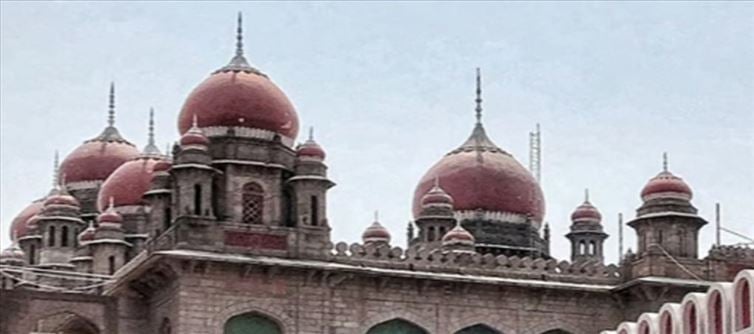
The Telangana High Court has issued notice to the ECI over Telugu-only SIR enumeration forms, according to reports in Telangana-based media — a legal intervention that suggests the judiciary finds the methodology questions worth examining. When a High Court asks the Election Commission to explain its process, the word "routine" invites closer scrutiny.
View on X
The Political Calculations — An India Herald Analysis
What follows is India Herald's analytical reading of the political implications. It is informed interpretation, not reportage of established fact.
In opposition circles, the 10 percent figure is reportedly not being read as mere housekeeping. The concern, as articulated by several opposition leaders in public statements, runs like this: if voter deletions concentrate in urban, minority-heavy, migrant-dense pockets — constituencies where INDIA bloc parties (Congress, AIMIM, TMC, SP, RJD) draw their thinnest margins — then 2029 Lok Sabha arithmetic could shift without a single policy announcement or campaign rally.
Is this the EC's intent? There is no evidence of deliberate partisan targeting, and India Herald does not allege any. But intent and structural outcome are different questions in electoral politics. The BJP's organisational machinery — booth-level, disciplined about ensuring its core voters are enrolled and verified through structures like shakti kendras and page pramukhs — may be better equipped to survive a rigorous roll cleanup than parties whose base includes seasonal migrants, informal workers, and communities with weaker documentation. This asymmetry, if it exists at the scale critics fear, would be structural rather than conspiratorial — and arguably harder to address for precisely that reason.
Opposition-governed states such as Telangana have visibly pushed back against SIR methodology. Whether the revision has proceeded with less friction in states governed by the BJP — a claim made by some opposition voices — is difficult to verify without comparable data from those states. India Herald invites readers, analysts, and party spokespersons from all sides to share constituency-level data that would illuminate this question.
IHG's own voter roll disputes over Bengaluru ward lists offer a preview of the kind of granular, constituency-level battles that could define the pre-2029 landscape — fights not over policy or personality, but over who is counted.
The 2029 Forward Read
India Herald's assessment — and we flag this explicitly as forward-looking analysis — is that the 2029 general election's contours may already be forming in the voter rolls.
Consider the potential cascade. India is simultaneously engaged in delimitation discussions that could redraw the seat count itself. If a significant voter base reduction is layered on top of potential seat redistribution, political analysts have suggested this could amount to a double reshaping of the electoral map — one structural (delimitation), one administrative (roll revision). Each alone would be noteworthy. Together, they could constitute the most consequential pre-election reconfiguration of Indian electoral geography in decades. Whether this possibility materialises depends on data that the EC has not yet disaggregated publicly.
For the BJP, the strategic implication — even if entirely unintended by the EC — could be favourable: a cleaner roll that removes genuinely dead and duplicate entries may improve the ratio of motivated, ideologically aligned voters. The party's booth-management infrastructure exists precisely to ensure its voters are verified and present. A stricter roll, by its nature, tends to benefit the more organised — a point of organisational theory, not conspiracy.
For the INDIA bloc, the challenge could prove acute in specific geographies. In Hyderabad, where AIMIM's Asaduddin Owaisi has built a political base among constituencies reportedly most vulnerable to roll attrition — Old City residents, migrant workers, women whose registrations may have been managed by male family members who have since relocated — a significant reduction could narrow margins in what has historically been a safe seat. If similar dynamics play out across even a fraction of India's 543 constituencies, coalition arithmetic for 2029 shifts materially.
View on X
What Readers and Watchdogs Should Track Next
Three things will determine whether this revision is genuinely routine or genuinely consequential:
First, the constituency-level disaggregated data. The EC has released aggregate figures. The political story lives in the breakdowns — which parliamentary seats lost the most voters, and how those seats voted in 2024. If deletions cluster disproportionately in opposition-held urban seats, the "routine" framing will face serious challenge. India Herald calls on the EC to publish this data proactively.
Second, the grievance-redress numbers. How many deleted voters have successfully restored their names? If the restoration rate is high, the system is self-correcting and the alarm is premature. If it is low — and early reports from Hyderabad, per Telangana Today, suggest difficulties — then deletion risks becoming effectively permanent disenfranchisement, whatever the procedural intent.
Third, the judicial trajectory. The Telangana High Court notice is an early signal. If similar petitions are filed in other states with vocal opposition governments, the Supreme Court may eventually need to examine the SIR methodology itself. A court-mandated transparency framework for roll revision would be genuinely new institutional territory in India.
The deeper question is not whether the EC's intentions are sound — they may well be entirely so. The deeper question is whether a democracy can sustain a process this consequential with this little granular public scrutiny. An approximately 10 percent voter base reduction, as reported by Telangana Today, is not a clerical adjustment. In a country where elections are won and lost by margins thinner than a single percentage point in dozens of constituencies, the difference between a roll that is "cleaned up" and one where legitimate voters are inadvertently "cleared out" is a difference that demands transparent, disaggregated, publicly available data.
The rolls are not just lists. They are the architecture of democratic consent. And the question India must answer — with data, not rhetoric — is whether this remodelling strengthens the building or changes who gets to live in it.


By the Numbers
- ~10% — approximate voter base reduction driven by the EC's Summary and Intensive Revision across multiple Indian states (Telangana Today)
- Hyderabad Parliamentary Constituency — reported epicentre of SIR complaints including missing voter names and language-exclusion concerns (Telangana Today)
- 543 — total Lok Sabha constituencies where the roll revision's cumulative impact on 2029 arithmetic remains to be assessed
Key Takeaways
- The ECI's Summary and Intensive Revision has reduced the voter base by approximately 10 percent across multiple states, according to Telangana Today — raising questions about the scale and distribution of deletions.
- Urban, migrant-heavy, minority-dense constituencies such as Hyderabad appear disproportionately affected by the deletion methodology, per reports and complaints cited by Telangana Today.
- The Telangana High Court has issued notice to the ECI over Telugu-only SIR enumeration forms in multilingual Hyderabad, marking an early judicial intervention into the revision process.
- Opposition parties in states like Telangana have pushed back against SIR methodology; the EC and BJP had not publicly responded to these specific criticisms at the time of publication.
- The roll revision, viewed alongside ongoing delimitation discussions, raises the possibility of a significant pre-election structural reshaping of India's electoral map — though this depends on constituency-level data not yet publicly available.
- The BJP's booth-level organisational infrastructure may make its voter base structurally better equipped to survive rigorous roll verification than parties reliant on migrant or weakly-documented voters — a structural asymmetry, not an allegation of intent.
Frequently Asked Questions
Why has the Election Commission reduced the voter base by approximately 10 percent?
According to Telangana Today, the ECI's Summary and Intensive Revision (SIR) has resulted in an approximately 10 percent voter base reduction across multiple states. The EC describes the exercise as routine democratic housekeeping — removing dead, duplicate, and migrated entries to ensure accurate rolls ahead of future elections. The EC had not responded to opposition criticisms of the methodology at the time of publication.
Which states or constituencies are most affected by the EC's voter roll revision?
Telangana Today's reporting centres on Telangana's Hyderabad Parliamentary Constituency, where complaints about missing voter names and Telugu-only enumeration forms have been most vocal. Whether similar patterns hold in other high-migration urban constituencies remains to be confirmed by constituency-level data that the EC has not yet disaggregated publicly.
How could the voter roll revision affect 2029 Lok Sabha elections?
If the approximately 10 percent reduction concentrates in urban, minority-heavy, and migrant-dense seats, it could shift marginal constituency outcomes. Political observers have noted that combined with ongoing delimitation discussions, this could amount to a significant pre-election reshaping of India's electoral map — though this remains analytical projection, not established fact.
What is the Telangana High Court's role in the voter roll controversy?
The Telangana High Court has issued notice to the Election Commission of India over the use of Telugu-only SIR enumeration forms in multilingual Hyderabad, according to reports in Telangana-based media. This is among the first significant judicial interventions into the revision process and could set precedent for challenges in other states.
Is the EC's voter roll cleanup politically biased?
There is no evidence of deliberate partisan targeting, and India Herald does not allege any. However, political analysts have noted a potential structural asymmetry: the BJP's booth-level organisational machinery may ensure its core voters are enrolled and verified more effectively than opposition parties whose bases include migrants and informal workers — making the outcome potentially uneven even if the intent is neutral. The EC and BJP had not responded to these observations at the time of publication.
 click and follow Indiaherald WhatsApp channel