

-

Acer
-
Andaman
-
Apple
-
Asus
-
Audience
-
Bangkok
-
Beijing
-
China
-
Delhi
-
Dell
-
Donald Trump
-
Election
-
Fashion
-
HP
-
HTC
-
Huawei
-
India
-
Indian
-
INTERNATIONAL
-
Japan
-
June
-
LG
-
local language
-
Motorola
-
Narendra
-
Nokia
-
Press
-
READ
-
Redmi
-
sam
-
Sam Mendes
-
Samantha
-
Samsung
-
Sony
-
Sri Lanka
-
Taiwan
-
TECHNOLOGY
-
United States
-
WATCH
-
white house

China reacted sharply to Japanese PM Sanae Takaichi's India visit because the summit produced concrete defence, semiconductor, and critical-minerals deals that collectively threaten Beijing's Indo-Pacific leverage. According to the Times of India and Hindustan Times, the Rs 1 trillion investment push and an early Quad meeting call signalled a structural Tokyo-Delhi alignment Beijing can no longer dismiss as ceremonial.
A trillion rupees is a lot of money. It is also, apparently, a lot of anxiety — if you sit in Beijing and watch two of your largest neighbours stack chips, sign semiconductor deals, and then publicly call for the one multilateral forum you despise most to meet sooner than planned. Japan's PM Sanae Takaichi landed in New Delhi in June 2026 for what the protocol sheets called a routine bilateral. What she left behind was anything but.
According to the Times of India, PM Modi and Takaichi unveiled a Rs 1 trillion Japanese investment push into India spanning semiconductors, AI, defence production, and healthcare infrastructure. The Hindustan Times reported that the summit agenda was led by chips and critical minerals — not submarines and missile shields — making the economic architecture of the deal arguably more threatening to Beijing than a carrier battle group parked in the Andaman Sea. As News18 noted, the Indo-Pacific was explicitly 'in focus,' and the two leaders called for an early Quad summit, a move that rattled Beijing's carefully cultivated narrative that the Quad is a spent force.
Takaichi herself framed the stakes in language Beijing could not misread. She declared that Japan and India share 'a common goal of upholding international order, a Free and Open Indo-Pacific,' a phrase that has become diplomatic shorthand for 'we see what China is doing, and we are organising against it.' The ceremonial warmth — Takaichi trying her hand at the santoor, Modi sharing the video — was the soft packaging around a very hard strategic core.
Political Pulse
Here is the part the joint statements will not tell you. The timing of Takaichi's visit is not incidental — it is surgical. In Tokyo's corridors, the whisper is that Takaichi, Japan's first female PM and a known defence hawk, needed a visible foreign-policy win that was not merely about the US alliance. India, with its scale, its mineral reserves, and its own quiet fury at Chinese border encroachments, was the obvious partner. For Modi, the calculus was equally sharp: a trillion rupees in Japanese FDI, arriving just as India's semiconductor ambitions need credible manufacturing partners, is the kind of deliverable that plays well in 2027 budget speeches and 2029 campaign rallies alike.
The talk in South Block, according to diplomatic circles tracked by India Herald, is that Delhi deliberately front-loaded the critical-minerals agreement because it knew this was the nerve most exposed in Beijing. China controls roughly 60 percent of global rare-earth processing. An India-Japan pact to diversify mineral supply chains is not a press-release abstraction — it is a direct assault on one of Beijing's most potent economic weapons.
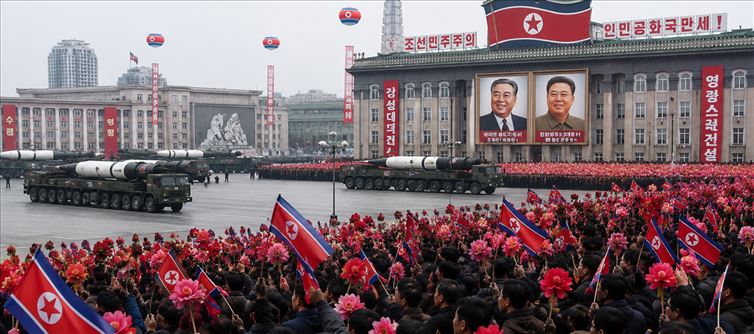
Beijing's response was immediate and unsubtle. As tracked by multiple outlets, China accused Japan of pursuing 'reckless militarism' — language usually reserved for moments when Beijing feels genuinely cornered, not merely irritated. The phrase is revealing: it is aimed at Takaichi's domestic audience as much as at Delhi, designed to invoke Japan's wartime past and delegitimise her defence agenda before it can mature into hardware on the water.
But here is what makes this different from the usual diplomatic theatre. Previous India-Japan summits produced warm words and modest MOUs. This one produced a number — Rs 1 trillion — and attached it to sectors (chips, AI, critical minerals) that sit at the exact intersection of economic competitiveness and national security. That is the combination Beijing cannot counter with wolf-warrior tweets alone.
The Triangle Beijing Cannot Solve
India Herald's read of the deeper geometry is this: China's Indo-Pacific strategy has long relied on keeping its rivals bilateral and its own relationships multilateral. The Belt and Road works precisely because each partner country deals with Beijing alone. The Quad, by contrast, forces China to confront a networked response — and the India-Japan leg of that network is now the one hardening fastest.
Consider the sequencing. Takaichi and Modi did not just sign investment deals; they pushed for an early Quad meeting, a signal that the next leaders' summit could arrive months ahead of schedule. For Beijing, which has spent years arguing the Quad is 'sea foam' that will dissipate, an accelerated timeline is a strategic embarrassment. It suggests the Quad is not fading — it is getting impatient.
The critical-minerals angle deserves special attention. India sits on significant reserves of lithium, rare earths, and cobalt — minerals essential for everything from EV batteries to missile guidance systems. Japan has the processing technology and the capital. Together, they can begin building an alternative supply chain that reduces the world's dependence on Chinese processing. Beijing's warning, as reported, that such cooperation would 'undermine regional stability' is itself an admission of how destabilising it finds the prospect.
What Comes Next — and What Delhi Should Watch For
India Herald's forward assessment: Beijing's retaliatory playbook is predictable but potent. In the coming weeks, expect three moves. First, economic pressure — subtle trade friction on Indian exports that depend on Chinese inputs, particularly in pharmaceuticals and electronics. Second, diplomatic counter-programming — a high-profile Chinese outreach to a South Asian neighbour (likely Sri Lanka or Bangladesh) designed to remind Delhi that Beijing has its own neighbourhood leverage. Third, and most consequentially, accelerated activity in the South China Sea and along the Taiwan Strait, intended to test whether the Quad's rhetoric translates into coordinated operational responses.
For Delhi, the risk is real but manageable. The trillion-rupee pledge must convert into actual disbursements — Japan's track record on this is mixed, and bureaucratic friction in India's semiconductor ecosystem remains formidable. The critical-minerals pact needs mining-to-processing timelines measured in years, not press conferences. And the Quad acceleration must survive a US election cycle that could, depending on the outcome, rewrite American commitment to the grouping entirely.
But the strategic direction is now locked in. Takaichi did not come to Delhi to play the santoor. She came to play the long game — and the sound Beijing heard was not music. It was the click of a lock turning.
More from India Herald



Key Takeaways
- Japan pledged Rs 1 trillion in investment in India across semiconductors, AI, defence, and healthcare — the largest single-visit Japanese commitment in recent memory, per the Times of India.
- The two leaders called for an early Quad summit, signalling that the multilateral grouping Beijing most opposes is accelerating, not fading.
- A critical-minerals cooperation pact directly targets China's dominance over rare-earth processing — roughly 60% of global capacity — making this summit an economic as much as a military challenge to Beijing.
- China's accusation of Japanese 'reckless militarism' reveals genuine strategic anxiety, not routine diplomatic objection.
- India Herald's forward read: expect Chinese economic friction on Indian imports, diplomatic counter-moves in South Asia, and accelerated South China Sea activity in the coming weeks.
By the Numbers
- Rs 1 trillion (~$12 billion): the Japanese investment commitment unveiled during PM Takaichi's India visit, per Times of India.
- ~60%: China's share of global rare-earth processing capacity, the strategic leverage directly threatened by the India-Japan critical-minerals pact.
The 5W+H: Who, What, When, Where, Why, How
- Who: Japanese PM Sanae Takaichi and Indian PM Narendra Modi, with China's foreign-policy establishment reacting.
- What: A bilateral summit that yielded Rs 1 trillion in Japanese investment commitments, deepened cooperation on critical minerals, AI, defence, and healthcare, and called for an early Quad leaders' meeting — prompting sharp Chinese accusations of 'reckless militarism' against Japan.
- When: June 2026, during PM Takaichi's official visit to New Delhi.
- Where: New Delhi, India — ceremonial welcome at Rashtrapati Bhawan followed by bilateral talks.
- Why: Beijing views the India-Japan convergence on critical minerals, semiconductors, and Indo-Pacific security architecture as a direct challenge to Chinese strategic dominance in the region.
- How: Through a series of signed agreements on investment, technology transfer, and mineral supply-chain diversification, plus a joint diplomatic push to convene the Quad ahead of schedule.
Frequently Asked Questions
What deals were signed during Japan PM Takaichi's India visit in 2026?
According to the Times of India and Hindustan Times, the summit produced a Rs 1 trillion Japanese investment push covering semiconductors, AI, defence, healthcare, and a deepened critical-minerals cooperation agreement. The two PMs also called for an early Quad leaders' meeting.
Why is China upset about India-Japan cooperation on critical minerals?
China controls approximately 60% of global rare-earth processing. An India-Japan pact to diversify mineral supply chains directly threatens one of Beijing's most potent economic leverage points, which is why China warned the cooperation would 'undermine regional stability.'
What is the Quad and why does it concern China?
The Quad — comprising India, Japan, Australia, and the United States — is a strategic grouping focused on a Free and Open Indo-Pacific. Beijing views it as a containment architecture aimed at limiting Chinese influence. Modi and Takaichi's call to accelerate the next Quad summit signals the grouping is strengthening, not dissipating as China had hoped.
How might China retaliate against India after this summit?
India Herald's analysis suggests three likely moves: subtle trade friction on Indian exports dependent on Chinese inputs (pharma, electronics), diplomatic counter-programming via outreach to South Asian nations like Sri Lanka or Bangladesh, and accelerated military activity in the South China Sea to test Quad cohesion.
 click and follow Indiaherald WhatsApp channel