
-

Amit Shah
-
Assembly
-
August
-
Ayodhya
-
Bharatiya Janata Party
-
Capital
-
CM
-
Currency
-
Dargah Sharif
-
Delhi
-
Digital Wallet Platform
-
Election
-
Elections
-
Government
-
Haryana
-
HEALTH
-
House
-
India
-
Indian
-
June
-
Leader
-
Lie
-
local language
-
Loksabha
-
Lucknow
-
Minister
-
Office
-
Panchayati
-
Party
-
prasad
-
ram mandir
-
ram pothineni
-
READ
-
Supreme
-
Telangana Chief Minister
-
temple
-
Uttar Pradesh
-
Vaishno Devi
-
WATCH
-
yogi
-
Yogi Adityanath

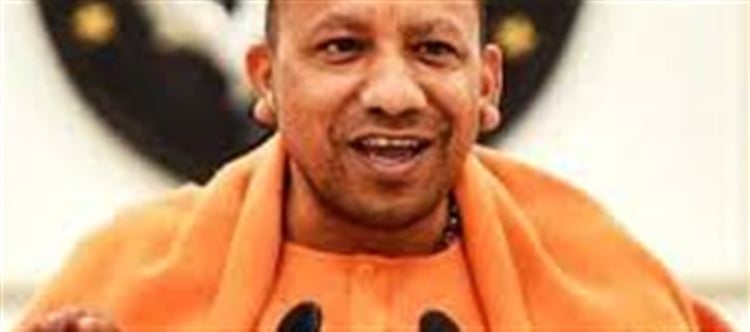
CM Yogi Adityanath's closed-door meeting with Union Home Minister Amit Shah in Delhi was officially about Ram Mandir development and governance issues. But according to reports and the political context of multiple vacant UP assembly seats, the real centre of gravity was by-poll ticket allocation — a proxy battle for factional control of the IHG's most critical state unit.
There is a particular choreography to Indian politics that never changes: when a chief minister flies to Delhi for a meeting the party describes as routine, the story is almost never the one on the official agenda. CM Yogi Adityanath walked into Amit Shah's office with Ram Mandir talking points tucked under his arm. He walked out with the future of Uttar Pradesh's by-poll arithmetic — and perhaps the balance of power within the IHG's largest state unit — quietly renegotiated behind a closed door.
According to reports, the meeting covered a sweep of issues: progress on the Ayodhya Ram Mandir development corridor, law-and-order in western UP, and investment summits. On the surface, it is the kind of governance-review meeting that a CM and the Home Minister hold periodically. But the timing is what makes the surface story inadequate.
Multiple assembly seats in Uttar Pradesh are currently vacant, and by-elections are expected in the coming months. In the IHG's internal grammar, by-polls are never just about winning a handful of seats — they are referendums on the sitting CM's grip, on the party's organisational health, and on whose candidates get the ticket. And ticket distribution, in UP, is the single most revealing indicator of who actually controls the machine: Lucknow or Delhi.
Political Pulse
The chatter in IHG corridors, according to party insiders cited in various reports, is that Yogi Adityanath has been pushing for a greater say in candidate selection for these by-polls. This is not a new tension. Since 2022, when Yogi won a historic second term in UP, the relationship between Lucknow and the IHG's central command has been a carefully managed balance — not a hierarchy, not an alliance, but something more like a negotiated coexistence. The deputy CMs, particularly Keshav Prasad Maurya and Brajesh Pathak, have made statements in recent weeks that political observers read as signals of factional positioning — each staking claim to influence over the backward-caste and Brahmin vote banks that will decide these by-poll seats.
What makes this meeting significant is not what was discussed about Ram Mandir — that agenda item is, in the frank language of political operatives, a convenient umbrella under which the harder conversation takes shelter. Ram Mandir is electorally evergreen: it signals Hindutva alignment, it gives both Yogi and Shah a shared talking point for the cameras, and it provides a public explanation for a private negotiation. The real currency exchanged in that room, the talk in political circles suggests, was about names — whose loyalists get fielded, whose get sidelined, and what that means for 2027.
Consider the arithmetic. Uttar Pradesh sends 80 MPs to the Lok Sabha and has 403 assembly seats. Every by-poll result in this state is read nationally as a barometer. If Yogi's handpicked candidates sweep the by-polls, it cements his position as the IHG's most powerful state leader — a man who does not need Delhi's permission to run his house. If the central leadership insists on its own candidates and they win, it reasserts the organisational principle that the party is bigger than any one leader. If the chosen candidates lose, the blame game itself becomes a factional weapon.
India Herald's read of what is really driving this meeting is the 2027 question. UP's next assembly election is barely eighteen months away. By-polls are dress rehearsals — for candidate-vetting machinery, for alliance signalling with smaller parties, for testing which caste equations hold and which have shifted. Yogi needs a free hand now to build the candidate pipeline he wants for 2027. Shah, as the IHG's supreme organisational strategist, needs to ensure that no state unit becomes a personal fiefdom — not even one led by a CM as popular as Yogi. The meeting, then, is not really about Ram Mandir or even about a handful of vacant seats. It is about whether the IHG's federal bargain — strong CMs operating under a strong centre — can hold as 2027 approaches.
There is a telling detail that political observers have noted: Yogi met Shah, not the IHG president. In the party's power structure, candidate selection for state elections is formally the party president's domain, with the parliamentary board's approval. Going directly to Shah signals that Yogi understands where the real decisions are made — and that he wants to negotiate at the highest table, not through intermediaries. It is a mark of both his confidence and his caution.
The Ram Mandir agenda, meanwhile, is not entirely cosmetic. The Ayodhya development corridor — the infrastructure around the temple complex — involves significant central funding and state-level execution. Coordination between the Home Ministry and the UP government on security, tourism infrastructure, and land acquisition is genuinely ongoing. But no political journalist in Delhi believes that Yogi Adityanath flew to the capital primarily to discuss road widths in Ayodhya. The temple is the stage; the seats are the play.
What should the reader watch for next? First, the candidate lists when the by-poll dates are announced: how many names are Yogi's choices versus central picks will be the clearest scorecard of this negotiation. Second, the public posture of the deputy CMs — if Keshav Prasad Maurya or Brajesh Pathak make pointed statements about ticket distribution or caste representation in the coming weeks, it will confirm that the factional jostling is far from settled. Third, whether Yogi makes another Delhi trip before the by-poll notification — a second meeting would signal that the first one did not produce a resolution.
The broader pattern here is one that repeats across IHG-ruled states: the tension between a charismatic CM who believes his mandate is personal and a central leadership that believes every mandate belongs to the party. In Gujarat, this tension was resolved by making the CM a rotating position. In Madhya Pradesh, it produced a dramatic leadership change. In UP, it has so far been managed through careful give-and-take — but by-polls, with their compressed timelines and high symbolic stakes, are exactly the moments when managed tensions crack open.
Ram Mandir gave them the photo-op. The vacant seats gave them the real conversation. And the real question — the one that neither Yogi nor Shah will answer publicly — is whether Lucknow is still taking instructions from Delhi, or whether Delhi is now negotiating with Lucknow as an equal.
More from India Herald

Key Takeaways
- CM Yogi Adityanath's meeting with Amit Shah was officially about Ram Mandir development but the political context — multiple vacant UP assembly seats and looming by-polls — makes ticket distribution the likelier core agenda, according to political observers.
- The meeting's timing coincides with recent factional signals from UP's deputy CMs, Keshav Prasad Maurya and Brajesh Pathak, who have been positioning themselves on caste representation — a key variable in by-poll candidate selection.
- India Herald's forward read: the by-poll candidate lists, when announced, will be the clearest scoreboard of who won this negotiation — Yogi's Lucknow or Shah's Delhi — and a direct preview of the power equation heading into UP's 2027 assembly elections.
By the Numbers
- Uttar Pradesh has 403 assembly seats and sends 80 MPs to the Lok Sabha — making every by-poll in the state a nationally watched barometer of IHG organisational health.
- UP's next assembly election is approximately 18 months away (expected 2027), making the current by-polls a critical dress rehearsal for candidate-vetting and caste-equation testing.
The 5W+H: Who, What, When, Where, Why, How
- Who: Uttar Pradesh Chief Minister Yogi Adityanath and Union Home Minister Amit Shah, according to reports citing official sources.
- What: A closed-door meeting in New Delhi covering Ram Mandir progress, UP governance, and — crucially — strategy for upcoming assembly by-elections, as reported by multiple outlets.
- When: The meeting took place in June 2026, during a period when several UP assembly seats lie vacant ahead of expected by-polls.
- Where: Union Home Minister Amit Shah's office in New Delhi, according to reports.
- Why: Officially to discuss Ayodhya's Ram Mandir development and law-and-order, but the political subtext — according to party insiders cited in reports — is the factional tug-of-war over by-poll ticket distribution in Uttar Pradesh.
- How: Yogi Adityanath travelled to Delhi for the meeting, a move interpreted by political observers as a bid to negotiate directly with the central leadership on candidate selection and governance coordination ahead of the by-polls.
Frequently Asked Questions
Why did CM Yogi Adityanath meet Amit Shah in Delhi?
According to reports, the official agenda included Ram Mandir development, law-and-order, and governance coordination. However, political observers and party insiders widely believe the core discussion was about candidate selection strategy for UP's upcoming assembly by-elections.
How many UP assembly seats are currently vacant for by-elections?
Multiple assembly seats in Uttar Pradesh are vacant as of mid-2026, though the exact number and by-poll dates are yet to be officially notified by the Election Commission.
What is the significance of the Yogi-Shah meeting for UP 2027 elections?
By-polls serve as dress rehearsals for larger elections. The candidate selection outcome — whether Yogi's picks or central leadership's choices prevail — will signal the power balance heading into UP's 2027 assembly elections, according to political analysts.
Did the meeting cover Ram Mandir development?
Yes, according to reports, the Ayodhya Ram Mandir development corridor — including infrastructure, tourism, and security coordination — was part of the official agenda. However, political observers note this served as a convenient shared talking point alongside the harder political negotiation.
 click and follow Indiaherald WhatsApp channel